China's AI Adoption Displaces Workers Across Industries
Programmers, translators, and scriptwriters lose jobs as government policies accelerate automation in the world's second-largest economy.
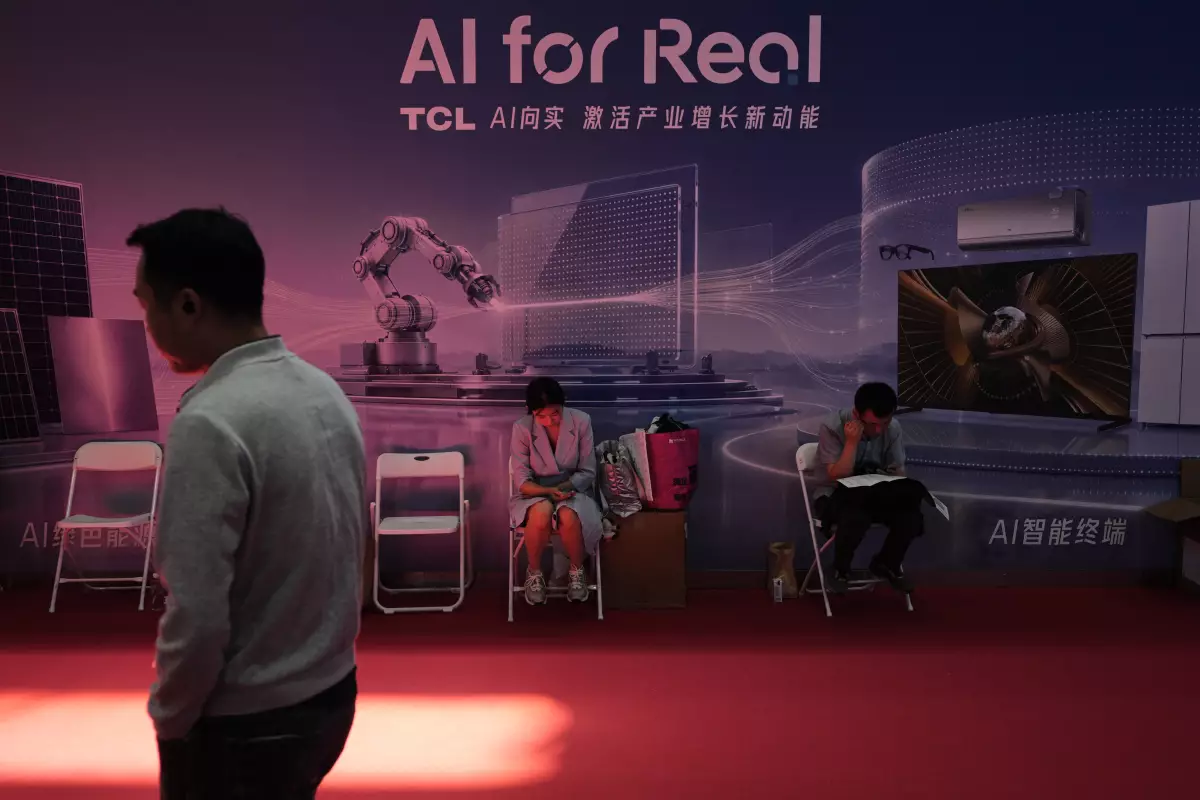
Automation accelerates job displacement in China
Computer programmer Fei Zhaojun lost his job in Beijing after his employer questioned whether AI could replace human coders. Within two weeks, he and approximately 160 colleagues were laid off—a scenario becoming increasingly common as China aggressively integrates artificial intelligence across its economy.
The displacement extends beyond technology roles. Translators face pay cuts exceeding 50% as AI-powered tools proliferate. Scriptwriters at educational content companies watch their teams shrink by half. Foreign language programs at universities lose popularity as students recognize diminishing career prospects.
China's industrial enterprises reporting AI usage jumped from 9.6% in 2024 to 47.5% last year, according to market intelligence firm IDC. The government's "AI Plus" initiative and five-year plan through 2030 actively encourage businesses to deploy AI applications and robotics across all sectors, creating what researchers describe as unusually rapid adoption compared to other countries.
Why it matters
China's aggressive AI deployment creates a real-world laboratory for automation's economic impact at massive scale. With 1.4 billion people and youth unemployment already triple the national rate, widespread job displacement could destabilize consumer spending and social stability—potentially undermining the government's technology ambitions. The experience may preview challenges other nations will face as AI capabilities advance.
Workers adapt with mixed results
Fei, 40, now creates vlog-style videos about ordinary people's lives during his career transition. "Mid-level coders' jobs are essentially replaceable in most cases," he said. "Even if it is a disaster that leads to replacing all humans, at this stage, you just have to use it as everyone else is using it."
Du Qinchun, a part-time translator in Chengdu, temporarily gained work training AI translation models—even as the technology threatens his profession. Wang Zhicheng, formerly a scriptwriter for 3D animated educational content, resigned after his company eliminated roughly half its writing team and now produces illustrated children's books independently.
Some workers report AI creates more problems than it solves. Wang found AI-generated scripts repetitive and formulaic, with inconsistent detail levels. High school chemistry teacher Yang Zheng, 29, views AI as a helpful supplement rather than replacement, noting it "often gets things wrong, but it improves over time."
Economic and demographic tensions
The displacement arrives as China's economic growth slows and consumer spending lags. Eswar Prasad, a Cornell University professor of economics and trade policy, warns that "AI is likely to lift productivity across the board but could have a severe disruptive effect on employment, worsening the employment growth problem."
China's overall urban unemployment rate hovers around 5%, but unemployment for people aged 16 to 24, excluding students, runs roughly triple that figure. Women face higher displacement risks than men, according to the International Labor Organization, due to concentration in roles suitable for automation.
Longer-term projections offer a different perspective. By 2050, China will have fewer than two working-age adults supporting each retiree as its population of 1.4 billion rapidly ages and shrinks. "Automation could partially offset a shrinking workforce rather than being purely a threat to it," said Xuenan Cao, a professor at San Francisco Bay University.
These details were first reported by the Associated Press.
This is an original analysis by the Omega editorial team. Source reporting: AI Watch.
Want systems like this working for your business?
Book a Call
