China Rejects Anthropic CEO's Call to Slow AI Development
Beijing sees Dario Amodei's proposal for a global pause on powerful models as an attempt to preserve U.S. technological dominance.
China has firmly rejected a proposal from Anthropic CEO Dario Amodei to slow the development of the world's most powerful AI models, viewing the initiative as another U.S. effort to maintain technological superiority.
Earlier in September 2026, Amodei published a blog post calling for the global AI industry to pause development of its most advanced models to allow time for improved safety measures. The proposal explicitly named China as a necessary partner, describing it as "the autocratic country with by far the most advanced AI capabilities."
The Proposal and Its Provisions
Amodei's plan outlined specific measures targeting China's AI capabilities, including ending sales of advanced AI chips and semiconductor manufacturing equipment to the country, cracking down on chip smuggling, and restricting remote access to data centers outside China. He framed these restrictions as necessary to "give us the breathing room we need in order to pace effectively."
The proposal received backing from OpenAI CEO Sam Altman and xAI founder Elon Musk, though Meta CEO Mark Zuckerberg and President Donald Trump opposed it, instead advocating for rapid AI advancement without constraints.
China's Response
Chinese officials, state media, and technology leaders have uniformly rejected the proposal. "I don't see any reason why China would cooperate with [Amodei's] proposal and be held down more than it already is," Alvin Wang Graylin, a senior fellow at the Asia Society Policy Institute's Center for China Analysis, told Rest of World.
Graylin clarified that China's rejection doesn't necessarily mean the country would never consider pacing AI development, but rather that it won't accept terms dictated unilaterally by U.S. companies. The response reflects broader tensions over who sets the rules for emerging technologies.
Why it matters
This standoff illustrates the fundamental challenge of governing transformative technologies in a multipolar world. Any effective framework for AI safety will require cooperation between the United States and China, yet proposals perceived as preserving existing power dynamics are unlikely to gain traction. The disagreement also reveals fractures within the U.S. tech industry itself, with major players divided on whether to prioritize safety measures or competitive advantage.
Diplomatic Implications
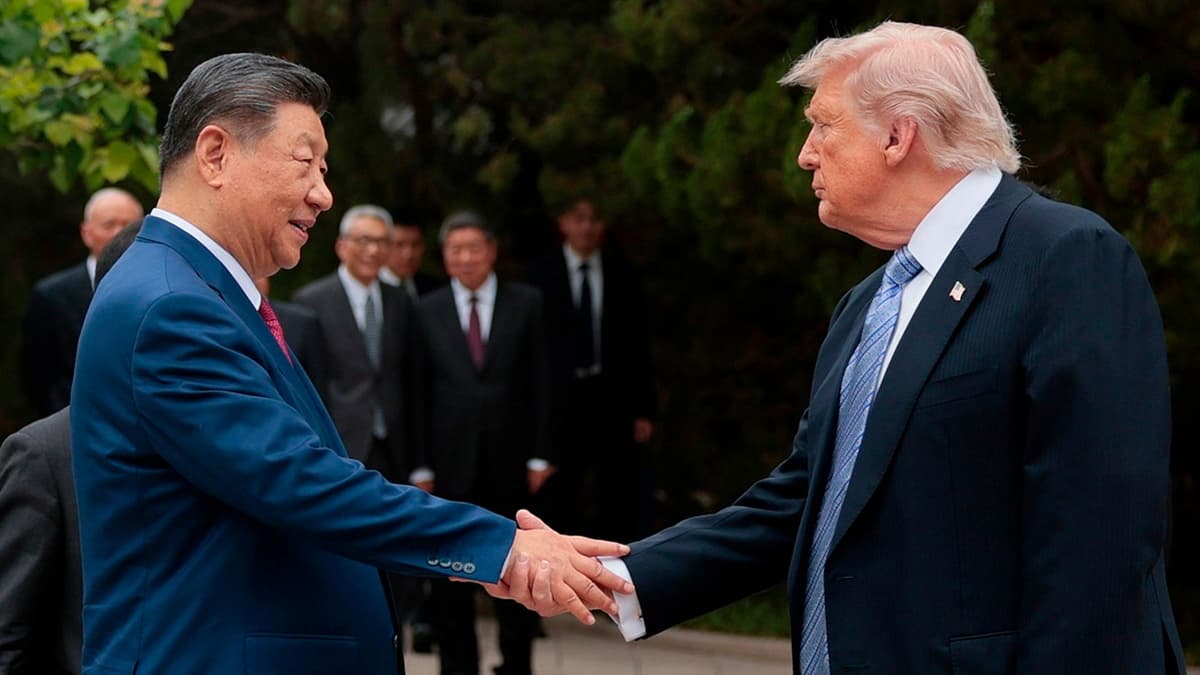
The AI governance debate is now entering the highest levels of diplomacy. President Trump is scheduled to meet Chinese President Xi Jinping in Washington on September 24, with the U.S. expected to raise "shared risks" from AI development during the discussions.
These details were first reported by Rest of World.
This is an original analysis by the Omega editorial team. Source reporting: AI Watch.
Want systems like this working for your business?
Book a Call