Maryland Governor Unveils AI Regulation Framework
Wes Moore's plan emphasizes worker protections and human oversight as Congress stalls on federal AI policy.
Maryland moves forward on state-level AI regulation
Maryland Governor Wes Moore has introduced a comprehensive framework for regulating artificial intelligence within the state, positioning Maryland to act independently as federal lawmakers remain gridlocked on national AI policy.
The framework centers on three core principles: maintaining human oversight of AI systems, protecting workers from displacement, and establishing safeguards for children. Moore emphasized that AI should augment human capabilities rather than eliminate jobs, with his administration coordinating with labor unions to ensure worker protections remain intact as AI adoption accelerates.
Security and sensitive sites
The plan places special emphasis on security measures at critical Maryland facilities, including the National Institutes of Health, the U.S. Naval Academy, Fort Meade, and public schools throughout the state. These locations will receive heightened scrutiny as AI systems are deployed.
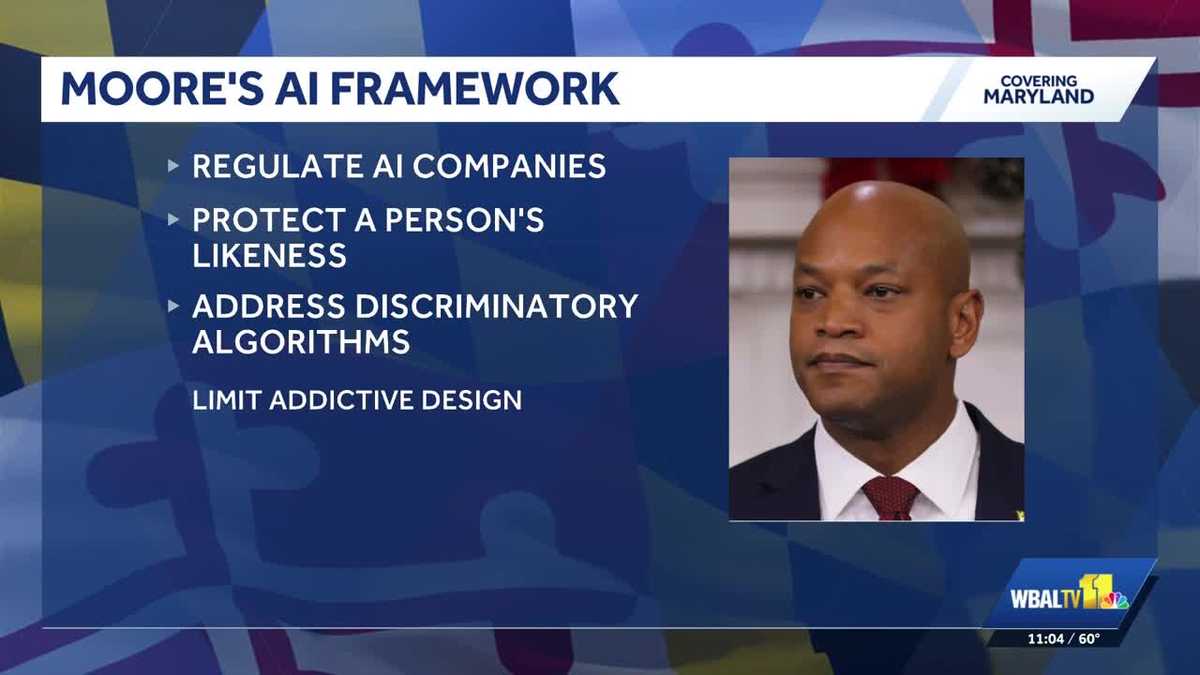
A newly formed AI sub-cabinet will translate the framework into concrete legislation. The group's mandate includes regulating AI model companies operating in Maryland, drafting right-of-publicity laws to prevent unauthorized use of individuals' likenesses, addressing algorithmic discrimination in housing markets, and working with the attorney general to restrict addictive design patterns in chatbots deemed unsafe.
Why it matters
Maryland's initiative represents a state-level response to the regulatory vacuum created by congressional inaction on AI policy. As one of the first comprehensive state frameworks, it could serve as a template for other states and potentially influence eventual federal legislation. The emphasis on worker protections also signals how state governments may prioritize labor concerns that have received less attention in federal AI discussions dominated by national security and innovation competitiveness.
Rejecting the China competition narrative
Moore directly challenged the argument that robust AI safeguards could weaken America's competitive position against China. "My fear is not China. My fear is a technology that no human being can control," the governor stated. He argued for balancing cooperation and competition, noting that some challenges require collaborative rather than purely competitive approaches.
The administration plans to work with state legislators before the next session to convert these policy recommendations into enforceable laws.
These details were first reported by WBAL-TV in Baltimore.
This is an original analysis by the Omega editorial team. Source reporting: AI Watch.
Want systems like this working for your business?
Book a Call