China Builds Self-Reinforcing AI Ecosystem Beyond Model Race
As homegrown systems like DeepSeek and Kimi mature, Beijing shifts from catching up in technology to integrating innovation, deployment, and governance into systemic advantage.
China's AI Strategy Evolves Beyond Technological Catch-Up
China's artificial intelligence development has entered a new phase that extends well beyond the question of whether its models can match U.S. capabilities. The country is now building what amounts to a self-reinforcing AI ecosystem—one where technological innovation, large-scale industrial deployment, and governance frameworks strengthen one another to create durable competitive advantages.
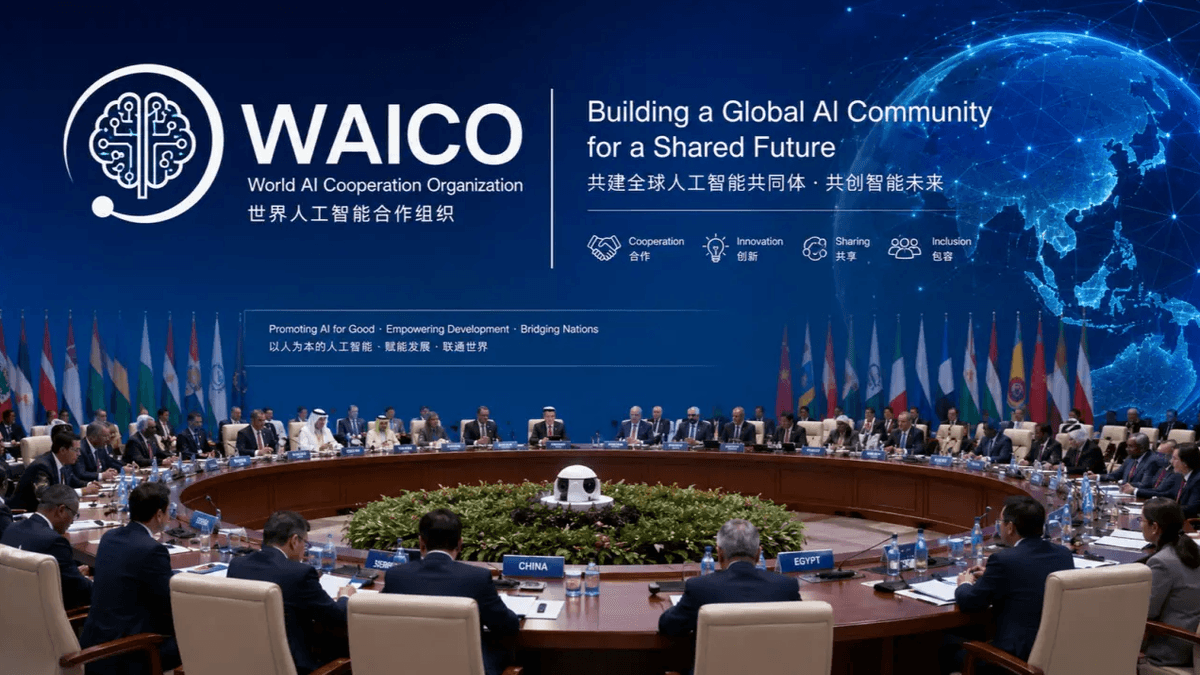
This shift was on display at the World Artificial Intelligence Conference in Shanghai in mid-July, where more than 1,100 companies showcased 4,400 exhibits, including 108 Chinese-developed AI chips and 261 large language models. The event also marked the signing of an agreement establishing the World Artificial Intelligence Cooperation Organization (WAICO), with representatives from 29 countries participating.
Technological Foundation Strengthens Despite Export Controls
China's foundational models have advanced rapidly over the past year. Moonshot AI's open-source Kimi K3 model, unveiled in July, outperformed Anthropic's Claude in long-context coding tasks and matched OpenAI's GPT-5.6 in scientific reasoning. Models like DeepSeek, Tongyi Qianwen, and ERNIE continue to narrow performance gaps with leading Western systems while demonstrating advantages in development efficiency and cost optimization.
U.S. export controls on advanced chips have not slowed this progress. Instead, they have accelerated China's push for technological self-reliance. In the first half of this year, major industrial enterprises increased integrated circuit output by 23.1 percent year-over-year, producing more than 1.5 billion chips daily. At the Shanghai conference, Huawei unveiled its Ascend 950 Super Node, which links 1,024 processors to deliver performance comparable to some of Nvidia's leading AI platforms.
Industrial Deployment at Scale
China's distinctive strength lies in translating technological advances into widespread industrial applications. Foundational models are now deployed across manufacturing, finance, healthcare, education, and transportation sectors. The country's vast digital economy provides fertile ground for AI commercialization, from AI-generated video and intelligent office software to embodied AI and humanoid robots.
The rapid improvement of open-source models is lowering adoption barriers, enabling small and medium-sized enterprises to develop industry-specific solutions. According to the International Data Corporation, China's AI investment is projected to reach $26.69 billion this year, with spending on AI services expected to exceed $4 billion.
Governance Framework Takes Shape
China is simultaneously building a comprehensive governance system to address algorithmic bias, privacy breaches, misleading content, and labor market disruptions. President Xi Jinping emphasized at the conference that AI "carries within it great opportunities as well as challenges to governance," stressing the need to address inherent and secondary risks.
The country's 15th Five-Year Plan identifies artificial intelligence as a key area for technological and industrial transformation, calling for deeper integration of education, science and technology, and talent cultivation. China also announced it would provide 5,000 AI training opportunities for developing countries over the next five years and establish international cooperation centers with ASEAN, the League of Arab States, and the African Union.
Why it matters
China's approach represents a fundamental shift in how nations compete in AI—moving from a narrow focus on model performance to building complete ecosystems that integrate technology, industry, and governance. This systemic strategy could prove more durable than technological leadership alone, particularly as it extends to shaping global AI standards and expanding access for developing economies. For Western technology leaders and policymakers, it signals that competitive advantage in AI will increasingly depend on industrial deployment capabilities and governance frameworks, not just research breakthroughs.
These details were first reported by China-US Focus in coverage of the World Artificial Intelligence Conference and China's evolving AI strategy.
This is an original analysis by the Omega editorial team. Source reporting: AI Watch.
Want systems like this working for your business?
Book a Call