California Passes Nation's Strongest AI Healthcare Regulations
Two nurse-backed bills establish guardrails requiring human oversight of AI clinical decisions and protecting workers who override algorithms.
California Sets National Precedent for AI in Healthcare
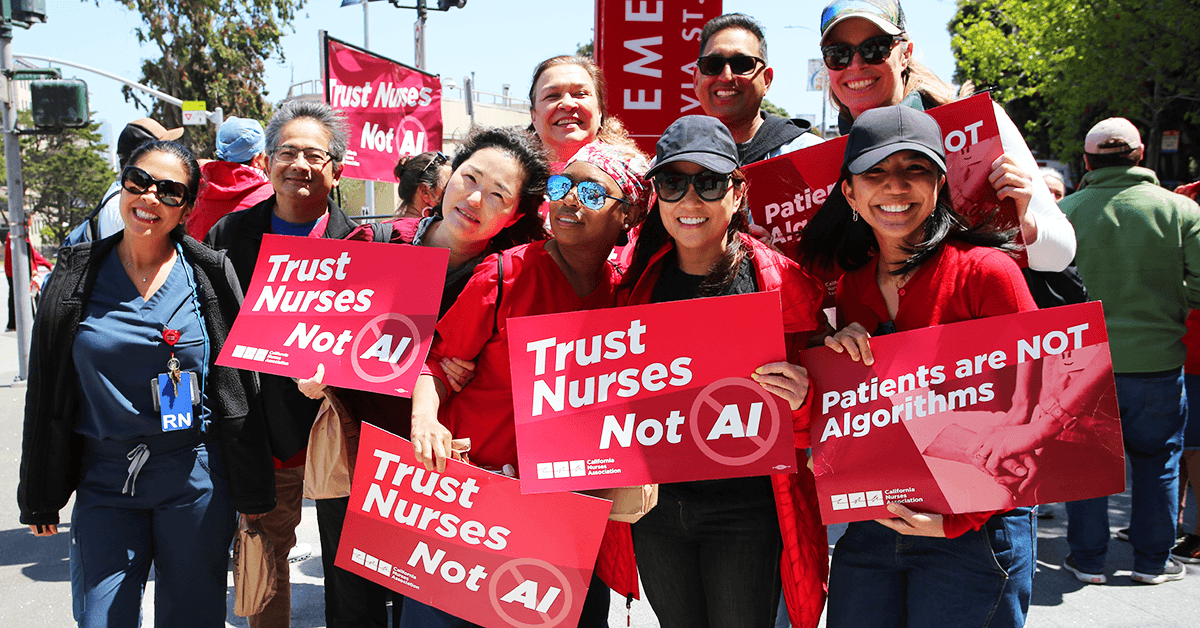
California's legislature has approved two groundbreaking bills that establish the most comprehensive protections in the United States against unchecked artificial intelligence deployment in healthcare settings. AB 1979 and AB 2575, both sponsored by the California Nurses Association, now await Governor Gavin Newsom's signature after clearing both legislative chambers.
The legislation passed despite sustained opposition from hospital corporations, health insurance companies, and technology industry coalitions that lobbied for months to weaken or defeat the measures, according to the California Nurses Association.
What the Bills Require
AB 1979, authored by Assemblymember Mia Bonta, prohibits healthcare entities from using AI systems to replace the clinical judgment of licensed healthcare professionals. The bill also mandates that companies offering AI health applications with access to medical records comply with California's medical confidentiality laws.
"Technology should not replace human decision-making in health care," Bonta stated. The legislation ensures that direct-to-consumer health chatbots must protect medical records and that licensed professionals retain authority to exercise professional judgment when AI clinical decision support systems inform patient care.
AB 2575, authored by Assemblymember Liz Ortega, protects healthcare workers' right to override AI outputs they deem unsafe or inappropriate without facing retaliation. Critically, the bill prevents AI developers and deployers from avoiding liability by blaming human healthcare workers who interacted with their systems.
Why It Matters
These bills address a fundamental tension in healthcare's rapid AI adoption: the balance between technological efficiency and human accountability. As hospitals and health systems deploy AI tools for diagnosis, treatment recommendations, and clinical workflows, questions of liability and professional autonomy have remained largely unresolved. California's framework—requiring human oversight and protecting workers who question algorithmic outputs—could become a template for other states grappling with similar concerns. The legislation also signals that healthcare AI will face stricter scrutiny than consumer applications, reflecting the higher stakes of medical decision-making.
Industry Pushback and Worker Advocacy
"Nurses fought for these bills because we are the last line of defense for our patients, and our employers know it," said Sandy Reding, president of the California Nurses Association. "Every day, nurses catch the errors that would otherwise reach the bedside. Now the corporations want machines to overrule us, and they want us to stay quiet about it."
Lorena Gonzalez, president of the California Federation of Labor Unions, emphasized that AI tools "are not licensed, not subject to health care privacy laws, and not required to take a Hippocratic Oath to 'do no harm.'"
Governor Newsom has until September 30, 2026, to sign or veto the legislation. The California Nurses Association represents more than 100,000 registered nurses across California and 225,000 nationwide.
These details were first reported by the California Nurses Association/National Nurses United.
This is an original analysis by the Omega editorial team. Source reporting: AI Watch.
Want systems like this working for your business?
Book a Call