California County Halts Massive AI Data Center Over Water Rights
Imperial County's 45-day moratorium on data centers highlights growing tensions between AI infrastructure expansion and local resource constraints.
California County Halts Massive AI Data Center Over Water Rights
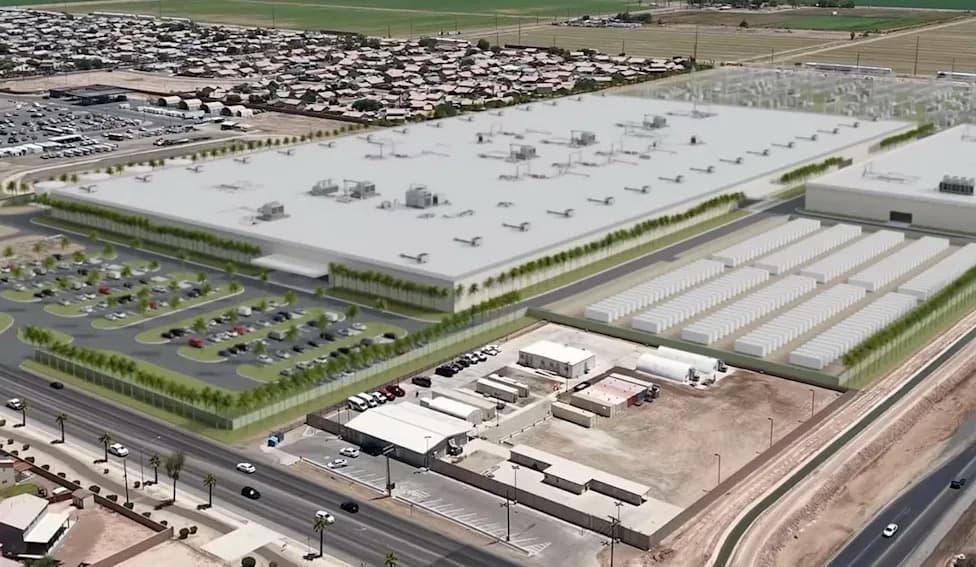
California officials have imposed a 45-day moratorium on data center development in Imperial County, blocking what could become the state's largest such facility and escalating a conflict over water access, environmental review, and community impact.
The Imperial Data Center, a proposed nearly 1 million-square-foot hyperscale complex designed to support AI and machine learning operations, had cleared initial approval hurdles in April when county supervisors approved land parcel mergers for the site. But sustained community opposition has now brought the project to a standstill, according to The Business Journal, which first reported the details.
County supervisors last week adopted the moratorium following a public hearing where residents criticized both the project's scale and the speed of its approval process. The board also established a public commission to examine zoning issues related to data center development.
Water dispute reaches legal battle
The project's water supply plan has become a central flashpoint. After an initial proposal to use recycled water collapsed, the development company Imperial Valley Computer Manufacturing sued the Imperial Irrigation District seeking 260 million gallons of Colorado River water annually. The company argues it can redirect water rights tied to farmland it purchased and left fallow.
This legal strategy has intensified concerns in a region already facing pollution challenges, limited water supplies, and heavy agricultural demand.
The project's backers have promoted the facility as an economic catalyst, projecting 2,500 construction jobs, 100 permanent positions, and approximately $28 million in annual tax revenue. Developer representative Rucci has challenged the moratorium's legal foundation, calling it "defective" and arguing that moratoriums should address specific emergencies rather than serve as planning tools.
Environmental review gaps fuel opposition
The City of Imperial has raised concerns that the development sits too close to residential areas and requires more comprehensive analysis of air quality, water consumption, and energy demand before proceeding.
State Senator Steve Padilla, a San Diego Democrat, told a town hall in El Centro that the project cannot claim exemption from oversight while attempting to build "the biggest data center in the state."
Michelle Hollinger, a vice president for Victoria Homes, pointed to public health data in her opposition: "Let me tell you what is actually expensive. It is expensive when Imperial Valley has some of the highest pediatric asthma rates in California."
Meanwhile, Lawrence Cox, owner of Coastline Family Farms, warned that "we're losing our ability to compete because of California-specific rules and regulations."
Why it matters
This dispute illustrates the growing friction between AI infrastructure expansion and local resource constraints. Data centers supporting AI operations require massive electricity and water supplies, potentially straining communities already facing environmental pressures. As AI deployment accelerates, more regions will confront similar questions about who benefits from these facilities and who bears the costs — particularly when projects involve contested water rights in drought-prone areas. The outcome in Imperial County could influence how other jurisdictions approach data center proposals.
The Business Journal provided the reporting on which this account is based.
This is an original analysis by the Omega editorial team. Source reporting: AI Watch.
Want systems like this working for your business?
Book a Call
