Enterprise
Boardroom AI Focus Shifts From Job Cuts to Cyber Defense
KPMG's CEO says corporate leaders now prioritize business transformation and security threats over workforce reduction concerns.
Key takeaways
- Corporate AI discussions have shifted from job cut concerns to business transformation and cybersecurity priorities over the past year.
- KPMG's workforce size remains stable despite AI adoption, but the talent mix is shifting toward data scientists and engineering roles.
- High AI deployment costs are forcing companies to selectively assign tools by role rather than providing universal access.
- Cybersecurity has become the dominant AI concern as advanced tools can identify vulnerabilities beyond human capability.
- Companies are racing to deploy AI-powered defense systems to counter threat actors using the same technology for attacks.
Boardroom AI conversations evolve beyond workforce fears
Corporate leaders are changing how they think about artificial intelligence deployment, moving past initial anxieties about mass layoffs to focus on business transformation and emerging cybersecurity threats.
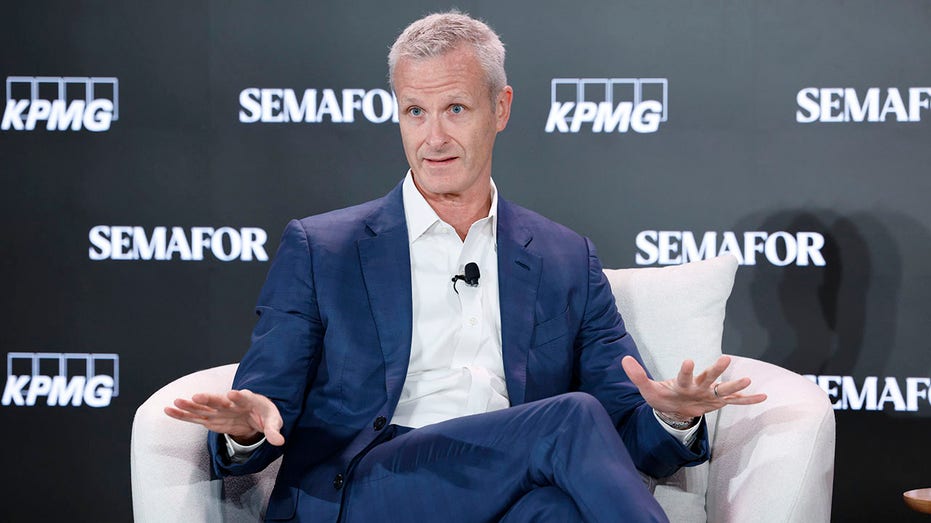
Tim Walsh, CEO of KPMG U.S., told FOX Business that boardroom discussions about AI have shifted dramatically over the past year. While executives previously fixated on potential white-collar job losses and campus hiring freezes, those concerns have given way to more strategic considerations about how to deploy the technology effectively and defend against AI-powered cyber threats.
Why it matters
This shift signals that enterprises are moving from theoretical AI concerns to practical implementation challenges. As companies invest heavily in AI tools, they're discovering that the technology creates new skill requirements and security vulnerabilities rather than simply eliminating jobs — a reality that will reshape corporate planning and budgets for years to come.
Workforce composition changing, not shrinking
Walsh reported that KPMG's overall workforce numbers haven't declined due to AI adoption, and he doesn't expect significant reductions. However, the composition of that workforce is evolving.
"I still need the traditional skills I was bringing in, but now I may need fewer. Not drastically fewer, but now I need data scientists, I need people who can transform data, I need engineering talent, and lots of it," Walsh explained.
Even as AI tools expand employee capacity and improve output quality, KPMG isn't seeing dramatic reductions in human worker hours. Walsh acknowledged some hour reductions may occur eventually, but expects the impact to be less severe than some predictions suggest.
Cost pressures drive selective deployment
Rising costs associated with enterprise AI deployment are forcing companies to take more targeted approaches. Walsh noted that AI tools "are not inexpensive at all," making it particularly challenging for middle-market and smaller businesses to invest at scale.
Companies are responding by mapping specific AI technologies to relevant employee roles rather than providing blanket access to the same tools across the organization. While Walsh expects costs to decrease over time, current price points require strategic thinking about where AI delivers the strongest return on investment.
Cybersecurity emerges as primary concern
Cybersecurity risks now dominate C-suite AI discussions, particularly following Anthropic's Project Glasswing initiative. The project emerged after Anthropic discovered its Claude Mythos Preview tool possessed powerful capabilities to identify and potentially exploit vulnerabilities.
Walsh emphasized that as threat actors gain access to advanced AI capabilities, companies must adopt the same technology for defense. "The only way to defend against these capabilities in the future will be to be able to use the technology on the defense," he said.
AI agents can now identify security vulnerabilities that humans couldn't detect due to complexity or time constraints, creating an arms race between attackers and defenders. KPMG has launched new cybersecurity offerings in response, including services to help companies in Anthropic's Cyber Verification Program deploy and apply the Mythos tool.
These details were first reported by FOX Business.