AWS AgentCore Runtime Simplifies Multi-Model AI Agent Deployment
New managed service eliminates infrastructure overhead for teams running complex agentic AI workloads across multiple models and frameworks.
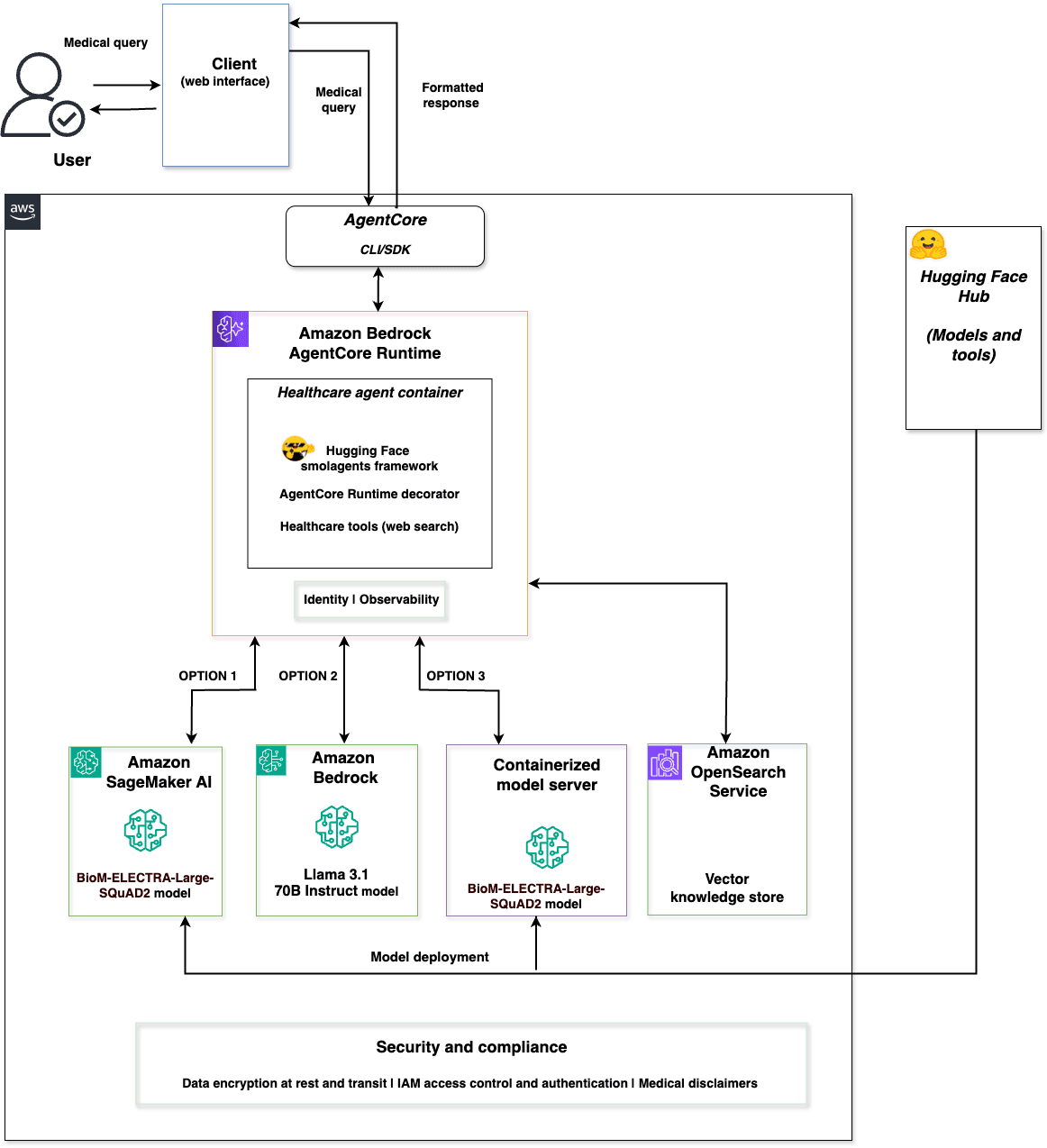
Healthcare AI agent migrates to managed runtime with unchanged logic
AWS has detailed how organizations can shift multi-model AI agents from self-managed container infrastructure to Amazon Bedrock AgentCore runtime without rewriting core application logic. The migration path addresses a common pain point: teams building agentic AI applications often spend more time managing container orchestration, scaling policies, and observability than developing agent capabilities.
According to AWS, the new runtime handles container lifecycle, identity management, and observability automatically, allowing developers to focus on agent code rather than infrastructure. The company demonstrated the approach by migrating a healthcare AI agent that orchestrates across three model backends—Amazon Bedrock with Llama 3.1 70B, Amazon SageMaker with BioM-ELECTRA-Large-SQuAD2, and a containerized model server—while preserving vector-enhanced knowledge retrieval through Amazon OpenSearch Service.
Why it matters
Multi-model orchestration is becoming standard practice as organizations discover that no single model handles every task optimally. Healthcare teams, for example, need domain-specific models for biomedical queries and general foundation models for broader reasoning. Managing the infrastructure to support this architecture has been a barrier. AgentCore runtime's framework-agnostic design means teams can deploy existing agent code built with Hugging Face smolagents or other frameworks without adaptation, reducing migration friction for organizations already running agentic workloads on Amazon ECS with Fargate or similar platforms.
Decorator pattern preserves existing code
The migration requires wrapping existing agent logic with AgentCore's decorator pattern. Three additions—BedrockAgentCoreApp initialization, an @app.entrypoint decorator, and app.run()—enable the runtime to manage the container while the agent code between decorator and return statement remains untouched. AWS reports deployment takes approximately 10 to 15 minutes using a single CLI command after initial project setup.
The healthcare agent implementation routes specialized biomedical queries to BioM-ELECTRA-Large-SQuAD2 on SageMaker and broader medical reasoning to Llama 3.1 70B on Bedrock. All three model backends implement Hugging Face Messages API compatibility, providing consistent request and response formats regardless of the selected model service.
Infrastructure comparison
The self-managed Amazon ECS with Fargate deployment gives teams full control over container configuration, networking, and scaling behavior but requires defining ECS task definitions, setting auto-scaling policies, configuring IAM roles per service, and establishing observability through CloudWatch. The AgentCore runtime version provides container orchestration, session-based scaling, identity management through IAM integration, and built-in tracing and logging without manual configuration.
Both approaches support the same multi-model orchestration and vector search capabilities. The choice depends on whether teams prioritize infrastructure control or prefer managed services that reduce operational overhead.
Production considerations
AWS notes the implementation is a sample for demonstration purposes. Production deployments handling medical or sensitive queries should use Amazon Bedrock Guardrails for content filtering and grounding validation as standard controls. The solution supports bring-your-own agent approaches, meaning organizations can deploy existing agent code to AgentCore runtime regardless of the framework used.
The complete implementation is available in AWS's sample-healthcare-agent-with-agentcore-on-aws GitHub repository. The migration pattern applies across industries including financial services and manufacturing where multi-model orchestration addresses varying query complexity.
These details were first reported by AWS in a Machine Learning Blog post.
This is an original analysis by the Omega editorial team. Source reporting: AI Watch.
Want systems like this working for your business?
Book a Call