Australia to Regulate AI Data Centers on Power, Water, Copyright
Prime Minister Albanese announces 2025 legislation requiring data centers to contribute more energy than they consume and protect creative works from unauthorized training use.
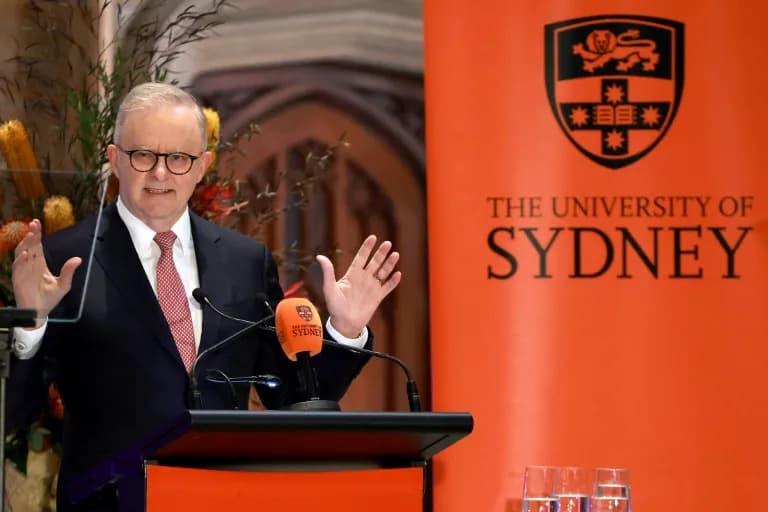
Australia plans to introduce comprehensive legislation next year governing how artificial intelligence data centers consume resources and use copyrighted material for model training, Prime Minister Anthony Albanese announced Wednesday.
In a policy speech at the University of Sydney, Albanese outlined regulations that would require large data centers to return more electricity to the grid than they draw, minimize water consumption, and avoid competing with housing developments for land. The government will also establish legal protections preventing AI companies from training models on Australian creative works without permission.
Why it matters
Data center investment drove Australia's economic growth in the first quarter of 2024, making it the largest single contributor according to government figures. As global AI companies race to build infrastructure, Australia is positioning itself to capture investment while protecting national resources and intellectual property—a balance other nations are watching closely as they develop their own AI governance frameworks.
Resource Requirements and Infrastructure Standards
The proposed legislation would impose clear legal obligations on data center operators. Facilities would need to demonstrate net-positive energy contribution to the electrical grid, addressing concerns about AI infrastructure straining power systems. Water usage minimization requirements respond to the significant cooling needs of high-performance computing facilities.
Albanese framed the regulations as essential to preventing Australia from becoming merely "a data warehouse for AI products made overseas." He emphasized the urgency of action, warning that delay would allow AI development to proceed without regard for Australian interests.
Copyright Protection Against AI Training
The copyright provisions directly respond to recent lobbying by US startup Anthropic, which has pushed Australian officials to modify copyright laws to facilitate AI model training. Musicians, writers, and publishers have urged the government to resist such pressure.
"Australian creative content was not 'up for grabs,'" Albanese stated. "No company should use Australian books, music, art or news to build or train AI without the artist's control... anything less is theft."
The announcement positions Australia alongside jurisdictions taking firm stances on AI training data, contrasting with more permissive approaches elsewhere.
Implementation Timeline and Governance
Albanese will meet with state and territory leaders next month to discuss the proposed laws, which are scheduled for introduction in 2025. The government is establishing a dedicated AI office within the Prime Minister's department to coordinate policy and oversee compliance.
The Prime Minister characterized the regulatory framework as enhancing Australia's appeal to international investors by providing clarity on approvals and compliance processes. He rejected treating AI as a threat to employment, instead positioning it as a tool for job creation.
Albanese noted the government has not yet observed significant AI impact on the Australian labor market, though monitoring continues.
These details were first reported by AI Watch.
This is an original analysis by the Omega editorial team. Source reporting: AI Watch.
Want systems like this working for your business?
Book a Call
