Arm's Samsung AI Chip Deal Targets Phones, Not Data Centers
The 2nm on-device accelerator partnership expands mobile inference reach while Arm's real data center bet remains the AGI CPU with $2B+ demand.
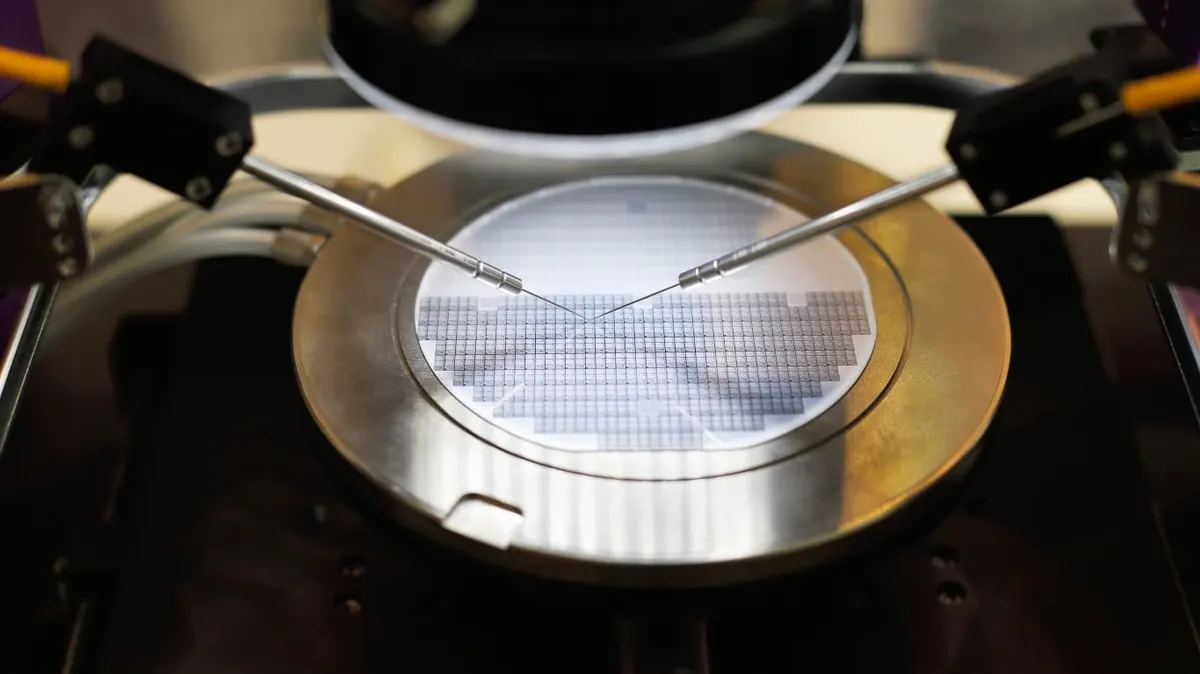
Arm Holdings has announced a collaboration with Samsung on a 2-nanometer on-device AI accelerator system-on-chip, but the deal's scope is narrower than the headline suggests. Arm is providing the AI accelerator architecture and core design IP, while Samsung's System LSI division handles full SoC integration and Samsung Foundry manufactures the chip on its SF2 2nm process.
The partnership targets power-efficient, low-latency inference on smartphones and consumer devices—a high-volume but lower-margin segment designed to reduce cloud dependence. This is not the data center breakthrough some investors may be anticipating.
Why it matters
Arm trades at roughly 298 times earnings after a 131% year-to-date rally, a valuation that prices in aggressive data center growth rather than incremental mobile wins. Understanding where the company's actual revenue inflection lies—and the competitive landscape it faces—is critical for investors underwriting that multiple.
The real data center play
Arm's genuine data center opportunity centers on the AGI CPU, where CEO Rene Haas disclosed demand now exceeds $2 billion across fiscal 2027 and fiscal 2028. In the company's fiscal Q1 2027, revenue reached $1.29 billion, up 22.4% year over year, with data center royalty revenue more than doubling annually. Arm Neoverse shipments have surpassed 1.5 billion cores, and management targets a $15 billion silicon business against a data center total addressable market cited at over $100 billion by 2030.
The company has secured design wins inside NVIDIA's Vera CPU, Google's Axion, Microsoft's Cobalt, and Amazon's Graviton 5, giving it approximately 50% CPU compute share among top hyperscalers, according to 247 Wall Street's analysis.
The margin picture is less favorable. Arm's AGI CPU gross margin is guided to the high 30% range, possibly low 40s for the first generation—a significant step down from its 92.5% IP-licensing gross margin. Additionally, a Qualcomm license litigation trial expected in Q4 2026 hangs over the royalty base.
The competitive reality
Arm must coexist with, not displace, NVIDIA in the data center. NVIDIA's fiscal Q2 2027 revenue reached $96.22 billion, up 106% year over year, with data center revenue of $89.02 billion. Critically, NVIDIA's Vera CPU is itself Arm-based, and Grace CPU revenue already exceeded $5 billion on a trailing twelve-month basis.
Qualcomm represents Arm's closest strategic analog and most direct new-entrant competitor. The company is guiding to $5 billion in fiscal 2027 data center revenue and $15 billion in fiscal 2029, with the Arm-based Dragonfly C1000 as its merchant CPU entry. Qualcomm's own Arm license dispute, with a trial expected in Q4 2026, could reshape the economics of its Arm-based server chips.
Taiwan Semiconductor Manufacturing fabricates the leading-edge silicon for NVIDIA's Rubin, Arm's AGI CPU partners, and Qualcomm's hyperscaler custom chips. The company's Q2 2026 revenue reached $40.2 billion, up 36% year over year, with 2nm debuting at 3% of wafer revenue in its first ramp quarter.
Bottom line
The Samsung SoC deal expands Arm's mobile inference footprint and provides Samsung Foundry with a real 2nm reference design, but it stops short of the AGI CPU opportunity that justifies Arm's current valuation. Investors underwriting the stock at nearly 300 times earnings are paying for the data center silicon business, where the incumbent shipped $89 billion in a single quarter and the closest peer is guiding to $15 billion by fiscal 2029.
These details were first reported by 247 Wall Street.
This is an original analysis by the Omega editorial team. Source reporting: AI Watch.
Want systems like this working for your business?
Book a Call