Alphabet Stock Falls 4% as Gemini 3.5 Pro AI Model Delayed
Google's flagship AI model is months behind schedule due to coding performance issues, according to Bloomberg sources.
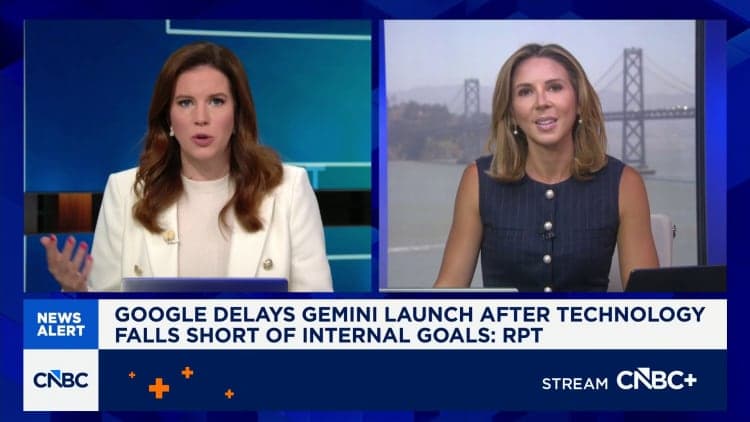
Alphabet shares declined 4% on Thursday following reports that the company has postponed the release of its Gemini 3.5 Pro artificial intelligence model, originally slated for a broader rollout in June.
The delay stems from performance issues, particularly with the model's coding capabilities, which have fallen short of internal benchmarks, Bloomberg reported citing sources familiar with the matter. The setback comes as competitors including OpenAI and Meta have recently launched AI models that demonstrate superior code generation abilities compared to Google's current offerings.
The competitive landscape
Code generation has emerged as a critical battleground for AI model providers. Meta introduced its Muse Spark 1.1 model last week, with AI chief Alexandr Wang calling it the company's "strongest model for agentic and coding work yet." OpenAI also released its GPT-5.6 Sol model, with CEO Sam Altman highlighting its 54% improvement in token efficiency for agentic coding tasks.
The emphasis on cost-effectiveness alongside performance reflects the broader industry trend, as companies seek AI models that deliver results without excessive computational expense. Chinese AI labs like Z.ai have also entered the space with open-weight variants accessible through the open-source ecosystem.
Google's response
Google first announced Gemini 3.5 Pro at its May developer conference, Google I/O, stating the model was being used internally but would require additional time before public availability. An Alphabet spokesperson told CNBC the company is "shipping quickly across a wide range of models while keeping them highly cost-effective for customers."
The spokesperson added that Google is currently testing the 3.5 Pro model, an upgraded Flash model, and other variants with partners, while also engaging with the U.S. government.
Why it matters
The delay signals potential challenges in Google's AI strategy at a moment when the company faces intensifying competition in generative AI. Code generation represents one of the most commercially valuable applications for large language models, with developers and enterprises increasingly relying on AI assistants for software development. Any performance gap in this area could affect Google's ability to compete for enterprise customers and maintain its position in the rapidly evolving AI market.
The details were first reported by Bloomberg.
This is an original analysis by the Omega editorial team. Source reporting: AI Watch.
Want systems like this working for your business?
Book a Call