Alibaba Unveils China's Most Powerful AI Chip Ahead of Xi-Trump Summit
The Zhenwu V900 chip and plans for a 10-trillion-parameter AI model signal Beijing's push for technological self-reliance as U.S. export restrictions bite.
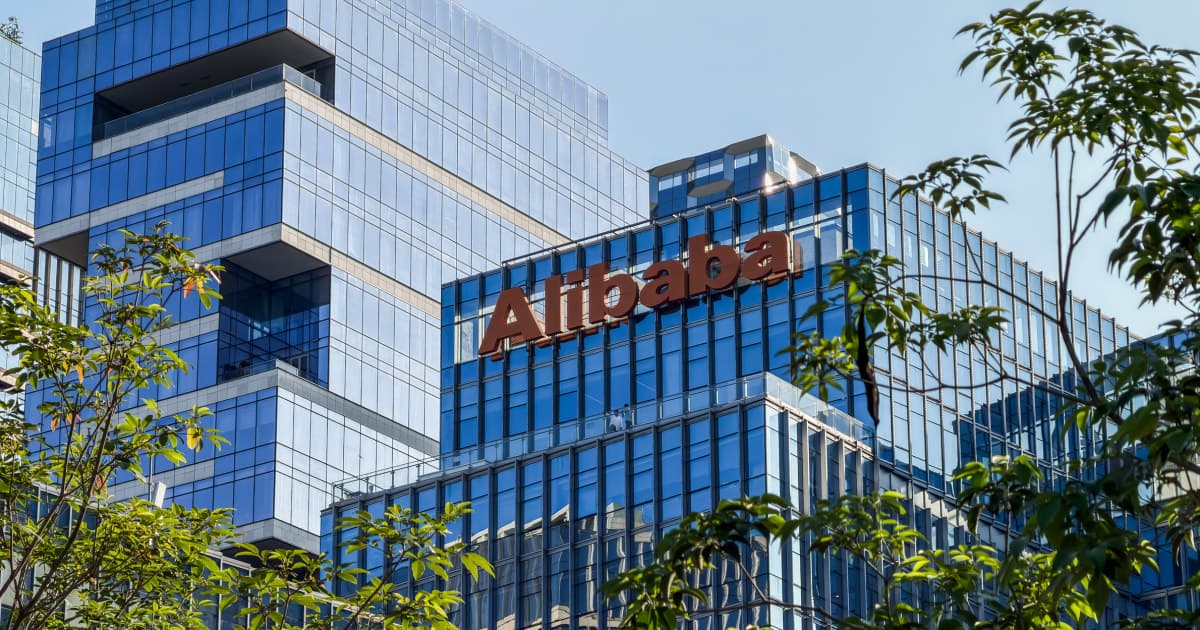
Alibaba announced what it characterized as China's most powerful artificial intelligence chip on Tuesday, unveiling the Zhenwu V900 alongside ambitious plans to scale up its AI models as Chinese and U.S. leaders prepare to meet in Washington.
The timing is notable: Chinese President Xi Jinping arrives Wednesday for a state visit with President Donald Trump, with AI competition, trade, and tariffs expected to dominate discussions. The announcement came during Alibaba's annual conference in Hangzhou, where CEO Eddie Wu detailed the company's roadmap for competing with U.S. AI leaders.
New chip delivers triple the performance
The Zhenwu V900 chip delivers three times the performance of Alibaba's previous-generation M890 chip, according to Wu. These chips power both the training of frontier AI models and inference—the calculations trained models use to generate responses. Alibaba deploys its Zhenwu chips in data centers serving both internal operations and cloud computing clients.
Beyond hardware, Alibaba outlined plans to train a new AI model at a scale of five to 10 trillion parameters, a measure of an AI system's learning capacity. The move would bring Alibaba closer to the most advanced U.S. models. Its current flagship Qwen3.8-Max model operates at 2.4 trillion parameters, while Chinese competitor Moonshot's Kimi K3, released in July, claims 2.8 trillion parameters.
Alibaba also announced plans to expand its data center infrastructure to over 20 gigawatts of computing capacity by 2032, citing exponentially rising demand for AI computing. For context, SpaceX reported approximately 1.4 gigawatts of AI computing capacity mid-2024 and aims to exceed 10 gigawatts by 2027.
Why it matters
China's accelerating AI capabilities are reshaping the geopolitical technology landscape just as Washington and Beijing prepare for high-stakes negotiations. Despite U.S.-led export restrictions blocking access to cutting-edge AI chips and chipmaking equipment, Chinese companies are demonstrating they can advance through domestic innovation and alternative approaches. Analysts suggest these gains give Beijing increased leverage in upcoming talks, while affordable open Chinese models continue gaining global market share—including in the United States. The developments underscore how export controls alone may not maintain technological distance between the two powers.
Working around U.S. restrictions
Chinese technology giant Huawei also unveiled new chip technologies last week as it seeks to challenge global leaders like Nvidia. While frontier AI model training in China still often relies on Nvidia chips, Chinese-designed alternatives are gaining ground as Nvidia faces restrictions on selling its most powerful AI chips to China.
Neil Shah, vice president at Hong Kong-based Counterpoint Research, noted that "using extra computing power to make up for chip limits helps China stay strong locally." However, Counterpoint senior analyst Parv Sharma cautioned that narrowing the AI and chipmaking gap depends on factors beyond chip design, including China's ability to advance the foundries that manufacture chips.
Wu acknowledged current constraints, noting that global shortages across the AI data center supply chain "are currently limiting the speed at which we can scale our compute infrastructure." He predicted that machine intelligence will eventually produce over 1,000 times more "thinking" than all of humanity combined, up from less than 3 percent currently.
The announcements come as U.S. AI leaders, including Anthropic CEO Dario Amodei, warn that China's AI development poses threats to the United States and call for slowing the technology's advancement.
These details were first reported by NBC News and The Associated Press.
This is an original analysis by the Omega editorial team. Source reporting: AI Watch.
Want systems like this working for your business?
Book a Call