Air Force, Space Force Test AI Battle Management in Joint Wargame
The May experiment in Las Vegas integrated multiple AI tools across services, cutting decision time from 50 minutes to under 10.
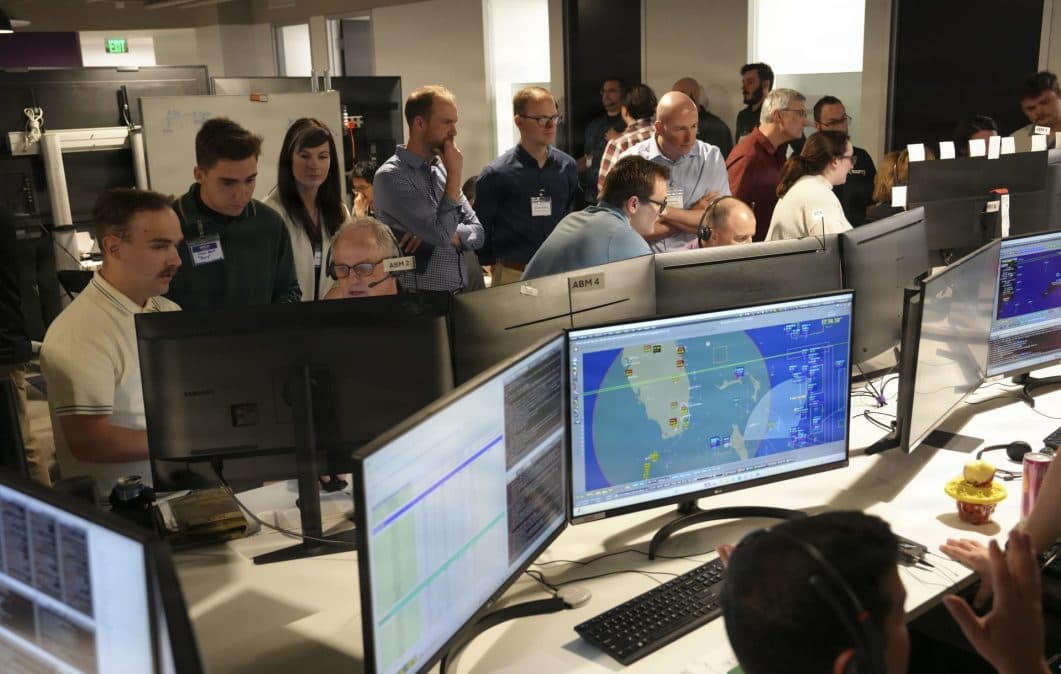
Air Force and Space Force unite for AI command experiment
The Air Force and Space Force conducted their first joint artificial intelligence battle management experiment in May, testing software tools designed to accelerate military decision-making in multi-domain operations.
The Multi-Decision Advantage Sprint for Human-Machine Teaming (MASH) brought together six industry teams and military software engineers in Las Vegas for two weeks of simulated combat scenarios. The experiment marked a significant step forward from previous Air Force AI trials by integrating multiple AI capabilities into a unified workflow and including Space Force guardians as active participants alongside airmen.
According to Col. John Ohlund, director of the Air Force's Advanced Battle Management System Cross-Functional Team, early results showed substantial improvements in decision speed. One air battle manager reported completing five to six tasks in the time it previously took to finish one — reducing the process from 50 minutes to roughly 10 minutes per tasking.
How the AI tools performed
The experiment tested AI microservices designed to automate three core functions: analyzing incoming data to identify and categorize entities, matching available military capabilities to situations, and generating optimized courses of action. Each simulation combined three separate microservices built by different industry teams for specific subfunctions.
A key technical breakthrough involved an orchestration tool developed by the Air Force Research Laboratory that allowed distinct software applications from different vendors to exchange data seamlessly without disrupting operations. Ohlund described this as proof that a modular, plug-and-play approach enables continuous competition and allows the military to select best-in-class software as it matures.
Battle managers used the AI tools to automate time-consuming tasks and consolidate large volumes of incoming data, freeing them to focus on strategic decisions rather than data processing.
Why it matters
This experiment represents a concrete step toward the Pentagon's Combined Joint All-Domain Command and Control vision, demonstrating that AI can help military commanders make faster decisions across air, space, cyber, and other domains. The successful integration of Space Force personnel also validates that different services face similar command-and-control challenges despite operating in vastly different environments. As near-peer adversaries develop their own AI capabilities, the ability to process information and generate options faster than opponents could prove decisive in future conflicts.
Building toward multi-service operations
The MASH experiment evolved from the Air Force's Decision Advantage Sprint for Human-Machine Teaming (DASH) program, which the 805th Combat Training Squadron began in 2024. While DASH focused on individual subfunctions of command and control, MASH evaluated how multiple subfunctions work together in realistic scenarios.
Space Force guardians brought domain expertise while demonstrating that air and space operations share fundamental requirements for rapid, synchronized decision-making. Their participation helped ensure the software was designed from the start to support integrated, multi-domain forces.
Ohlund noted that future experiments will challenge AI tools to solve multi-domain problems because that reflects operational reality. An Air Force battle manager may lack authority to execute space or cyber effects but must prepare information and options for commanders who do have that authority.
The Air Force plans to continue these wargames through the rest of the year and hopes to invite members from all military services to participate in future experiments. The goal is to create an operational blueprint for modern command and control that spans all domains.
These details were first reported by DefenseScoop.
This is an original analysis by the Omega editorial team. Source reporting: AI Watch.
Want systems like this working for your business?
Book a Call
