AI Tools Boost Individual Creativity But Harm Group Innovation
New research shows generative AI creates a hidden trade-off between personal productivity and collective creative diversity.
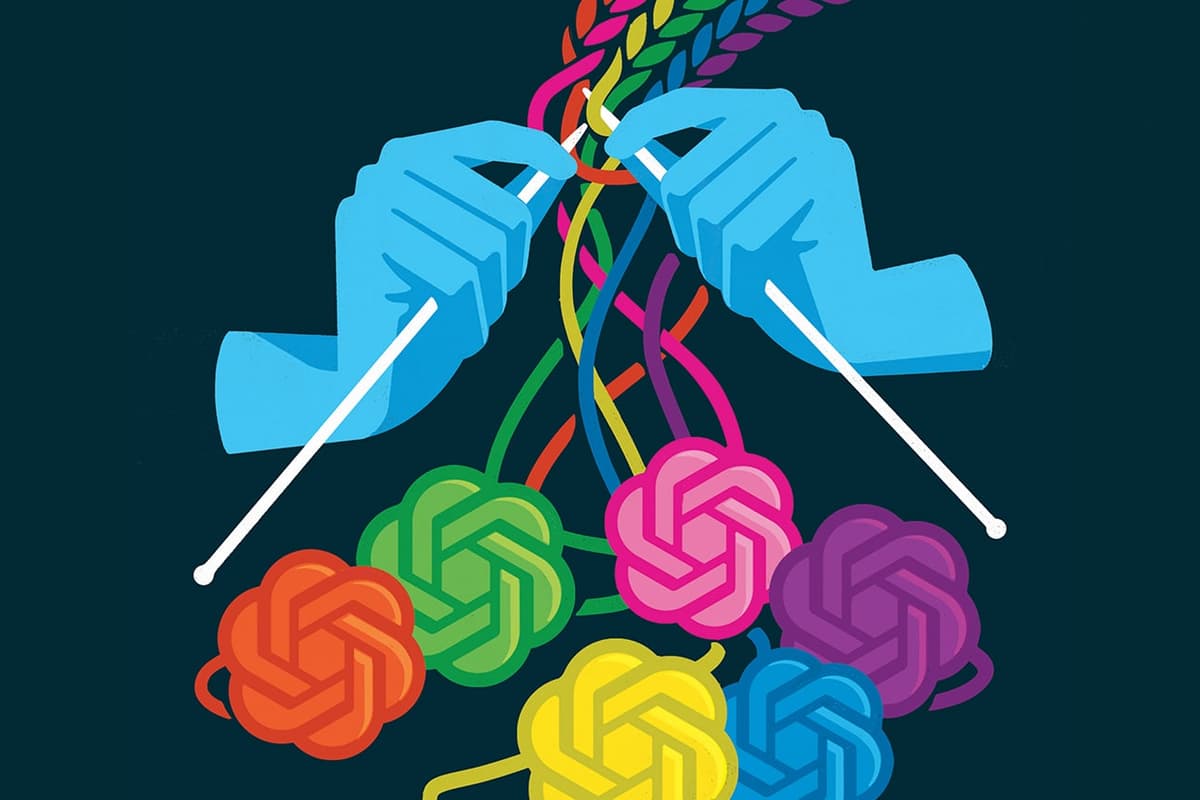
The Creativity Paradox in AI-Assisted Work
Generative AI tools promise to supercharge human creativity, offering instant brainstorming partners and rapid prototyping capabilities. But new research reveals a troubling trade-off: while these tools enhance individual creative output, they simultaneously diminish creativity at the collective level.
This finding carries significant weight for business leaders. With 83% of senior executives ranking innovation among their top three priorities, understanding how AI shapes creative processes has become a strategic imperative, not just a technological curiosity.
Why it matters
Organizations depend on diverse thinking to generate breakthrough innovations and avoid strategic blind spots. If AI tools inadvertently homogenize creative output across teams, companies may find themselves producing more ideas that are individually competent but collectively redundant—undermining the very innovation goals they're trying to accelerate.
How AI Changes Creative Dynamics
Researchers define creativity as the intersection of two qualities: novelty (how original or rare an idea is) and usefulness (how valuable or effective it proves in practice). An idea must satisfy both criteria—something novel but useless, or useful but unoriginal, doesn't qualify as truly creative.
For groups, a third dimension becomes critical: diversity. A collection of ideas may include some that seem novel to certain people but obvious to others, or concepts that are original yet impractical. The breadth and variety of perspectives matters as much as any single contribution.
According to findings from four recent studies, AI tools appear to narrow this diversity. While individuals using generative AI can produce more creative outputs—likely because the technology helps them explore possibilities faster and overcome initial blocks—the aggregate result shows less variation across the group's total output.
The mechanism behind this pattern likely involves anchoring effects. When AI generates suggestions that appear "good enough," users may stop exploring alternative directions prematurely. The technology can also constrain the search space too early in the creative process, funneling multiple people toward similar solutions based on common training data and algorithmic patterns.
The Strategic Challenge for Leaders
This research, first reported by MIT Sloan Management Review, suggests organizations face a nuanced challenge in deploying AI creativity tools. The technology clearly offers value for individual productivity and ideation. However, leaders must actively counteract its homogenizing effects on team-level innovation.
Companies may need to implement deliberate practices that preserve creative diversity—such as encouraging teams to generate initial ideas independently before consulting AI tools, or using multiple AI systems with different training approaches to broaden the solution space rather than narrow it.
The findings underscore that maximizing innovation requires more than simply distributing powerful tools. It demands understanding how those tools reshape collaborative dynamics and taking intentional steps to preserve the collective creativity that drives meaningful breakthroughs.
These insights were originally published in MIT Sloan Management Review's AI Watch.
This is an original analysis by the Omega editorial team. Source reporting: AI Watch.
Want systems like this working for your business?
Book a Call