AI Data Centers Face Trade-Offs Between Water Use and Emissions
New research reveals hardware choices and grid integration can cut carbon by 10–20%, but water-saving measures may increase emissions.
The Environmental Cost of AI Infrastructure
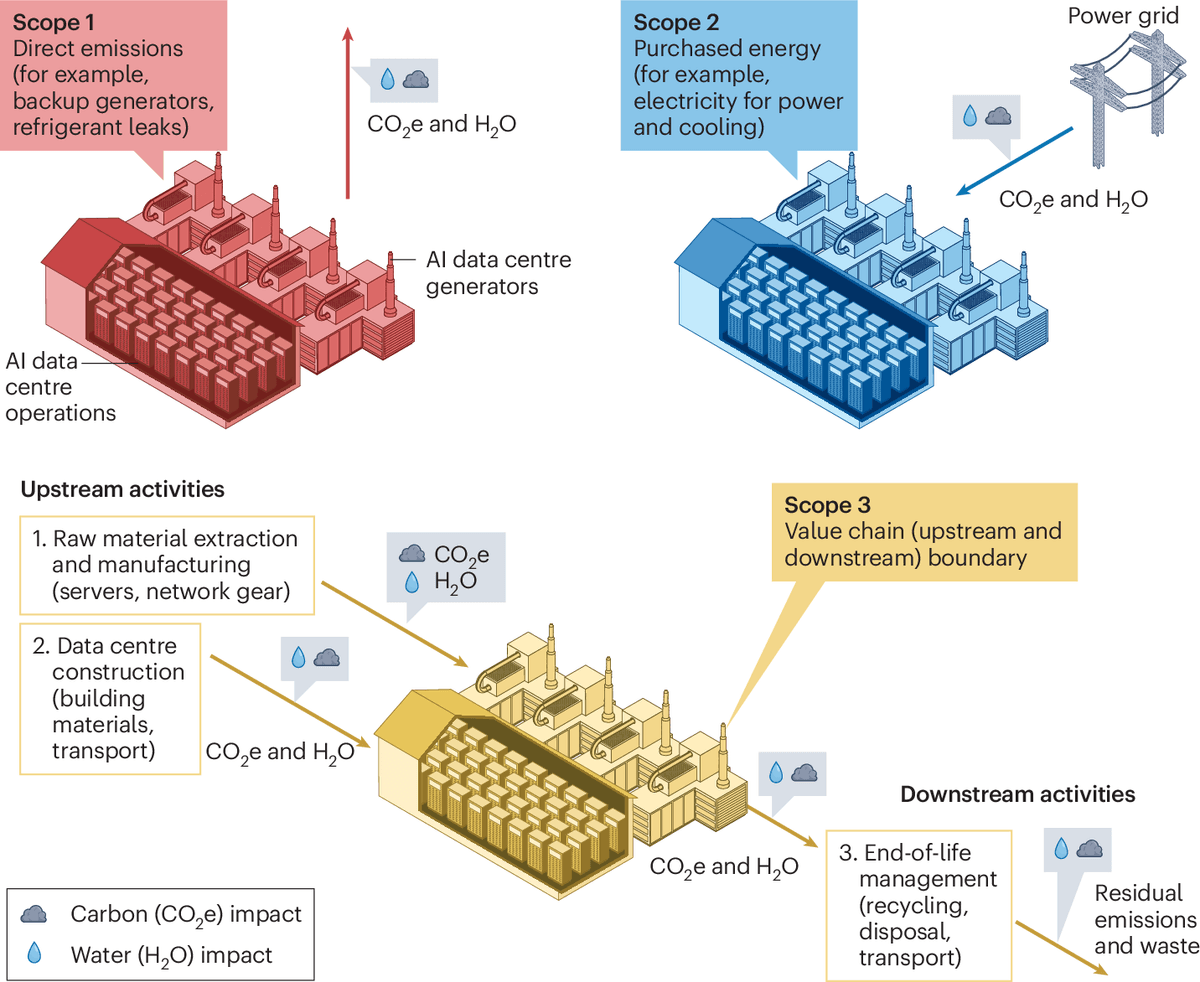
Data centers powering artificial intelligence are on track to double or triple their footprint between 2023 and 2028, adding roughly 650 terawatt-hours of annual power demand globally. This explosive growth has intensified scrutiny of AI's environmental toll—not just electricity consumption, but also greenhouse gas emissions and freshwater stress.
A comprehensive review published in Nature examines both the scale of these challenges and emerging strategies to address them. The findings reveal that more than half of emissions from large AI data centers stem not from electricity use, but from embodied emissions—the carbon cost of manufacturing chips and constructing facilities.
Hardware and Grid Strategies Show Promise
Design decisions at the hardware level can meaningfully reduce environmental impact. Using recycled components or older, lower-performance hardware for AI inference tasks—which are less computationally demanding than training—can cut overall data center emissions by 10 to 20 percent by lowering embodied carbon.
Grid integration offers another lever. Training workloads scheduled during periods when renewable energy is abundant can reduce the carbon intensity of model development by approximately 10 percent in electricity grids with high renewable penetration. This approach aligns AI computation with favorable grid conditions rather than running workloads on-demand regardless of energy source.
The research also highlights that AI inference, while less energy-intensive per operation than training, accounts for 40 to 60 percent of a model's lifetime carbon emissions when aggregated across all uses. This underscores the importance of optimizing deployment infrastructure, not just training efficiency.
The Water-Carbon Dilemma
Data centers rely on water for cooling, and efforts to reduce water consumption can backfire environmentally. The review notes that methods aimed at cutting water use sometimes increase carbon emissions, creating a negative coupling between the two environmental pressures.
This trade-off complicates decision-making for data center operators, particularly in regions facing both water scarcity and pressure to decarbonize. The authors emphasize that effective strategies must balance energy consumption, water use, carbon output, and broader societal needs rather than optimizing for a single metric.
Why it matters
As AI becomes embedded in more products and services, the infrastructure supporting it will claim a growing share of global energy and water resources. Understanding the trade-offs between different mitigation approaches—and recognizing that embodied emissions often exceed operational ones—is essential for technology leaders making infrastructure decisions. The findings suggest that environmental responsibility in AI requires coordinated attention to hardware lifecycles, grid integration, and regional resource constraints, not just efficiency improvements in model training.
These findings were first reported in a review article published in Nature.
This is an original analysis by the Omega editorial team. Source reporting: AI Watch.
Want systems like this working for your business?
Book a Call