AI Now Embedded Throughout Cardiac Imaging Workflows
Many clinicians don't realize they're already using artificial intelligence at nearly every stage of cardiovascular scans, from acquisition to analysis.
AI operates invisibly in modern cardiac imaging
Artificial intelligence has become so deeply embedded in cardiovascular imaging that many clinicians no longer recognize when they're using it. The technology now operates throughout the imaging pipeline—from initial scan acquisition through image reconstruction and quantitative analysis—often working invisibly within routine clinical workflows.
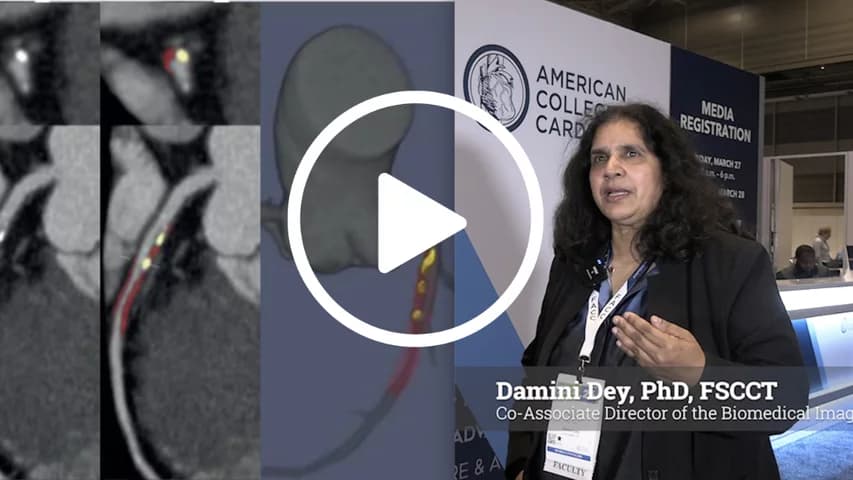
Damini Dey, PhD, professor of biomedical sciences and director of the quantitative image analysis program at Cedars-Sinai, recently discussed this trend at the American College of Cardiology's ACC.26 conference. Audience polling during an AI session revealed that many attendees were unaware of how extensively AI had been integrated into their daily practice.
"People don't know when they're using AI because it's been used behind the surface for so many imaging applications that it's very much integrated and seamless," Dey explained in an interview.
Why it matters
The invisible integration of AI into cardiac imaging represents a fundamental shift in how cardiovascular diagnostics operate. Unlike standalone AI tools that require conscious adoption, embedded AI improves image quality, reduces radiation exposure, and automates time-consuming measurements without disrupting existing workflows. This seamless deployment accelerates clinical benefits while reducing the learning curve that typically accompanies new technology adoption.
AI improves scans before physicians see them
Modern CT, MRI, and nuclear imaging systems increasingly rely on AI to optimize scanning protocols, assess patients during acquisition, reduce image noise, and reconstruct high-quality images from lower radiation doses. These improvements happen automatically, often without operators realizing algorithms are making real-time adjustments.
"You don't know when the scanner suggests the protocol that it's using AI, but it is," Dey noted.
After acquisition, AI performs automated segmentation and quantitative measurements that would otherwise require extensive manual work by technologists and radiologists. However, Dey emphasized that human validation remains essential: "The human has to be in the loop and validate the measurements."
Plaque analysis demonstrates clinical impact
Automated coronary plaque analysis exemplifies AI's clinical value. Dey helped develop AutoPlaque, an FDA-cleared software now used at Cedars-Sinai to provide detailed quantitative assessments of coronary plaque burden and characteristics from coronary CT angiography.
The software enables physicians to evaluate plaque composition and distribution far more comprehensively than visual interpretation alone. According to Dey, many of these analyses would simply not occur without AI because manual completion is impractical.
"For plaque analysis, it's definitely not something that could be done without AI," she said. "For automation, AI is needed, otherwise it could not be performed."
Clinicians at Cedars-Sinai have adopted the technology because it helps personalize treatment decisions, particularly for preventive cardiology patients.
Reimbursement and future trajectory
Recent reimbursement pathways for coronary plaque analysis and CT-derived fractional flow reserve are expected to accelerate adoption. Dey noted that reimbursement matters because deploying AI requires significant time and financial investment.
Looking ahead, Dey does not foresee autonomous AI replacing physicians. While AI can automate measurements and improve efficiency, clinicians remain responsible for validating results and making final diagnostic and treatment decisions.
Dey expects continued integration across cardiovascular imaging as clinicians grow more comfortable with the technology, though she acknowledged predicting AI's five-year trajectory remains difficult. As AI moves from standalone software into core imaging system functionality, its greatest success may be that users eventually stop noticing it altogether.
These details were first reported by Cardiovascular Business.
This is an original analysis by the Omega editorial team. Source reporting: AI Watch.
Want systems like this working for your business?
Book a Call