China's AI Weather Models Challenge Global Forecasting Leaders
Systems from Shanghai AI Lab, Huawei, and Fudan University are matching traditional supercomputer predictions while delivering results in a fraction of the time.
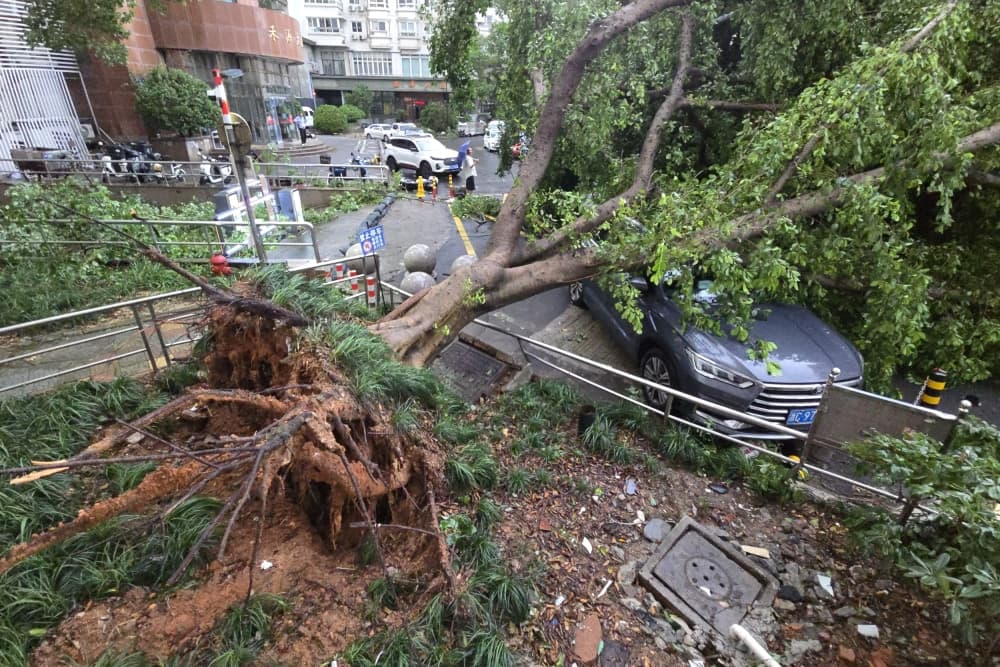
China has positioned itself as a major force in AI-powered weather forecasting, deploying systems that can generate predictions as accurate as traditional supercomputer models while operating at dramatically higher speeds.
Three Chinese-developed platforms—Fengwu from Shanghai AI Laboratory, Pangu from Huawei, and Fuxi from Fudan University—are now being tested alongside conventional forecasting systems during typhoon season in East Asia. These AI models represent a fundamental shift in meteorological methodology, learning patterns from historical weather data rather than simulating atmospheric physics through numerical equations.
Real-world performance during Typhoon Dolphin
The practical capabilities of these systems were demonstrated during Typhoon Dolphin's recent approach to mainland China. Five days before landfall, Fengwu predicted the storm's arrival time and location to within 30 minutes and 30 kilometers, according to Sun Zhi, CTO of Techwind, the company handling Fengwu's commercial applications.
Fengwu has drawn particular attention in the research community after developers reported it outperformed Google's GraphCast—one of the best-known AI forecasting systems globally—across approximately 80 percent of evaluated weather variables. The Chinese system also extended skillful global medium-range forecasts beyond 10 days.
Why it matters
Weather forecasting has become a new competitive arena where technological capability translates directly into public safety outcomes. Even marginal improvements in typhoon track predictions enable authorities to organize evacuations more effectively, prepare for flooding, and minimize transport disruptions. China's rapid advancement in this field demonstrates how AI development is increasingly tied to critical infrastructure applications rather than consumer products alone.
Current limitations and hybrid approaches
Despite their speed advantages and lower computing costs, AI weather models still face significant constraints. Sun acknowledged that while these systems excel at predicting storm paths, they lag behind conventional forecasts in determining storm intensity. Long-range climate predictions also remain untested territory.
"If we predict a climate change event 18 months in advance, people won't believe it," Sun said. "They need to know it's reliable. We need to do years of scientific research before people trust us when we say there will be an El Nino event."
For the foreseeable future, meteorological agencies are likely to run AI and traditional numerical models in parallel, using each system's strengths to compensate for the other's weaknesses. The global landscape includes not only Chinese systems but also Google's GraphCast and GenCast, Nvidia-backed FourCastNet, and the European Centre for Medium-Range Weather Forecasts' AIFS.
The details of China's AI weather forecasting capabilities were first reported by NBC News.
This is an original analysis by the Omega editorial team. Source reporting: AI Watch.
Want systems like this working for your business?
Book a Call