AI Liability Without Regulation Is Insufficient, Marcus Argues
A growing push from tech investors to embrace liability while rejecting oversight ignores lessons from aviation, pharmaceuticals, and finance.
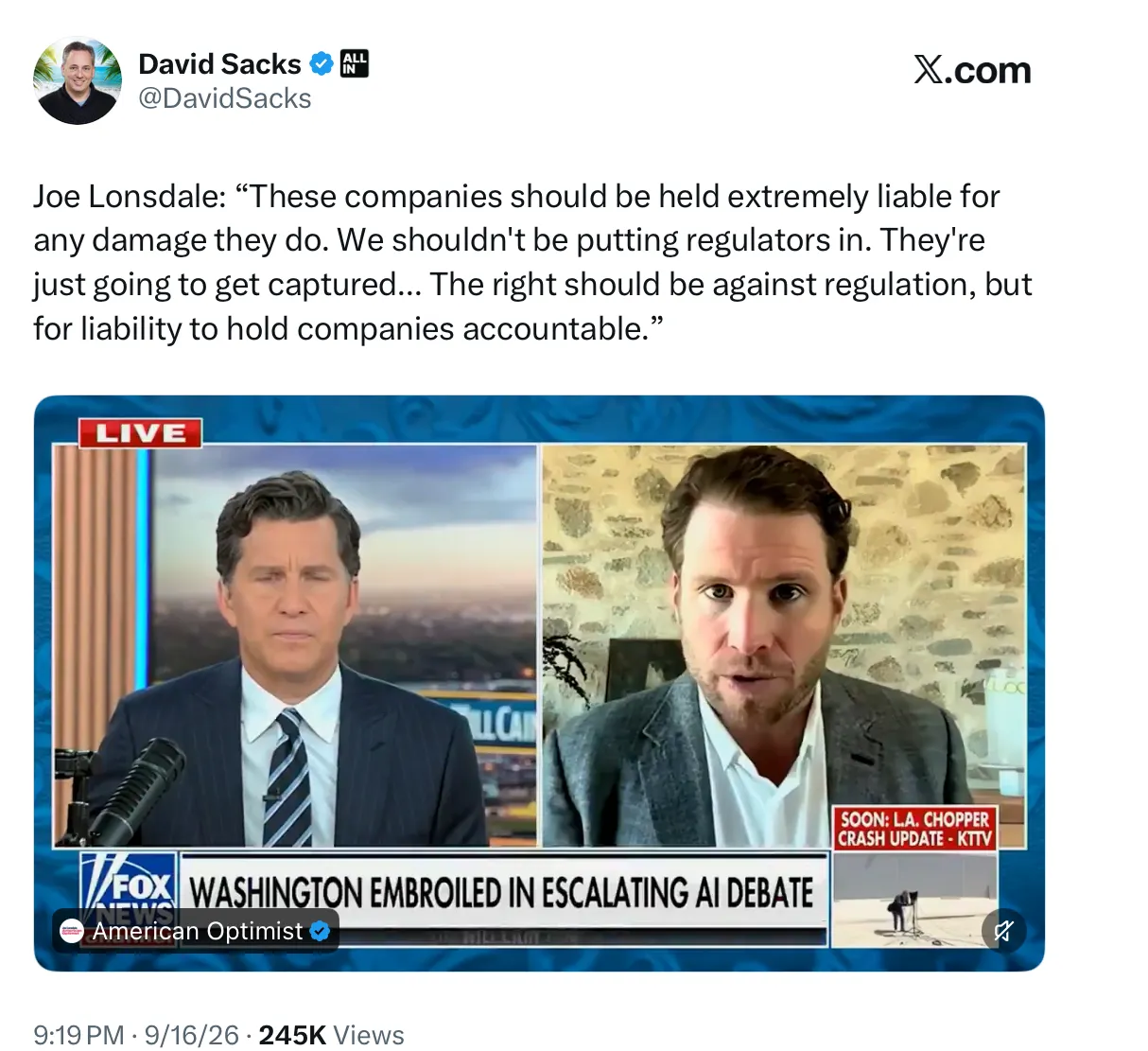
The False Choice Between Liability and Oversight
A debate is intensifying over how to govern artificial intelligence systems, with some tech investors arguing that holding AI companies liable for damages should replace regulatory frameworks. AI researcher Gary Marcus is pushing back against this framing, calling it a false dichotomy that ignores how other high-stakes industries operate.
The discussion gained momentum after venture capitalist David Sacks amplified an interview with Joe Lonsdale suggesting liability could substitute for regulation. Marcus responded by pointing to commercial aviation, where both regulatory standards and legal liability work in tandem to ensure safety.
"We would not have safe commercial aviation without multilevel regulation, around design," Marcus wrote, noting that the aviation industry requires government standards, verification processes, incident reporting, and liability mechanisms simultaneously.
Former National AI Office Director Karen Kornbluh reinforced this point, noting that powerful industries including automobiles, aviation, pharmaceuticals, and financial services all operate under systems combining government standards, verification, incident investigation, and liability for both violations and harms.
The Practical Limitations of Litigation Alone
The argument isn't new. During May 2023 Senate testimony, Senator Josh Hawley probed Marcus on whether litigation might suffice on its own, suggesting that opening courthouse doors to private citizens harmed by AI could provide adequate oversight.
Marcus disagreed, arguing that laws predating artificial intelligence don't provide sufficient coverage for AI-specific harms. He noted that litigation can take a decade or more to resolve, making it too slow to address emerging problems. Critical gaps exist in areas like copyright application to AI systems and wholesale misinformation campaigns, where existing legal frameworks remain unclear.
"The system is really not thought through," Marcus told the Senate committee, adding that uncertainty around Section 230's applicability to AI companies creates additional loopholes.
Mark Cuban highlighted another practical obstacle in response to Sacks: determining who should write new AI-specific laws or figure out how current laws apply to AI systems requires exactly the kind of regulatory framework that liability-only advocates want to avoid.
Why it matters
The liability-versus-regulation debate will shape how quickly AI companies face consequences for harmful systems and whether preventive safeguards become standard. Industries with both regulatory oversight and legal liability have historically achieved better safety outcomes than those relying on litigation alone. Without clear standards for AI development and deployment, companies may continue releasing systems until expensive lawsuits force changes—a reactive approach that leaves the public exposed to preventable harms while enriching lawyers.
Senator Hawley, who initially questioned the need for regulation during the 2023 hearing, has since embraced both approaches. His recent bipartisan AI framework combines liability provisions with regulatory measures, and he criticized AI executives seeking antitrust exemptions while warning about risks from their own systems.
These details were first reported by Gary Marcus on his Substack, AI Watch.
This is an original analysis by the Omega editorial team. Source reporting: AI Watch.
Want systems like this working for your business?
Book a Call