AI Job Applications Create Hiring Crisis for Recruiters
Automated tools flooding companies with thousands of résumés are forcing recruiters to add friction back into the process.
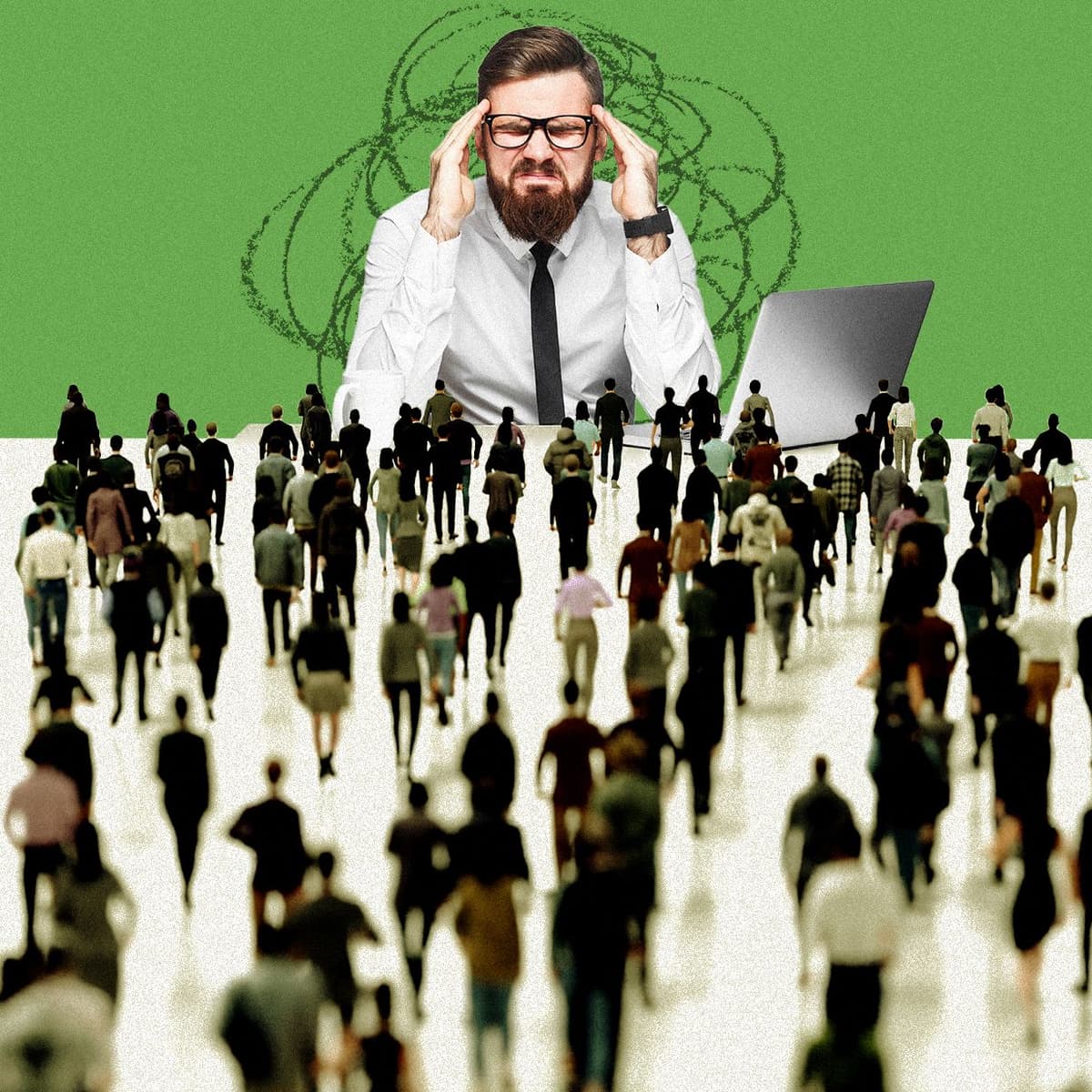
Recruiters are drowning in applications. What was once a manageable stream of 50 to 100 résumés per job posting has exploded into thousands of submissions within 24 hours, many generated or enhanced by artificial intelligence.
Andrew Stockwell, formerly head of people at software company Vendr, watched this transformation unfold over the past year. Where he once spent time identifying and engaging with quality candidates, he found himself paying skilled recruiters simply to sort through an avalanche of applications—many fake, many AI-generated, and most difficult to distinguish from one another.
The friction-free application paradox
For years, companies worked to remove barriers from the hiring process. LinkedIn's Easy Apply feature, one-click applications, and simplified job boards were designed to maximize the candidate pool. The logic seemed sound: more applicants should mean better odds of finding the right hire.
That strategy backfired spectacularly when AI entered the equation. Tools like ChatGPT, which became publicly available in late 2022, enabled job seekers to generate tailored résumés and cover letters instantly. Services such as JobAssist and Apply4Me now promise to submit applications to dozens of companies with minimal human involvement.
The numbers tell the story. LinkedIn reports that submissions per applicant have jumped 46 percent compared to February 2020. Since ChatGPT's launch, applications are up 22 percent. Meanwhile, job openings have contracted from a peak of 12.3 million in March 2022 to roughly 7 million today, according to Bureau of Labor Statistics data.
Why it matters
The collision of AI-powered application tools and a tighter job market has broken the traditional hiring funnel. Recruiters can no longer effectively evaluate candidates through résumé screening alone, while qualified applicants struggle to stand out in a sea of automated submissions. This dysfunction is pushing companies toward referral-based hiring, which risks reducing workforce diversity and excluding talented candidates who lack insider connections.
Adding friction back in
Recruiters are now deliberately making applications harder. Some companies are deploying AI interview agents to conduct initial screenings, hoping to separate serious candidates from automated submissions. Others are implementing knockout questions with strict criteria or adding skills assessments earlier in the process.
Ophir Samson, head of voice AI at recruiting platform Greenhouse, says recruiters have reversed course entirely. "A year ago, every recruiter would tell me: We want to make it as easy as possible to apply for jobs," he notes. "What they got was 2,000 applicants in 24 hours for a job. That is a shitty experience for everyone."
LinkedIn itself has responded by adding limits on automated applications and rolling out features that warn seemingly underqualified applicants they may not be a good fit.
The human cost
The dysfunction hits from both sides. Jane Curran, chief transformation officer at real estate firm JLL, describes a market where employers claim they cannot find qualified people while job seekers insist opportunities do not exist.
Stockwell now experiences this firsthand. After leaving Vendr in February, he estimates his online applications lead to phone interviews less than 2 percent of the time. He has shifted to in-person networking, knowing that without a personal connection, his chances of getting noticed are nearly zero.
Former HR executive Tessa White, who now advises job seekers on TikTok, believes the entire system needs rebuilding. "Every time we seem to strive for efficiency, we seem to give up quality," she observes.
These details were first reported by WIRED.
This is an original analysis by the Omega editorial team. Source reporting: WIRED.
Want systems like this working for your business?
Book a Call
