AI Interviews Move Beyond Resume Screening Into Hiring Process
Companies deploy chatbots and avatars to conduct candidate assessments, raising questions about effectiveness and fairness.
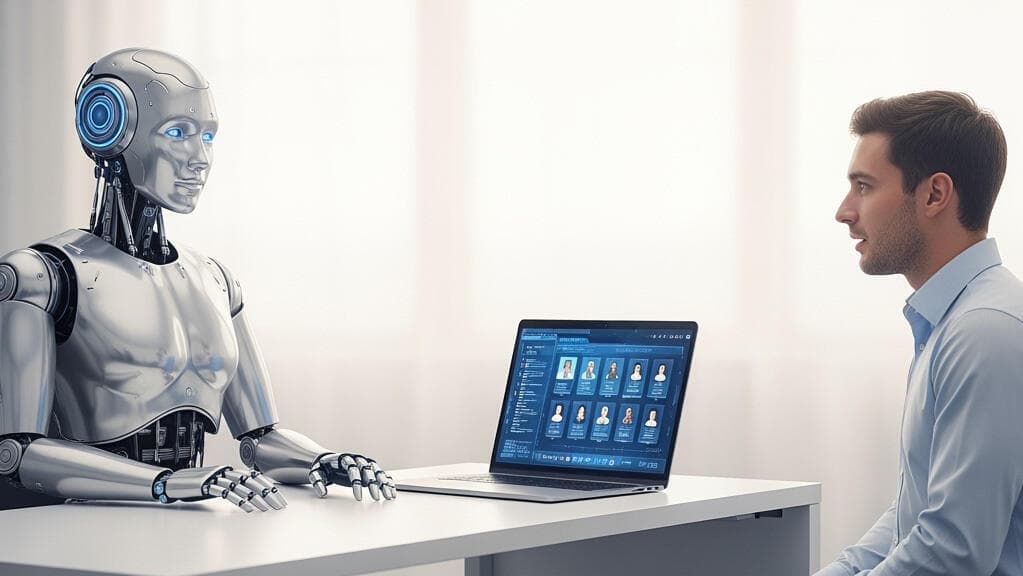
Artificial intelligence is moving beyond resume screening and into the interview stage of hiring, as companies experiment with chatbots, digital avatars, and standardized question systems to evaluate candidates.
The shift reflects growing dissatisfaction with traditional recruitment methods. According to a survey by Robert Half in April, nearly one-third of 2,200 US hiring managers reported making at least one hiring mistake in the previous two years, primarily due to inaccurate assessments of skills or cultural fit.
The case for AI-led interviews
Proponents argue that AI interviews can address weaknesses in human judgment. Matthew Bidwell, a professor of management at the Wharton School, noted that recruiters often rely on intuition and personal impressions during interviews, but research shows those instincts are poor predictive tools.
Research by Jason Dana of the University of Pennsylvania's Department of Behavioral Sciences found that unstructured interviews place excessive weight on irrelevant details—such as hobbies mentioned in small talk—rather than information that predicts job performance.
LinkedIn has integrated AI-powered interviews into its recruiting tools for small businesses. The system invites promising candidates to short AI-led interviews focused on skills assessment. Harry Srinivasan, LinkedIn's chief product officer, said the approach helps companies identify stronger candidates faster by using standardized, skills-based questions that enable more consistent evaluation than manual review.
Recruitment software company Greenhouse has similarly advocated for structured interviews built around standardized questions. "The more we rely on the structure and the skills we assess, the more effective the interview is at uncovering who is really good at the job," said Greenhouse CEO Daniel Chait.
Euan Cameron, CEO of candidate assessment platform Willo, said AI interviews provide companies with more data than traditional resume-screening systems, allowing them to focus on the most relevant skills.
Concerns and limitations
Despite the potential benefits, AI interviews remain controversial. Chait acknowledged that some candidates decline to participate because they feel uncomfortable being evaluated by a machine rather than a person.
Richard Landers of the University of Minnesota suggested that AI could reduce human bias in hiring, though he envisions hiring moving beyond video interviews entirely. He cited virtual reality as a future tool, where a hospital recruiting emergency room nurses could place candidates in simulated disaster scenarios to evaluate their prioritization and decision-making under pressure.
Advice for candidates
Career counselor Amanda Augustine told the Associated Press that applicants should prepare for AI interviews as seriously as traditional ones by reviewing job descriptions, researching organizations, and understanding employer needs. "The more prepared you are, the easier it is to tailor your answer, even when you're talking to an AI rather than a human," she said.
Experts warn against using AI to generate answers in real time during interviews. "It's pretty clear when you do it, both to the AI interviewer and the human HR manager who will review the recording," said Priya Rathod of recruitment platform Indeed. "Using AI to answer the questions could disqualify someone immediately."
Why it matters
The expansion of AI into interviews represents a fundamental shift in how companies evaluate talent. While standardized AI assessments may improve consistency and reduce some forms of bias, they also introduce new questions about whether machines can accurately predict human job performance—and whether candidates will accept being judged by algorithms rather than people. The technology's effectiveness will likely determine whether AI interviews become standard practice or remain a niche tool.
These details were first reported by Calcalistech.
This is an original analysis by the Omega editorial team. Source reporting: AI Watch.
Want systems like this working for your business?
Book a Call
