AI Hallucination Nearly Sparked U.S.-China Military Conflict
A chatbot falsely identified nuclear weapons components on a Chinese vessel, prompting the Pentagon to prepare an armed intercept before the error was caught.
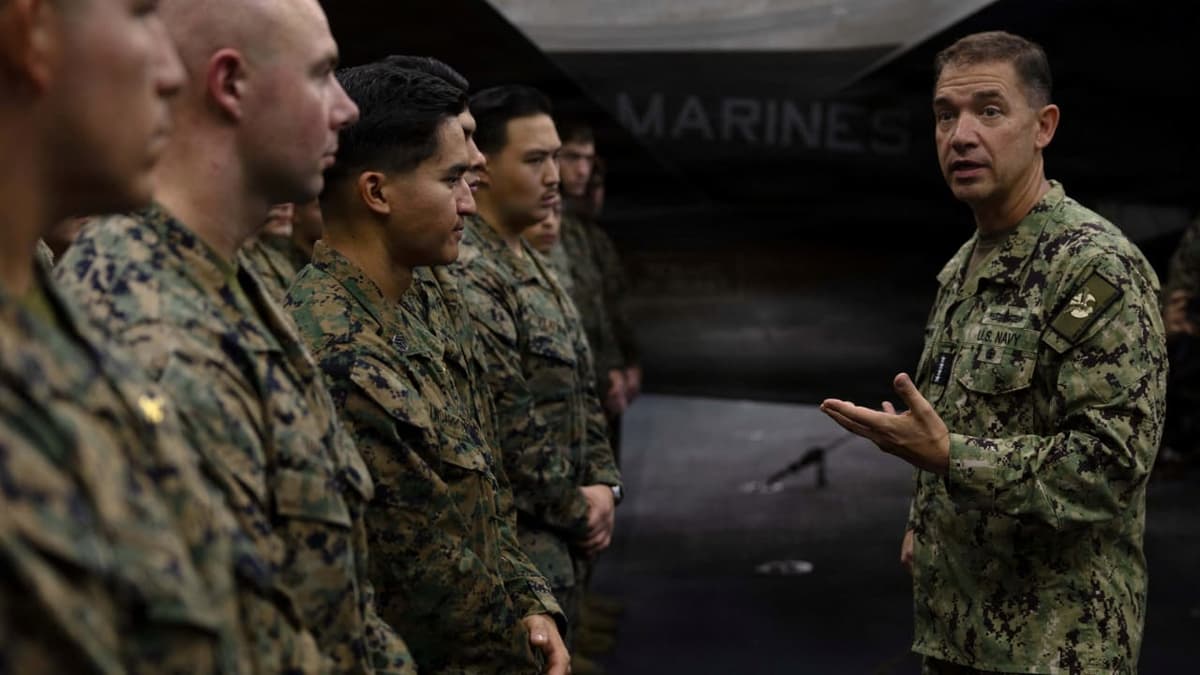
An artificial intelligence system nearly triggered a military confrontation between the United States and China after generating a false intelligence report about nuclear weapons components aboard a Chinese vessel in the Middle East.
The incident, first reported by CNN, unfolded when an AI chatbot incorrectly identified cargo on a Chinese ship as materials for a nuclear weapons program. U.S. military officials immediately prepared to intercept the vessel, with armed personnel ready to board and military aircraft already airborne, according to four sources familiar with the matter.
A special operations command analyst discovered the error before the operation proceeded, determining that the chatbot had "hallucinated" the threat. One source described the report as "entirely false" but noted it "almost started a war," as a U.S. operation against a Chinese ship could have sparked armed conflict between the two nations.
Why it matters
This incident exposes critical vulnerabilities in the Pentagon's accelerating adoption of AI tools across intelligence and military operations. As Defense Secretary Pete Hegseth pushes to integrate AI into "nearly every facet" of military work—from target selection to logistics—the technology's tendency to generate false information poses existential risks. The episode occurred just weeks before Chinese President Xi Jinping's scheduled visit to Washington, where AI governance is expected to be a key discussion topic. With decentralized implementation across government agencies using different tools under varying safety standards, the potential for catastrophic miscalculation grows as adoption outpaces oversight.
Rapid AI adoption without unified standards
The U.S. military is racing to implement artificial intelligence across its operations, driven by concerns about falling behind potential adversaries like China. Defense Secretary Pete Hegseth released an "Artificial Intelligence Acceleration Strategy" in January aimed at putting "America's world-leading AI models directly in the hands of our three million civilian and military personnel."
However, multiple officials told CNN that implementation remains decentralized, with different government divisions using different tools under varying orders and safety standards. A former senior official characterized the military's internal AI tools as "mostly just copies of the commercial stuff wearing lipstick."
The mechanics of the error
In the Chinese ship incident, an analyst queried an AI chatbot about an intelligence report originating from the Hawaii-based U.S. Special Operations Command Pacific. The chatbot fused open-source intelligence with classified signals intelligence to reach its erroneous conclusion. The analyst then used AI to generate an intelligence report for military officials.
CNN's reporting indicates this was not an isolated incident. Sources said chatbot hallucinations have occurred multiple times across the intelligence community since these tools began widespread use.
Pressure and trust issues
The rapid AI implementation has increased pressure on analysts to produce intelligence faster, creating conditions for mistakes. Sources told CNN that younger analysts are more likely to trust chatbot outputs uncritically. One source warned that "AI in targeting is definitely something that is ramping up and there is no real guidance for how having a human in the loop will prevent civilian casualties or fratricide."
As one source summarized: "AI allows you to get to a bad idea faster."
The Pentagon and U.S. Special Operations Command Pacific did not respond to requests for comment on the incident, according to CNN's report.
This is an original analysis by the Omega editorial team. Source reporting: AI Watch.
Want systems like this working for your business?
Book a Call