AI-Generated Misinformation Derails Rural Solar Projects
A Louisiana parish killed a $175 million solar farm after Facebook groups spread false claims about toxic panels and weather disruption.
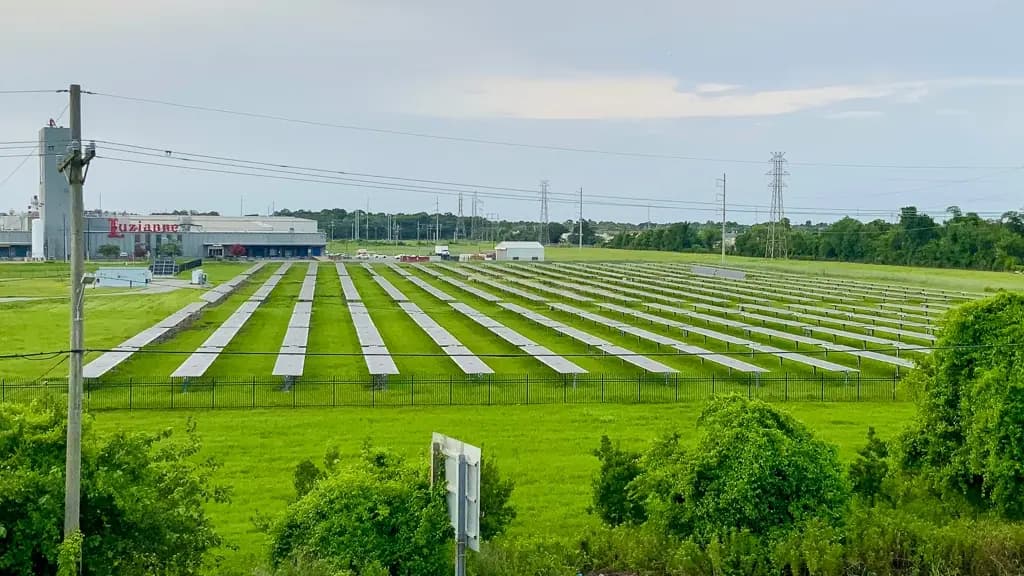
A coordinated misinformation campaign on Facebook successfully blocked a $175 million solar project in Louisiana's Iberia Parish last year, highlighting how AI-generated content and social media networks are emerging as major obstacles to renewable energy deployment across rural America.
The Acadiana Solar project would have generated millions in local tax revenue for the rural parish. Instead, the parish council passed an ordinance requiring solar farms to sit at least half a mile from residential property lines — among the most restrictive setbacks in the state and effectively killing the development.
The misinformation ecosystem
Opposition centered on a 1,200-member Facebook group called "NO Industrial/Utility solar in Iberia Parish," where administrators and members spread claims that solar panels contaminate soil and water, cause fires, and even create tornadoes. Many posts were cross-posted from a larger 11,000-member national group called "Stop Solar-Wind-BESS-Carbon Capture Scams."
Threat intelligence firm Alethea identified a network of accounts producing AI-generated anti-solar content tailored to different states. The same graphics and messages — "Once Louisiana is gone, there's no way to get it back. Solar panels belong on roofs, not on farmland" — appeared across groups for Texas, Iowa, Nebraska, and Tennessee. Many accounts were anonymously run and based in Bangladesh, according to the analysis, designed to "manufacture the appearance of organic, grassroots consensus."
The national group's creator posted requests for volunteers willing to be trained to spread anti-solar messages by "copying and pasting news links" and "writing a short introduction to the news articles," according to The Lens, which first reported these details.
The reality versus the fears
Researchers at the University of Louisiana-Lafayette have systematically debunked the claims circulating in these groups. Terrence Chambers, recently retired director of UL-Lafayette's Center of Efficiency and Sustainable Energy, testified that solar cells are completely sealed from air and water during normal operation, preventing any material from leaching into soil. A December 2024 study from UL-Lafayette researchers concluded there are no harmful emissions or runoff from solar plants.
Modern solar installations are designed to withstand winds of 150 mph or higher, and data from 50,000 operational facilities shows they withstand hurricanes and hail effectively. Louisiana now requires decommissioning plans with set-aside funds before construction begins, addressing concerns about abandoned equipment.
Property value studies in North Carolina and Virginia found solar projects have no negative effect on surrounding home values.
The economic cost
Iberia Parish's decision carries significant financial consequences. Across Louisiana, 19 operating solar projects are generating substantial tax revenue for rural parishes. The Oxbow project in Pointe Coupee Parish is projected to generate $9.7 million in local taxes within three years. Morehouse Parish has collected about $3 million in sales tax from the Oak Ridge Solar Farm, with half going to the school board.
Even with tax exemptions, solar facilities generate at least 40 times more local property tax than farmland, according to UL-Lafayette researchers. The university study predicts solar will bring approximately $500 million in state taxes through 2035.
For Andree McAnally, whose family would have leased land for the Acadiana project, the lost income was personal. After her husband died from COVID in 2021, the lease payments would have helped with college tuition and household expenses. She told the parish council she had initially believed the misinformation herself until researching the facts. "We have three generations right there on the property," she said. "And I would not put myself or my children in harm's way."
Why it matters
This case demonstrates how AI-generated content and coordinated social media campaigns can override expert testimony and economic data in local policy decisions. As solar becomes increasingly cost-competitive and essential for climate goals, the ability of misinformation networks to block projects in rural communities represents a scalable threat to renewable energy deployment nationwide. The question for Louisiana and similar states is whether future projects will locate across state lines instead — taking jobs and tax revenue with them.
These details were originally reported by The Lens with support from a Grist grant.
This is an original analysis by the Omega editorial team. Source reporting: AI Watch.
Want systems like this working for your business?
Book a Call