AI Data Centers Face Power Crisis as Chip Demands Surge
Industry scrambles to redesign facilities and electrical systems before energy constraints throttle the AI boom.
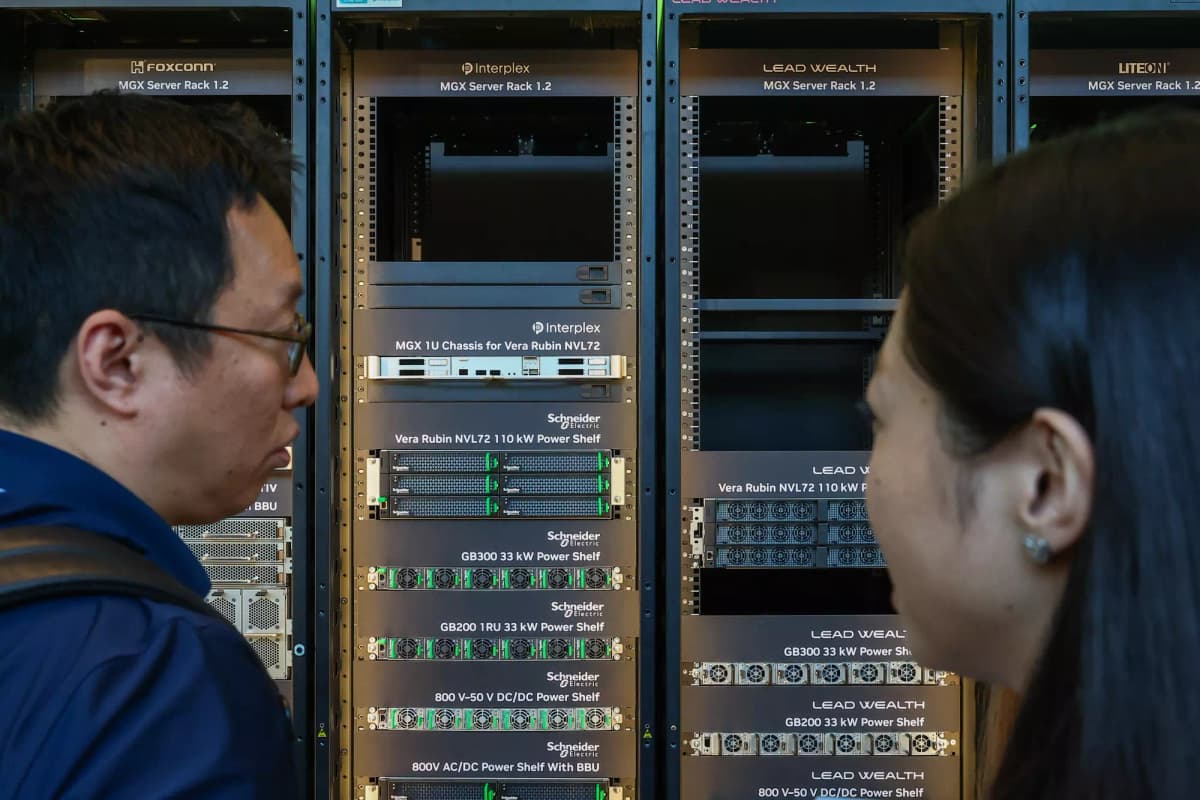
The artificial intelligence industry is confronting a fundamental constraint that could slow its explosive growth: electrical power. As chipmakers release increasingly powerful processors, the data centers that house them are approaching the physical limits of energy generation and distribution.
The scale of the challenge is stark. Tesla and SpaceX CEO Elon Musk warned earlier this year that chip production may soon outpace the industry's ability to power those chips, potentially as early as late 2025.
The exponential power problem
Traditional data centers running standard computing tasks require 25 to 40 kilowatts per server rack—enough to power roughly 20 air conditioners. AI data centers, by contrast, pack densely configured graphics processing units that demand far more energy.
Current AI racks equipped with 72 GPUs draw approximately 150 kilowatts. Nvidia's upcoming Rubin system, set to launch later this year, will require around 300 kilowatts per rack. Industry experts anticipate future configurations approaching 1 megawatt per rack—sufficient to power 750 average American homes.
"Increasingly, the rule of the game now in AI is that the more you can pack performance in a chip, the densities will keep getting higher and higher," said Sachin Jain, chief operating officer at cloud provider CoreWeave.
Compounding the issue, roughly 30% of power flowing into data centers currently goes unused for actual AI processing, according to Nvidia. Much of this energy dissipates through cooling systems and transmission losses across sprawling facilities.
Redesigning from the ground up
The power crunch is forcing wholesale reimagination of data center architecture. Nvidia's 2024 Blackwell chip demonstrated one approach: maintaining the same energy consumption as its predecessor while dramatically increasing processing capacity. However, the chip generated substantially more heat, overwhelming traditional air cooling systems.
This led to adoption of direct-to-chip liquid cooling, which Nvidia and power equipment manufacturer Vertiv estimate can improve energy efficiency by 15%.
More radical changes target the electrical distribution system itself. Data centers currently step down grid power from 34,500 volts to the 12 volts chips require through multiple conversion stages, with energy escaping as heat at each step. Nvidia is testing equipment called "sidecars" that consolidates these conversions.
The industry is also pursuing solid-state transformers—electronic devices that can switch between AC and DC current while handling higher voltages. Power distribution systems account for roughly one-third of total energy losses; switching to 800-volt DC systems could reduce losses to below 1%, according to Gartner analyst Tony Harvey.
Why it matters
Energy constraints represent more than an operational challenge—they threaten to become the primary brake on AI development as trillions of dollars flow into infrastructure buildout. The power demands are already triggering political backlash in some regions and forcing companies like Microsoft to reconsider clean-energy commitments. Without fundamental redesigns of how data centers consume and distribute electricity, the industry risks hitting hard limits on expansion regardless of available capital or computing breakthroughs.
A potential silver lining: DC power systems integrate more readily with renewable energy sources, which typically generate direct current. While the U.S. lacks China's excess renewable capacity, the architectural shift could eventually facilitate cleaner energy adoption.
GE Vernova, which manufactures data center power equipment, reports strong demand from major cloud providers for 800-volt DC systems. "Everybody is asking us to provide solutions for the next orders to come," said Philippe Piron, CEO of GE Vernova's electrification segment.
These details were first reported by Bloomberg writers Forgash and Dottle.
This is an original analysis by the Omega editorial team. Source reporting: AI Watch.
Want systems like this working for your business?
Book a Call