AI Data Centers and Water Use: What the Numbers Really Show
Experts weigh competing claims about whether hyperscale facilities pose a genuine threat to local water supplies or represent overblown concerns.
The debate over data center water consumption
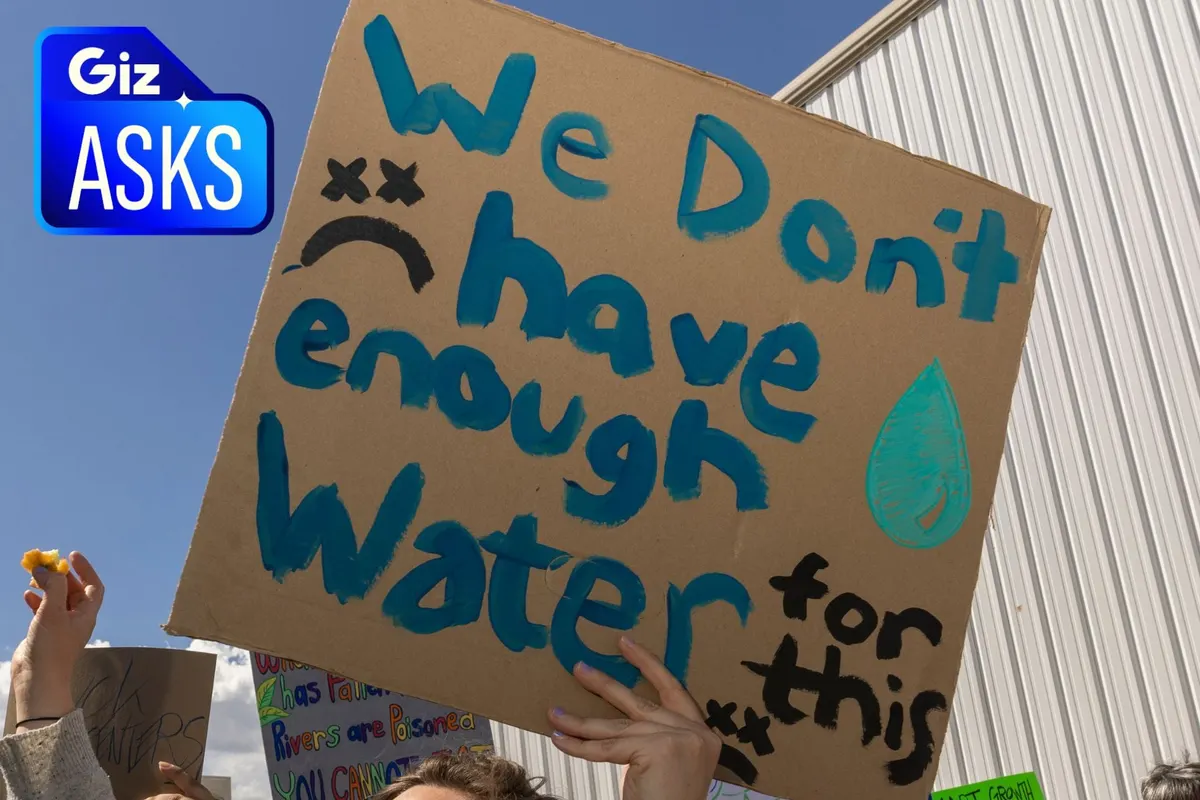
AI data centers have become flashpoints for community opposition across the United States, with nearly 150 protests staged across 42 states last month. Water consumption stands out as a primary concern, particularly as real-world examples emerge: Google's facilities in The Dalles, Oregon consumed nearly 40% of the city's total water in 2025, approximately 550 million gallons. In Fayetteville, Georgia, a Quality Technology Services campus drew 30 million gallons before receiving its first utility bill.
Yet industry voices argue the alarm is excessive, pointing to efficient closed-loop systems and questioning the statistics that drive headlines. The reality, according to experts interviewed by Gizmodo, falls somewhere between crisis and non-issue—heavily dependent on location, technology, and scale.
Why it matters
The distinction between traditional data centers and AI hyperscale facilities fundamentally changes the infrastructure equation. While communities have absorbed thousands of conventional data centers nationwide, the emerging generation of AI facilities can consume 100 times more power and up to 5 million gallons of water daily. These requirements arrive precisely as drought-prone regions face mounting resource constraints, creating conflicts that existing regulatory frameworks weren't designed to address.
The power-water tradeoff
Water-assisted cooling systems present a genuine efficiency advantage, according to Shaolei Ren, a professor of electrical and computer engineering at the University of California, Riverside. During heat waves, evaporative cooling requires substantially less electricity than air-cooled systems, potentially reducing strain on already-stressed power grids.
But annual consumption figures mask critical details. Peak demand matters more than total volume when a facility's maximum draw exceeds local water treatment, storage, or distribution capacity. A data center using reclaimed water in a water-rich region poses different risks than one tapping potable supplies in drought-vulnerable communities.
Scale separates old from new
Traditional data centers—more than 4,000 operate across the United States—demand between 10 and 30 kilowatts and use mixed cooling approaches, notes Fred Bloetscher, associate dean at Florida Atlantic University's Department of Civil, Environmental and Geomatics Engineering. Most communities can accommodate these facilities.
AI hyperscale centers represent a different category entirely. Approximately 84 such facilities are proposed nationwide, each consuming up to 1 megawatt of power. Meta's Hyperion proposal in Los Angeles spans over 2,000 acres. Air cooling proves impractical at this scale, making water consumption nearly unavoidable with current mainstream technology.
The mismatch compounds: AI users concentrate in urban areas, but available land exists in rural regions with less robust water and power infrastructure. This geographic tension explains why communities from Florida to the Pacific Northwest have imposed restrictions or moratoriums.
Emerging cooling technology
Contact cooling systems using dielectric liquids could dramatically reduce both water consumption and energy costs, according to Arthur Harrington, adjunct professor of law at Marquette University. These chassis-based immersion systems submerge electronics in heat-absorbing fluids that don't conduct electricity, eliminating the need for chillers, air handlers, and water treatment systems.
Systems like LiquidCool Solutions require no cooling water when ambient temperatures stay below 113 degrees Fahrenheit, feasible in most climates. The technology works with existing server racks, making retrofits economically viable. If widely adopted, such systems could address water concerns while cutting energy costs—though deployment remains limited compared to conventional cooling infrastructure.
The path forward
Effective solutions require evaluating full local context rather than blanket policies, Ren emphasizes. Options include using reclaimed water, installing on-site storage, switching cooling modes based on conditions, and coordinating with both water utilities and grid operators. What's missing, Bloetscher notes, is comprehensive planning that integrates these massive facilities with regional resources and community needs.
These details were first reported by Gizmodo.
This is an original analysis by the Omega editorial team. Source reporting: AI Watch.
Want systems like this working for your business?
Book a Call