Automation
AI Data Center Boom to Drive 150M Sq Ft of Logistics Demand
New research shows infrastructure buildout will reshape industrial real estate through 2030, creating jobs while intensifying competition for land and power.
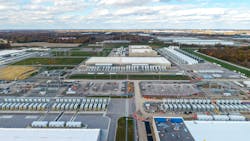
Key takeaways
- Prologis forecasts more than 150 million square feet of logistics leasing tied to AI infrastructure through 2030, with companies serving data center buildout already representing 15% of new leasing in top U.S. markets.
- The demand could support up to 150,000 jobs, with roughly half expected to be permanent positions for ongoing maintenance and operations rather than temporary construction roles.
- Data centers compete directly with warehouses for land, power, and labor—in Georgia, power-ready data center land costs approximately 3.5 times comparable industrial land.
- Every gigawatt of data center development removes roughly 10 million square feet of potential logistics capacity due to lower floor-area ratios and extensive infrastructure requirements.
- Regulatory challenges, supply chain constraints, and resource competition could extend development timelines while supporting the value of existing logistics real estate.
The artificial intelligence infrastructure boom is creating massive ripple effects across the logistics sector, with new research projecting more than 150 million square feet of warehouse and distribution space demand through the end of the decade.
According to Prologis Research, companies supporting data center construction and operations already account for nearly 15% of new leasing activity in the top 30 U.S. markets so far in 2026. The firm expects 40 to 50 million square feet of related net absorption this year alone.
Why it matters
This represents a fundamental shift in industrial real estate dynamics. The AI buildout creates sustained logistics demand while simultaneously making it harder and more expensive to develop new warehouse space—a dual pressure that could reshape supply chains and real estate valuations for years to come.
An Integrated Supply Chain Opportunity
The logistics demand stems from an entire ecosystem of manufacturers, suppliers, contractors, third-party logistics providers, and service companies that build and maintain data centers. Based on historical employment patterns in non-ecommerce warehousing, this growth could support up to 150,000 jobs.
The demand profile differs from typical logistics cycles. Multi-year construction pipelines create visible, sustained requirements spanning both initial buildout phases and long-term operational support. While nearly all the space will be needed for five years or longer, Prologis estimates roughly half the demand—and associated jobs—will be permanent, driven by ongoing maintenance, equipment replacement, and facility upgrades.
Intensifying Competition for Critical Resources
The data center expansion is simultaneously creating obstacles for traditional logistics development. Data centers and warehouses now compete directly for land, electrical power, construction materials, and skilled labor.
In major data center markets, this competition is driving up development costs and shrinking the land available for logistics use. Power-ready sites command substantial premiums—in Georgia, for instance, land suitable for data centers averages approximately 3.5 times the value of comparable industrial land after accounting for entitlement and power-access costs.
The impact on logistics capacity is significant. For every gigawatt of data center development, approximately 10 million square feet of potential logistics development capacity is removed from the market. While each gigawatt requires roughly 5 million square feet of data center building area, the facilities demand considerably more total land than warehouses due to substations, transformers, security setbacks, and cooling infrastructure. Floor-area ratios for data centers typically run around 20%—roughly half those of logistics facilities.
Early Stages and Friction Ahead
The buildout remains in its early phases, and Prologis notes that regulatory challenges, supply chain shortages, and competition for scarce resources could extend the timeline for matching supply with demand. These frictions may support the value of existing logistics real estate even as they complicate new development.
These findings were first reported by Prologis Research in a new survey examining the logistics impact of AI infrastructure expansion.