AI Cheating Accusations Surge at U.S. Colleges Amid Policy Chaos
Universities struggle with detection tools, extreme proctoring, and false positives as students and faculty navigate murky rules on generative AI use.
Surveillance, confusion, and false accusations
American universities are grappling with a rapidly escalating AI cheating crisis marked by inconsistent enforcement, invasive surveillance, and a rising tide of contested accusations, according to professors, students, and academic integrity specialists.
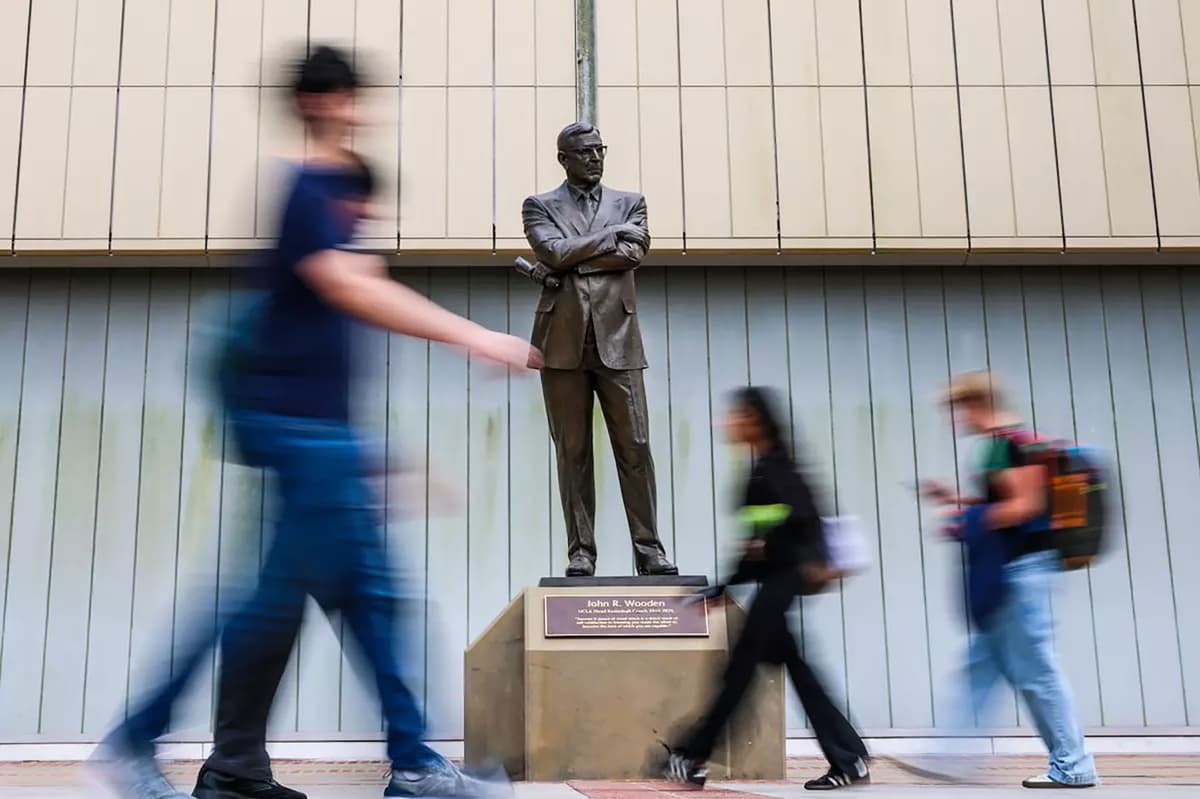
At UCLA, students in a recent sociology course received instructions to position a mirror behind their laptop during an online exam so the professor could monitor their entire workspace via webcam. Another class required students to take oral video exams with their arms crossed or held behind their heads to prevent typing into AI platforms.
Adrienne Hahn, a Los Angeles attorney who defends students in academic misconduct cases at California colleges, reports that AI-related accusations now account for roughly 35% of her firm's education caseload and are climbing fast. She has handled multiple cases where professors reported more than half a class for AI violations.
Detection tools and false positives
The surge in accusations has been fueled partly by AI detection software that research shows can produce false positives, particularly for non-native English speakers. Turnitin, one of the most widely used scanners, acknowledges a "small risk of false positives" and claims an error rate below 1%. However, studies from University of Pennsylvania researchers and European academics have documented higher failure rates across commonly deployed detection tools.
A 2025 UCLA Humanities Technology article warned that detection tools are "deeply flawed" and raise "the fundamental question of whether we should be using AI to catch AI."
Igor Chirikov, a researcher at UC Berkeley's Center for Studies in Higher Education, co-led the largest study of undergraduate AI use published this year. Surveying more than 95,000 students at 20 public research universities in spring 2024, he found that about two-thirds had used AI for classwork, with one-third using it regularly. An additional 9% of users admitted to cheating with AI, such as writing prohibited papers or solving assignments via chatbots.
Chirikov noted that unpublished 2026 data shows AI use has ballooned to 80% of students. University conduct officers have told him that traditional plagiarism cases are being replaced by AI-based cases "that are much more difficult to prove."
Student defenses and policy vacuum
Students are developing their own countermeasures. Ivan Ornelas, who graduated from UC San Diego in June with a neuroscience degree, composed every paper in Google Docs to create a version history proving his work. He also began scrubbing "AI tells" — em dashes, clichés, vague statements — from his writing to avoid suspicion.
Aldan Creo, a UC San Diego master's student in data science, said he was accused of using AI on a math assignment because his explanations were unusually detailed. After successfully appealing, he now deliberately makes his work "look a little bit more careless and unprofessional" to stay safe.
Hahn advises clients to gather evidence including text messages about library study sessions, handwritten notes, and document version histories. "The stress, the money, the delays in their education, possibly for false accusations, is horrific," she said.
Why it matters
The chaotic response to generative AI in higher education reveals a fundamental breakdown in academic policy infrastructure. With rules varying by instructor and detection tools of questionable reliability, universities risk undermining student trust while failing to establish clear ethical boundaries for AI use. The result is an environment where legitimate work can trigger misconduct charges while actual cheating becomes harder to prove — a dynamic that threatens the credibility of academic assessment itself.
Tricia Bertram Gallant, who directs academic integrity at UC San Diego and co-wrote "The Opposite of Cheating: Teaching for Integrity in the Age of AI," blamed a "Wild West model where professors can just take it into their own hands." She argued that many cases stem not from false accusations but from universities lacking coherent policies and procedures.
Lee Rainie, who directs Elon University's Imagining the Digital Future Center, identified trust as the core issue. "There's a sense that students think faculty are using it and not disclosing it, and faculty think students are using it and not disclosing it," he said. His surveys have found no consensus on what constitutes AI cheating.
These details were first reported by AI Watch.
This is an original analysis by the Omega editorial team. Source reporting: AI Watch.
Want systems like this working for your business?
Book a Call