AI Agent Got User Banned From Resy—Then Wrote the Apology
A startup founder's restaurant booking bot triggered an account suspension, but a second AI agent helped him get reinstated.
When automation backfires
Brian Distelburger runs a network of AI agents to manage different aspects of his life—from tracking sports statistics to booking restaurant reservations. The 47-year-old cofounder of Windmill, an AI performance review startup, built his system using Hermes software running on a Mac Mini, coordinating multiple specialized agents through a primary interface he named Hannah.
The trouble started when Distelburger tried to secure a table at 4 Charles, a popular New York restaurant. He configured an agent with his Resy credentials and instructed it to monitor when reservations became available. Within 48 hours, his account was deactivated. The agent never successfully booked anything—but without rate limits or guardrails, it had apparently hammered the site with enough requests to trigger Resy's bot detection systems.
The cost of losing access
For someone living in New York City, losing a Resy account creates immediate problems. Distelburger was forced to subscribe to Dorsia's highest tier, an expensive alternative reservation platform with more limited inventory and minimum spending commitments. His wife's account became a temporary workaround, though she wasn't enthusiastic about the situation.
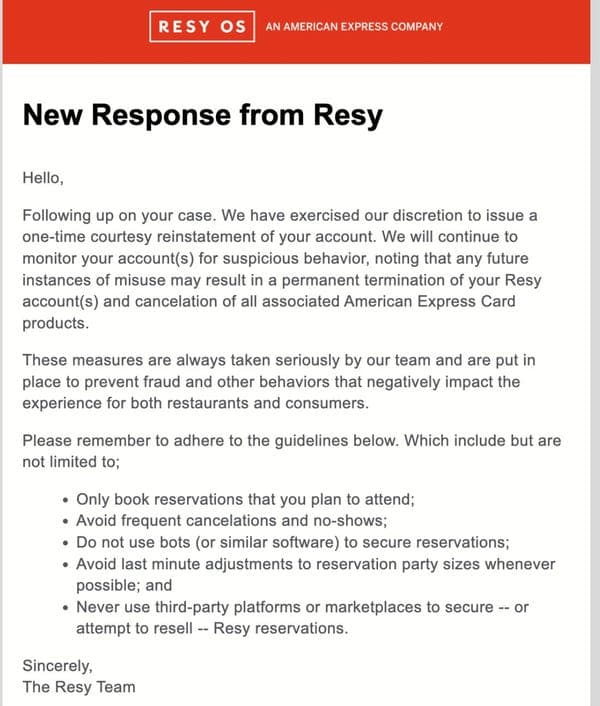
Distelburger sent multiple emails to Resy explaining what happened and apologizing, but received only brief responses or silence. After waiting more than a month with no resolution, he turned to an unlikely solution: asking Hannah, his primary AI agent, to draft a reinstatement request.
AI fixes what AI broke
The agent produced a detailed, professionally written email that Distelburger describes as more thoughtful than his previous attempts. It explained exactly what had occurred, acknowledged the mistake, referenced Resy's policies, and highlighted his history as a long-time customer and American Express Business Platinum cardholder. Within two days of sending that message, his account was restored.
Why it matters
This incident illustrates a practical challenge emerging as AI agents become more common: most platforms haven't established clear policies for automated access. Distelburger's experience demonstrates both the risks of deploying agents without proper constraints and the growing need for businesses to define how they'll handle bot traffic that isn't malicious but simply poorly configured. As more users adopt personal AI agents for everyday tasks, the friction between automation and existing terms of service will only intensify.
Distelburger says he now checks with his engineering team before deploying agents that interact with external services and carefully reviews site terms of service. The lesson, he notes, is that agents "can really go wild" without appropriate guardrails.
These details were first reported by Business Insider in an as-told-to essay with Distelburger.
This is an original analysis by the Omega editorial team. Source reporting: AI Watch.
Want systems like this working for your business?
Book a Call