80% of US Factories Remain Unautomated Despite Product Surge
New edge AI and vision systems flood the market while execution lags far behind manufacturer intent, creating a widening deployment gap.
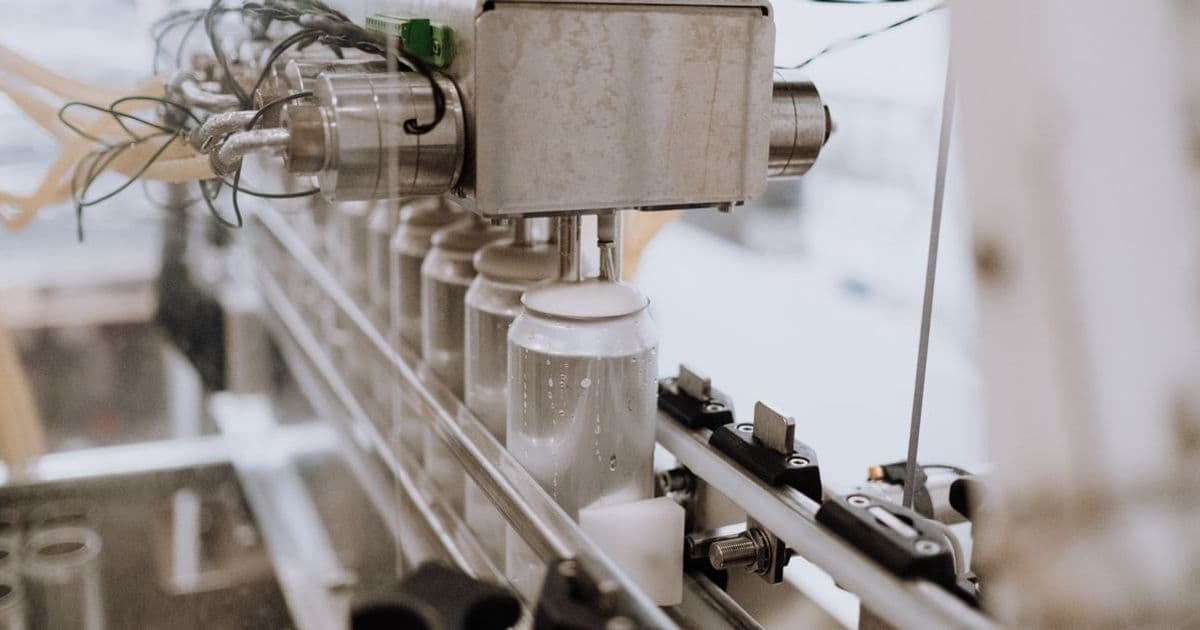
A stark contradiction defines American manufacturing today: while vendors unveil increasingly sophisticated automation technologies, more than 80% of US facilities still operate with zero automation, according to Intrinsic Chief Technology Officer Brian Gerkey, as reported by Manufacturing Dive.
The gap between belief and action has grown conspicuous. Deloitte's 2025 Smart Manufacturing and Operations Survey found that 92% of manufacturers consider AI critical to their future, yet only a small fraction report widespread AI deployment in current operations. This chasm between conviction and implementation has become the central challenge suppliers now race to solve.
"There is no doubt interest is high across the board, but execution is where things get difficult," Jeff Burnstein, president of the Association for Advancing Automation, told Manufacturing Dive.
Why it matters
The 80% unautomated base represents both a massive market opportunity and a competitiveness risk. As experienced workers retire and take undocumented operational knowledge with them, manufacturers face mounting pressure from multiple directions: labor shortages, global competition, and the need to preserve institutional expertise. Whether this pressure converts into actual deployment will shape US manufacturing competitiveness through the decade.
Vendors target the execution barrier
At Automate 2026 in Chicago, multiple suppliers introduced platforms explicitly designed to lower deployment friction. Rockwell Automation launched FactoryTalk ResilientEdge, a unified execution architecture for bringing intelligence and scalability to manufacturing operations, according to Manufacturing Tomorrow.
Siemens expanded its Simatic AX software-defined automation platform to reach OT-focused maintenance teams, adding ladder programming and support for the Simatic S7-1200 G2 controller for basic automation applications, per Manufacturing Tomorrow.
SINTRONES positioned secure edge AI computing as critical infrastructure for connecting plant floors to analytics systems, targeting AI vision and intelligent control applications while keeping inference local rather than cloud-dependent, Manufacturing Tomorrow reported.
Vision systems and machining get faster
Pleora Technologies and imavix engineering introduced GEV-Stream, a complete GigE Vision 3.0 pipeline designed to eliminate latency variability and CPU bottlenecks as vision systems scale to higher data rates, according to Manufacturing Tomorrow. Traditional UDP-based architectures have struggled with these demands.
RoboDK will demonstrate CAM software that cuts robotic machining deployment time by up to 40%, combining CAD-to-robot machining with collision-free motion planning in production-ready configurations, Manufacturing Tomorrow reported.
Festo presented motion, handling, and engineering solutions aimed at simplifying machine assembly and startup. The common theme across announcements: vendors now compete explicitly on speed-to-value.
Security and investment signal long-term commitment
As OT devices proliferate, smaller manufacturers face expanding attack surfaces. Transicon will host a July 21 webinar on operational technology cybersecurity for SME manufacturers, Manufacturing Tomorrow reported, addressing risks that grow proportionally with edge AI and software-defined controller adoption.
Capital spending patterns reflect sustained confidence in automation demand. JR Automation, a Hitachi Group company, announced a $72.8 million global headquarters in Zeeland, Michigan, and acquired Mark One, a surface preparation and material handling supplier, in January 2026, according to the company.
The knowledge transfer crisis compounds the challenge. As experienced technicians and engineers approach retirement, manufacturers risk losing operational expertise that was never formally documented, the A3 editorial team noted in Automate.org. Automation increasingly serves as a vehicle for capturing that knowledge, not merely replacing labor.
These details were first reported by Manufacturing Dive, Manufacturing Tomorrow, Automation.com, and Automate.org.
This is an original analysis by the Omega editorial team. Source reporting: Automation Watch.
Want systems like this working for your business?
Book a Call