70% of Enterprises Cannot Trace Multi-Agent AI Failures
New research reveals a critical accountability gap as automation outpaces governance infrastructure across industrial operations.
The accountability crisis in multi-agent AI
Seven in ten enterprises operating multi-agent AI systems cannot determine which agent caused a failure when something goes wrong, according to research from Kore.ai first reported by Automation Magazine on July 8. The finding quantifies a governance challenge that has escalated as organizations move from single AI models to networks of interacting agents.
The accountability gap creates concrete operational risks. When an AI agent makes a procurement decision, schedules maintenance, or adjusts logistics routing, the inability to reconstruct the decision chain after a failure generates liability exposure and turns remediation into guesswork. The research indicates this is now a majority condition among enterprises, not an isolated problem.
For CIOs and IT operations leaders, the implication is clear: logging, observability, and audit tooling require evaluation alongside the AI agents themselves. Deploying multi-agent systems without these controls represents a documented risk rather than a theoretical concern.
Why it matters
As industrial operations adopt increasingly complex AI systems, the absence of decision traceability creates regulatory, liability, and operational continuity risks that procurement and compliance teams must address before expanding deployments. The 70% figure suggests most organizations are operating with a critical blind spot in their automation infrastructure.
ABB completes autonomous mobile robot portfolio
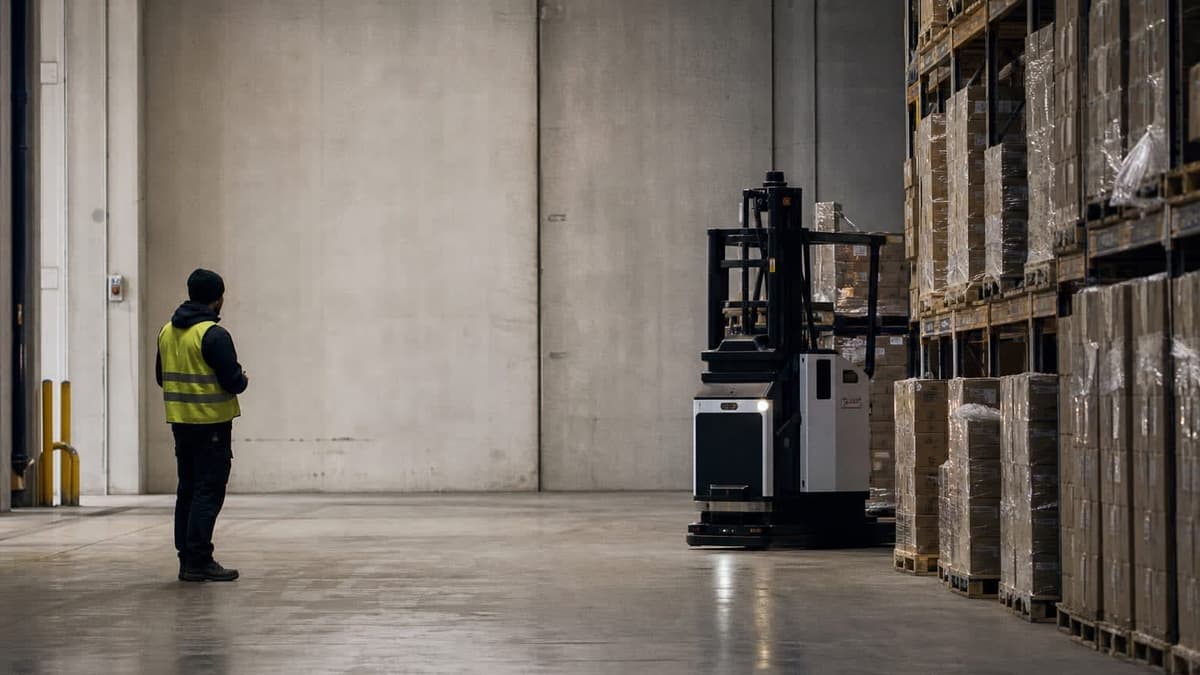
ABB Robotics announced the Flexley Stack F712, an autonomous forklift that extends the company's AI-powered Visual SLAM navigation technology to heavy-load stacking operations. The launch completes ABB's AMR product family, which previously covered lighter transport and picking roles but left high-rack forklift tasks to conventional equipment.
Visual SLAM—simultaneous localization and mapping driven by camera data rather than fixed infrastructure like floor magnets—reduces deployment time and allows rerouting without physical facility changes. Extending this capability to forklift payloads enables fleet managers to run mixed AMR types under a consistent navigation stack, simplifying integration and support contracts.
For procurement teams evaluating autonomous material handling, ABB's move to cover the full operational range makes single-vendor versus best-of-breed comparisons more concrete.
UK workplace vehicle fatalities spike 71%
The UK Health and Safety Executive released data showing worker fatalities from being struck by moving vehicles rose 71% compared to the previous year. Safety professionals responding to the figures called on employers to strengthen vehicle and pedestrian segregation rather than dismiss the increase as statistical variation.
The numbers are relevant to any operations leader running facilities with mixed vehicle and foot traffic, including most distribution centers, manufacturing floors, and construction sites. Technologies deployed to address this risk include proximity detection systems, autonomous vehicle access control, and camera-based monitoring—several of which connect to the broader AMR and visual intelligence developments in the industrial automation sector.
The HSE data did not attribute the spike to a single cause, but the scale of the year-over-year change indicates the issue warrants immediate review of existing risk assessments.
Additional automation developments
DHL confirmed plans to open an automated healthcare logistics hub at Infinity Park Derby, adding specialist cold-chain and pharmaceutical handling automation to its UK network. The Netherlands opened its first Humanoid Application Centre at MICS on July 6, designed to move humanoid robots from demonstration into tested workplace deployments. Kognitiv Spark released an updated version of its RemoteSpark connected field worker platform on July 15, strengthening the link between frontline technicians and remote experts.
These developments were first reported by Automation Magazine and MarketScale.
This is an original analysis by the Omega editorial team. Source reporting: Automation Watch.
Want systems like this working for your business?
Book a Call