Amazon warehouse managers resist automated staffing software
Internal documents reveal friction as the company moves toward algorithm-enforced labor decisions by 2026.
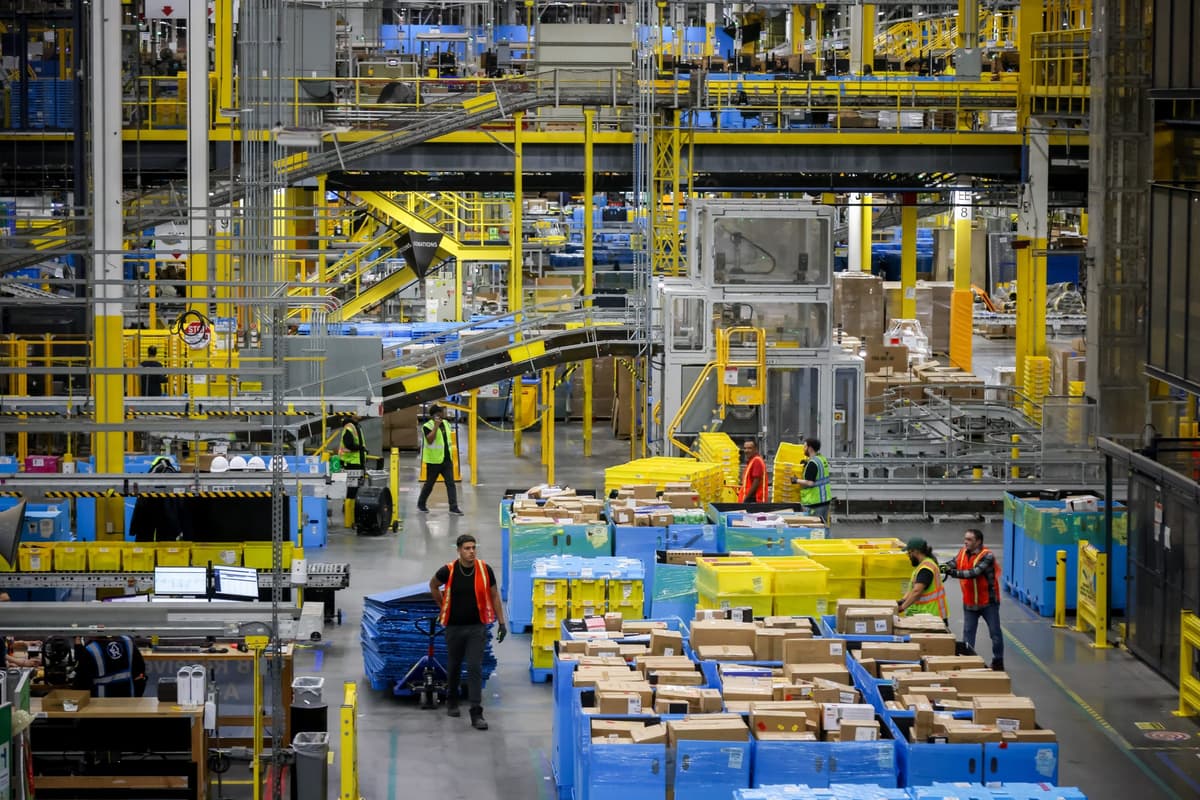
Amazon is piloting machine learning systems designed to automate warehouse staffing decisions, but the rollout has exposed a fundamental tension: managers keep overriding the software's recommendations, and the company now plans to limit their ability to do so.
Internal planning documents reviewed by Business Insider show Amazon intends to expand these labor-management systems across dozens of North American fulfillment and sort centers, with projected annual savings in the hundreds of millions of dollars. The systems include tools like DOPLERS for staffing plans, Full Facility Load Balancing for labor moves, and Right Link Station for tracking support staff.
The override problem
Warehouse managers have been disabling automated features, manually editing time records, and finding workarounds to maintain control over staffing decisions. According to internal Slack conversations from earlier this year, some managers asked engineers to turn off enforcement immediately after it launched at test sites.
One manager wrote, "Please turn it off now and I will explain." Minutes later, an Amazon product manager replied, "We will disable enforcement for now."
Managers cited several concerns: the software overreacted to brief volume slowdowns, pulled workers from urgent areas, and failed to account for individual worker capabilities. One manager questioned whether the system understood that "6 foot three Henry that weighs 250 pounds is way better at chasing than 67-year old Henrietta that weighs under 100 pounds."
Some managers also overstaffed support roles and "hid hours through manual time edits," exploiting what Amazon called "loopholes" in the system.
Amazon's response: enforcement, not flexibility
Rather than treating manager resistance as evidence that automation has limits, Amazon concluded that recommendations alone were insufficient. "Providing managers with optimized recommendations is necessary but insufficient," one document stated. "Without system-enforced guardrails, manual overrides and habits erode even the best science."
Internal roadmaps call for progressively tighter controls, including limits on how far managers can deviate from algorithmic recommendations. "Hard enforcement is the end goal for 2026," one planning document stated. Amazon's success metrics for that year include a "reduction in manual staffing interventions by managers."
The company framed the issue as a measurement problem: "Algorithm accuracy cannot be meaningfully measured without enforcement."
Why it matters
This conflict illustrates a broader challenge in workplace automation—not just whether AI can make better decisions than humans, but whether organizations can compel employees to follow those decisions. Amazon's approach suggests the company views manager discretion as an obstacle to algorithmic optimization rather than a necessary check on it. The outcome will shape how one of the world's largest employers balances human judgment against machine efficiency, with implications for hundreds of thousands of warehouse workers.
Company response
An Amazon spokesperson told Business Insider the premise was "wrong," saying the technology is only being piloted at a small number of facilities to help managers adjust staffing as volumes change. Managers still make decisions while the software provides "better information," the spokesperson said, adding that the quotes came from an "early-stage planning document" that doesn't reflect current operations.
The spokesperson emphasized that the tools are intended to help managers make more consistent decisions, not replace their judgment, and that broader expansion plans remain subject to change.
These details were first reported by Business Insider's Eugene Kim.
This is an original analysis by the Omega editorial team. Source reporting: Automation Watch.
Want systems like this working for your business?
Book a Call
