Xi Jinping calls for shared AI governance, rejects U.S. dominance
Speaking at Shanghai's World AI Conference, China's president urged international cooperation while Chinese models gain ground on American rivals.
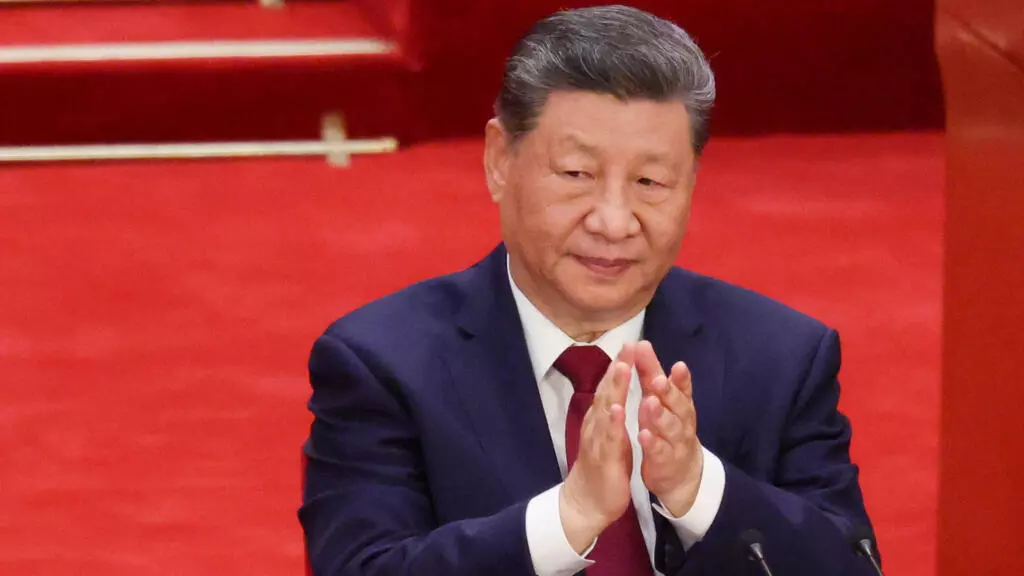
China's President Xi Jinping used a major artificial intelligence conference in Shanghai to advocate for multilateral governance of AI technology, warning against allowing any single nation to control the rapidly evolving sector.
"AI development should not be a solo performance by a single country, but a symphony of international cooperation," Xi told attendees at the opening of the World Artificial Intelligence Conference on Friday, according to France 24. He added that nations should "jointly oppose overstretching the national security concept in the field of AI or placing one country's security over that of others."
The remarks come as Chinese AI models increasingly compete with top American offerings while attracting international users through lower costs and open-source accessibility.
Why it matters
Xi's call for shared AI governance arrives at a pivotal moment when the technology's military applications, cybersecurity risks, and economic impact are generating friction between major powers. His framing positions China as a counterweight to U.S.-led restrictions on technology exports, while Beijing simultaneously builds domestic AI capabilities that could reshape global market dynamics. The establishment of a China-led international AI cooperation organization signals an effort to create alternative governance structures outside Western frameworks.
China's growing AI footprint
The four-day World Artificial Intelligence Conference drew more than 1,000 Chinese tech firms alongside officials and researchers, showcasing approximately 3,000 products ranging from advanced semiconductor systems to smartphones with autonomous app operation capabilities.
Beijing-based startup Moonshot AI released its Kimi K3 model during the conference, with performance reportedly rivaling some leading U.S. models. Other highlights included MiniMax's M3 model and Huawei's Atlas 950 "supernode" AI architecture.
China's AI market reached 1.2 trillion yuan ($177 billion) in 2025 and is projected to grow more than 30 percent this year, according to official data cited by France 24. Daily consumption of "tokens"—the industry's unit of AI usage—has increased a thousandfold over two years.
The country leads globally in generative AI patent filings, with the World Intellectual Property Organisation recording more than 43,000 such filings between 2024 and 2025.
International cooperation efforts
On Thursday, China's foreign minister Wang Yi and representatives from 29 countries including Russia, Pakistan, and Indonesia signed an agreement establishing the World Artificial Intelligence Cooperation Organization. Headquartered in Shanghai, the intergovernmental group aims to promote consultation and ensure "healthy and orderly" AI development among members.
Leaders attending the conference included UN Secretary-General Antonio Guterres, Cambodia's Hun Manet, and Thailand's Anutin Charnvirakul.
Xi emphasized the need for regulatory frameworks, stating that nations "should put in place laws and regulations, technological monitoring, early warning, and emergency response systems, in order to ensure AI is always under human control."
Competitive landscape
While the United States maintains advantages in advanced chips, frontier computing infrastructure, and capital-intensive model development, "China is its closest and most comprehensive competitor," Poe Zhao of Hello China Tech told France 24.
A growing number of international companies, including Siemens this year, are adopting Chinese open-source AI models, attracted by their performance, lower costs, and customization capabilities compared to closed systems from U.S. companies like OpenAI and Anthropic.
The United States and European Union have imposed restrictions on Chinese tech imports citing national security concerns, while debates continue over who controls access to cutting-edge AI technology.
These details were first reported by France 24 with AFP.
This is an original analysis by the Omega editorial team. Source reporting: AI Watch.
Want systems like this working for your business?
Book a Call
