World Council of Churches Joins 225 Groups Opposing AI Warfare
Declaration at UN meeting demands tech firms stop supplying military AI systems and governments halt their use in targeting operations.
The World Council of Churches has joined 225 other organizations in signing a declaration that demands technology companies and governments stop using artificial intelligence systems in military targeting operations, citing grave risks to international humanitarian law and human rights.
The declaration, signed during a United Nations Office for Disarmament Affairs meeting in Geneva from June 15-17, warns that AI-accelerated warfare is "enabling killing rapidly and at scale" while no technical or procedural safeguards exist to prevent violations of international law.
Specific demands for companies and governments
The document calls on AI developers to "cease supplying" artificial intelligence systems for use in the "military kill chain" and to take all necessary measures to ensure their products do not contribute to violations of humanitarian or human rights law. Companies unable to prevent or mitigate such risks should refuse military contracts entirely, the signatories argue.
Governments are urged to halt the use of AI tools, including large language models, in military targeting operations and to ensure transparency about current AI deployment in combat situations.
Real-world evidence cited
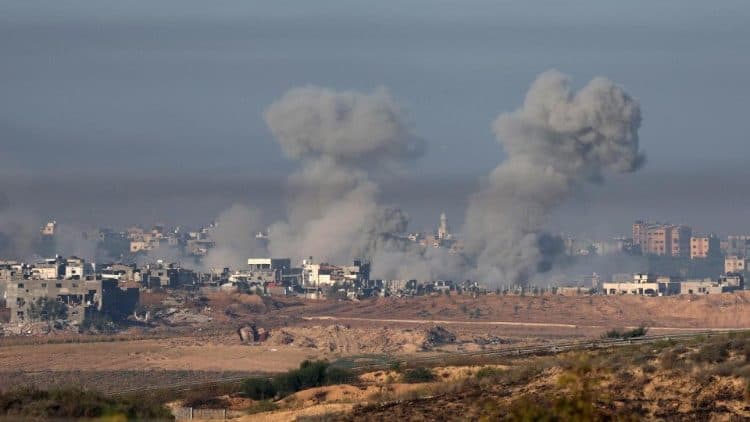
The declaration references media reports and Pentagon statements indicating that AI tools for rapid target generation have increased the speed, scale, and destructive force of U.S. strikes against Iran. Similar assessments apply to systems used by Israeli armed forces, according to the document.
These technologies dilute human responsibility in life-and-death decisions and may conceal international crimes "behind a veneer of apparent algorithmic objectivity while simultaneously evading accountability," the signatories state.
Why it matters
The declaration represents a significant coalition of religious, human rights, and civil society organizations challenging the military AI industry at a moment when these systems are already deployed in active conflicts. The timing is notable: the Geneva meeting occurred weeks after Pope Leo XIV's encyclical Magnifica Humanitas called for the world to "disarm AI." The document's specific focus on large language models in targeting operations addresses an emerging capability that could fundamentally alter the speed and scale of warfare while undermining core principles of distinction, proportionality, and precaution required under international law.
Concerns about automated dehumanization
The 226 signatories—including Amnesty International and numerous local organizations—express particular concern that large language models used for target generation push military actors toward warfare where fundamental humanitarian law principles "are not, and likely cannot be, adequately respected."
These systems automate dehumanization by "reducing matters of life and death to a simple chat prompt," the declaration states. When militaries rely on AI to identify targets so quickly that human review becomes merely a formality, "mass atrocities can, and often will, occur."
The opacity surrounding AI use in military operations seriously undermines the possibility of assigning moral or legal responsibility when errors occur, the signatories warn. The speed, scale, unreliability, bias, and often unlawfully sourced nature of input data create conditions that risk facilitating human rights violations, crimes against humanity, and war crimes.
The details were first reported by Vatican News.
This is an original analysis by the Omega editorial team. Source reporting: AI Watch.
Want systems like this working for your business?
Book a Call