Wisconsin Congressman Uses AI-Generated Attack Video in Tight Race
Rep. Derrick Van Orden's synthetic deepfake of opponent Rebecca Cooke highlights gaps in social media regulation as states struggle with disclosure laws.
Wisconsin Congressman Uses AI-Generated Attack Video in Tight Race
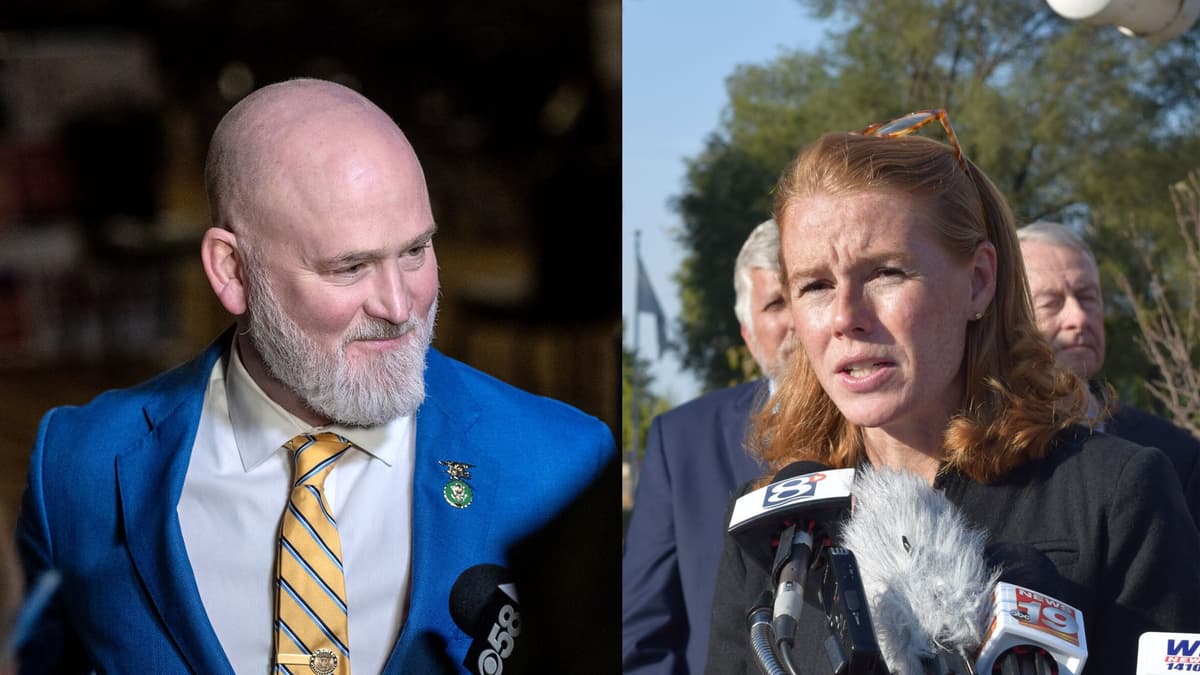
U.S. Rep. Derrick Van Orden, a Republican representing Wisconsin's 3rd Congressional District, recently published an AI-generated video depicting his Democratic challenger Rebecca Cooke as an elitist demanding obedience from "peasants." The synthetic figure, created using Grok—the AI tool integrated into X—resembles Cooke and declares, "I am the Anointed One. You will comply and you will vote for me."
The video represents a test case for how AI-generated content operates in political campaigns, particularly on social media platforms where existing regulations may not apply.
Why it matters
This incident exposes a critical gap in election integrity safeguards. While Wisconsin passed a bipartisan law in 2024 requiring disclosure of AI-generated content in campaign advertisements, that statute doesn't extend to social media posts. As AI tools become more accessible and sophisticated, the distinction between paid ads and organic social content creates an enforcement vacuum that candidates can exploit—even in states with disclosure requirements on the books.
The Regulatory Landscape
Twenty-eight states now have disclosure laws covering AI-generated political content, and three states have implemented outright bans on political deepfakes, according to the National Conference of State Legislatures. Yet enforcement remains inconsistent.
Recent congressional primaries in Tennessee and Kentucky saw candidates use undisclosed AI-generated attack ads despite state disclosure laws. In Tennessee, one Republican primary candidate depicted his opponent with drag queens and Nancy Pelosi; in Kentucky, a PAC-funded ad showed a candidate holding hands with progressive Representatives Alexandria Ocasio-Cortez and Ilhan Omar. Local reporting confirmed neither campaign disclosed the AI-generated nature of these materials.
Oregon is currently testing the teeth of its disclosure statute, with the Secretary of State investigating a former Republican congressional candidate who posted AI videos to social media during an unsuccessful campaign.
The Free Speech Challenge
Peter Loge, who directs the School of Media and Public Affairs at George Washington University, notes that regulating political speech—particularly on social media—faces substantial First Amendment hurdles. The fundamental issue, he argues, isn't the technology itself.
"The issue isn't whether or not they're AI-generated or deep fakes," Loge said. "It's that the Republican incumbent is making stuff up about his Democratic challenger, and regardless of the technology, you shouldn't make stuff up about your challenger."
Loge warns that widespread use of synthetic media in campaigns risks eroding voter trust across the board. When everything could potentially be fabricated, distinguishing truth from falsehood becomes exponentially harder.
Campaign Responses
Van Orden's campaign defended the video as satire, noting it includes a disclaimer identifying it as AI-generated. Campaign spokesperson Grace Kim characterized the content as grounded in reality and criticized Cooke for "lying to voters about who she is."
Cooke responded by calling for federal legislation like the Protect Elections from Deceptive AI Act, which would ban distribution of deceptive synthetic media in political campaigns. She described the video as "nasty mudslinging and character defamation" that frustrates voters across party lines.
The race for Van Orden's seat ranks as Wisconsin's most competitive congressional contest, with national Democrats targeting the seat as part of efforts to flip the narrow Republican majority in the House.
These details were first reported by Wisconsin Public Radio.
This is an original analysis by the Omega editorial team. Source reporting: AI Watch.
Want systems like this working for your business?
Book a Call
