Why AI Infrastructure Demands a Different Architecture Than IT
From compute design to data flow patterns, enterprise AI systems require purpose-built environments that traditional data centers weren't designed to support.
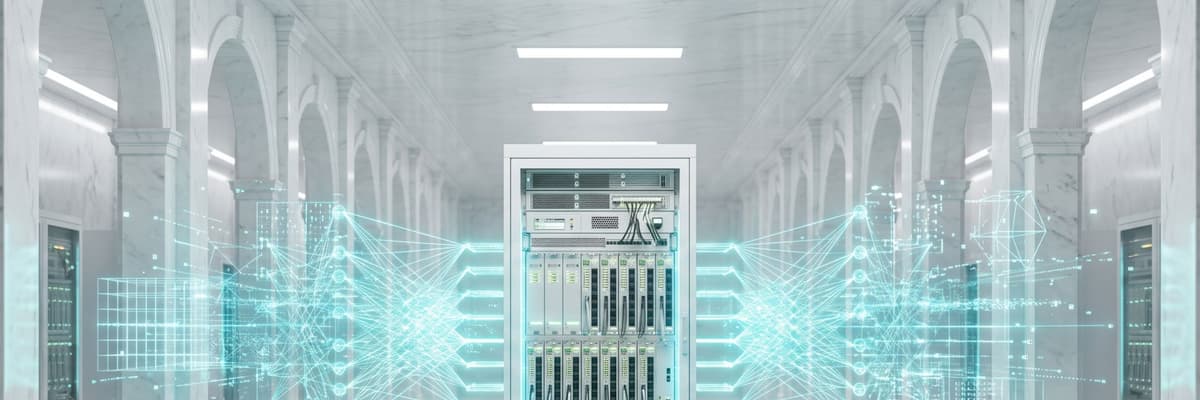
Why AI Infrastructure Demands a Different Architecture Than IT
Enterprises scaling artificial intelligence beyond pilot projects are confronting a reality many didn't anticipate: traditional IT infrastructure wasn't built for AI workloads. The gap isn't about incremental upgrades—it reflects fundamental differences in how these systems process information and move data.
Traditional IT environments execute sequential business logic through CPU-based architectures optimized for predictable workflows. AI infrastructure, by contrast, functions as a high-density computing fabric engineered for massive parallel matrix operations and continuous data pipelines, according to ASUS in a detailed infrastructure analysis.
Why it matters
As organizations commit capital to AI deployments, understanding these architectural differences determines whether investments deliver performance or create expensive bottlenecks. The shift from experimentation to production exposes infrastructure limitations that can't be solved by simply adding more servers to existing environments.
Compute Architecture Shifts From Sequential to Parallel
CPUs that power enterprise applications excel at sequential, rules-based tasks. AI model training and inference require different processing capabilities. GPUs and specialized accelerators handle the parallel computation across large data volumes that deep learning and generative AI demand. This shift introduces new requirements for power delivery, cooling systems, and overall infrastructure design that traditional data centers weren't engineered to support.
Data Becomes the Operating Model
In conventional IT systems, data supports transactions and application access in relatively structured formats. For AI infrastructure, data defines how the entire system operates. Models require massive datasets to learn and adapt, creating demands for infrastructure that can collect, store, move, and process information at both high speed and scale. Organizations need environments supporting data-intensive training alongside low-latency inference for production applications.
Network Traffic Patterns Invert
Traditional IT environments handle primarily North-South traffic—data flowing between users and external services. AI systems generate predominantly East-West traffic, with communication happening inside the data center between GPUs, servers, storage layers, and networking components as clusters collaborate on model training and large-scale processing.
This architectural shift requires moving from multi-tier tree network designs to non-blocking Spine-Leaf or Fat-Tree topologies equipped with high-speed interconnects like NVIDIA NVLink and InfiniBand. The performance bottleneck moves inward, where efficiency depends on how rapidly the system moves data within clusters rather than user-facing responsiveness alone.
Integrated Systems Replace Component Upgrades
High-performance AI environments require tightly integrated systems combining advanced accelerators, high-speed networking, scalable storage, and efficient thermal management. As compute density increases, direct-to-chip and liquid cooling technologies become essential for maintaining performance, reliability, and energy efficiency.
ASUS has deployed these principles in production environments, including collaboration with Taiwan's National Center for High-performance Computing on next-generation AI supercomputing platforms. The company has implemented NVIDIA GB300 and HGX H200 clusters with direct-to-chip liquid cooling, and through its Infrastructure Deployment Center has compressed setup time from three weeks to three days using automation.
The NCHC Nano 4 supercomputer exemplifies integrated design, delivering 81.55 PFLOPS while achieving 1.18 power usage effectiveness (PUE) and ranking No. 29 on the TOP500 list.
These details were first reported by ASUS in its infrastructure analysis.
This is an original analysis by the Omega editorial team. Source reporting: AI Watch.
Want systems like this working for your business?
Book a Call