White House AI framework remains classified after industry meeting
Major AI companies agreed to voluntary frontier model reviews, but the government won't publish the rulebook—leaving smaller labs and critics in the dark.
The U.S. government has finalized a voluntary framework for reviewing frontier AI models but is keeping the details classified, according to sources familiar with a White House meeting held this week.
OpenAI, Anthropic, Google, Meta, Nvidia and other leading AI companies attended Tuesday's briefing and agreed to the proposed arrangement. Under the framework, developers can voluntarily submit closed-source frontier models to the government for up to 30 days before public release. An assortment of administration officials—not a single agency—will conduct the reviews.
But the administration does not plan to publish the framework itself. Which models qualify, what thresholds trigger review, and which "trusted partners" get early access to the most powerful systems remain undisclosed to the public and much of the industry, Fortune first reported.
What's in the framework
Reports indicate the framework covers models that are closed-source, demonstrate state-of-the-art capabilities, and present national security risks. However, a source familiar with the briefing said neither "state-of-the-art" nor "national-security risk" have been clearly defined.
Companies were told to submit models as close to launch-ready as possible rather than at early checkpoints. During the 30-day review window, submitted models will be held in high-security environments where access is logged and employees may be restricted from using their own frontier model while Washington evaluates it.
Open-weight models appear excluded from the framework based on accounts from sources familiar with the process. The exclusion is notable because Washington has expressed concern about open-weight releases from Chinese companies including Alibaba, DeepSeek and Moonshot AI that approach American frontier capabilities.
Smaller labs say opacity favors incumbents
Only a handful of companies were in the briefing room when the framework was discussed, according to a source familiar with the situation. Smaller and open-source labs worry these safety frameworks could influence broader market structure and entrench the use of closed-source frontier models that are "government-approved."
Some companies working with open weights remain unsure whether their models could be submitted or what that would mean in practice. Critics argue that excluding open source models explicitly while keeping the framework classified may push customers toward using closed-source alternatives that have received government review.
Why it matters
The classified approach to AI governance raises questions about who shapes the rules for the most powerful technology systems being built today. When only dominant firms see the framework, smaller competitors and the public cannot assess whether requirements are proportionate, enforceable, or favor incumbents. The lack of transparency also makes it difficult to evaluate whether the framework addresses the AI risks Washington claims to be most concerned about—particularly open-weight models from Chinese developers that the current framework appears to exclude.
Criticism from multiple directions
Americans for Responsible Innovation, a Washington-based AI policy nonprofit, said in a post on X: "This is not a handshake deal with tech companies. It's the rulebook for ensuring they don't endanger the public. If only tech companies know what's in the rulebook, it doesn't work."
Adam Thierer, a resident senior fellow at R Street, said the administration "appears destined to give us something far more arbitrary and burdensome" than its predecessor "with this behind-closed-doors de facto licensing regime they are concocting."
Rep. Lori Trahan, co-sponsor of the bipartisan FRONTIER Act, argued AI governance "belongs in a civilian agency, where it can be seen and questioned, not buried inside the national security apparatus."
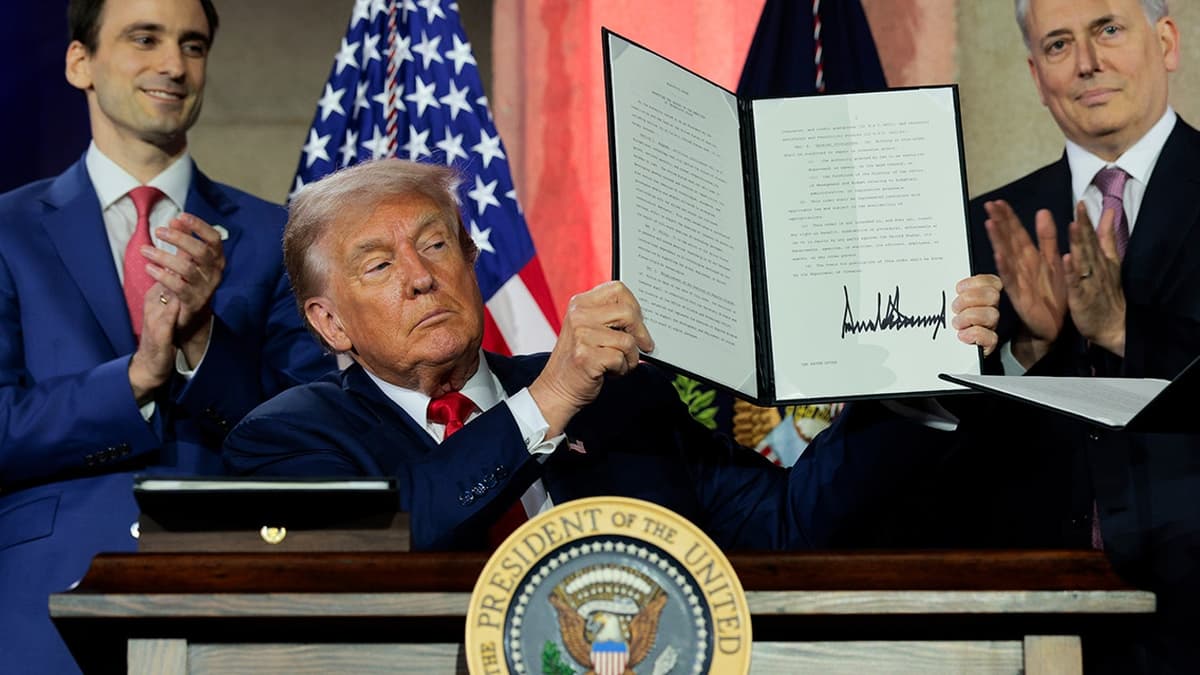
The framework stems from a June order by President Trump directing officials to create it. That order already stipulated that the benchmarking process used to designate a "covered frontier model" may be classified, with determination sitting with the NSA director.
Details were first reported by Fortune.
This is an original analysis by the Omega editorial team. Source reporting: AI Watch.
Want systems like this working for your business?
Book a Call