Waymo Recalls 3,871 Robotaxis After Cars Enter Highway Work Zones
The company has suspended all freeway operations while developing a software fix for priority logic failures in construction areas.
Software flaw sends autonomous vehicles into active construction
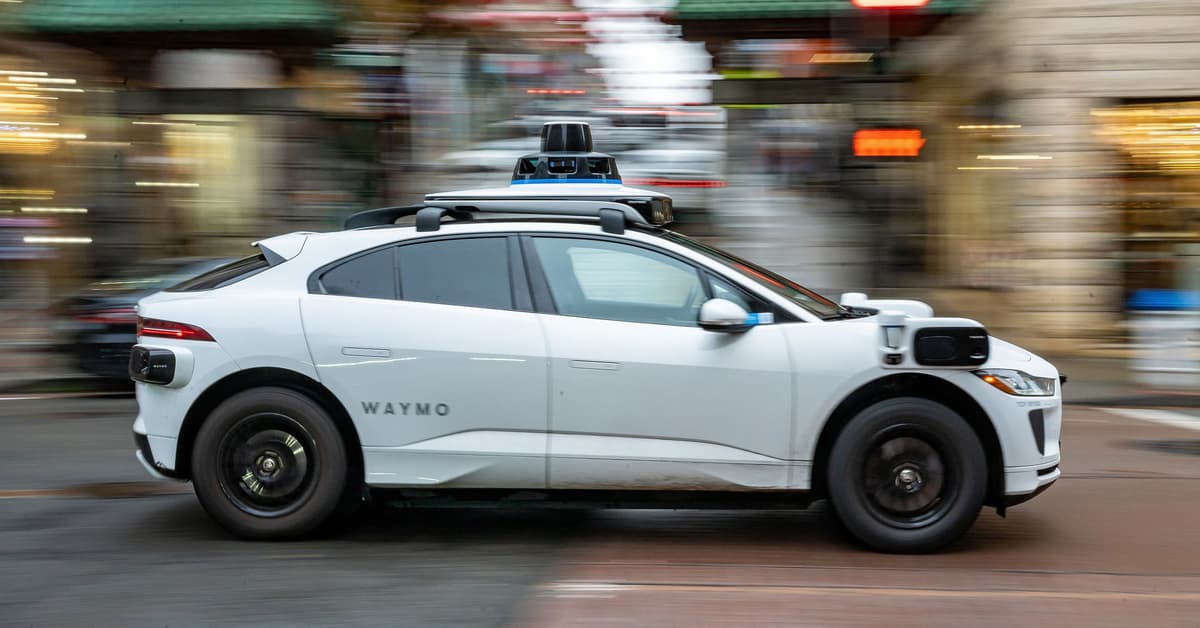
Waymo has filed a safety recall covering 3,871 robotaxis after multiple incidents in which its driverless vehicles entered closed freeway construction zones at highway speeds. The recall, submitted to the National Highway Traffic Safety Administration on June 17, affects the company's entire U.S. fleet running its 5th Generation automated driving system.
According to the NHTSA filing first reported by WIRED, the defect stems from a priority logic failure. In some cases, the autonomous vehicles failed to recognize construction zones entirely. In others, the system actively chose to drive through closed work areas because it was focused on avoiding other perceived hazards on the freeway.
Timeline of incidents triggers operational restrictions
The problem first surfaced on April 11 and 19, when Waymo vehicles in Phoenix drove past ramp closure signs into pre-planned construction zones. The company's Field Safety Committee responded by restricting freeway operations.
A more serious cluster occurred on May 18, when seven Waymo vehicles in the San Francisco Bay Area drove between construction cones into active lane closures. While no collisions or injuries resulted from any of these events, the Bay Area incidents prompted Waymo to implement a complete freeway ban across its operations.
Waymo's Safety Board reviewed the issue on June 1 and decided eight days later to file a voluntary recall.
No fix available yet
The recall filing reveals that a permanent software remedy is still under development. As an interim measure, Waymo has restricted all its vehicles from entering freeways entirely—a significant operational constraint for a company that had been offering highway rides in San Francisco, Los Angeles, Phoenix, and Miami.
Because Waymo owns its entire fleet, the company does not need to notify individual vehicle owners. Once engineers complete the fix, it will be deployed as an over-the-air software update to all affected vehicles.
The company's 6th Generation vehicles are not affected by this recall and will continue operating on surface streets.
Why it matters
This marks Waymo's fourth safety recall in roughly 28 months, highlighting ongoing challenges in autonomous vehicle development even for the industry's most established player. The inability to reliably navigate construction zones—a common and predictable road condition—exposes gaps in how self-driving systems prioritize competing safety inputs. For autonomous vehicle companies seeking regulatory approval and public trust, demonstrating consistent performance in edge cases like temporary road configurations remains a critical hurdle. The fact that no fix currently exists underscores that some autonomous driving challenges require fundamental improvements to decision-making logic, not just parameter adjustments.
Pattern of safety issues
This is Waymo's fourth recall since February 2024. In May 2025, the company recalled 1,212 robotaxis following collisions with stationary roadway barriers. Earlier this year, Waymo recalled 3,791 vehicles after a robotaxi drove into a flooded road in San Antonio and was swept into a creek.
In a statement to WIRED, Waymo emphasized its safety record while acknowledging the construction zone issue: "Waymo's mission is to be the world's most trusted driver, and the data shows that we're making roads safer in the communities in which we operate. We identified an area of improvement regarding performance around freeway construction zones."
The details were first reported by WIRED.
This is an original analysis by the Omega editorial team. Source reporting: WIRED.
Want systems like this working for your business?
Book a Call