Utah AI Chatbot Refills Prescriptions Without Doctor Approval
A state pilot program has ignited debate over whether artificial intelligence should be licensed to perform tasks long reserved for physicians.
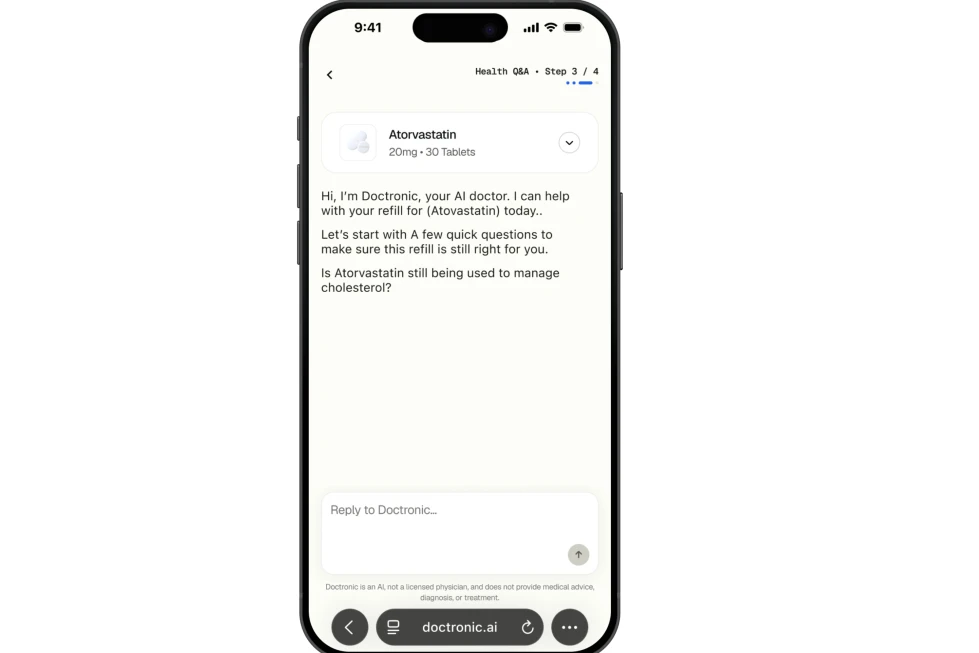
Utah pilot breaks century-old medical licensing precedent
A prescription refill program launched in Utah this January has become the first in the nation to allow an AI chatbot to authorize medications without traditional physician oversight for each transaction. The program, which uses an AI system called Doctronic, enables Utah residents to renew existing prescriptions online through an automated conversation that verifies their identity and medical history.
The initiative operates under Utah's "regulatory sandbox" framework, which permits state officials to temporarily waive existing laws for companies testing promising technologies. That legal workaround has allowed Doctronic to sidestep statutes that restrict prescribing authority to licensed medical professionals—laws that have governed American medicine for more than a century.
According to the Associated Press, which first reported details of the program, the arrangement has created an unprecedented situation where an AI system effectively performs medical functions without meeting the training, testing, and licensing requirements imposed on human doctors.
Medical board learned of program from news reports
Utah's medical licensing board discovered the program only after its January launch appeared in news coverage. In March, eleven board members sent a letter to state officials requesting the program be suspended, citing concerns about automatically renewing medications that carry risks of side effects or dangerous drug interactions.
"We were essentially told: 'Yes this is going on. And no, you don't have a say in it,'" said Dr. Alan Smith, a family physician who chairs the board, though he emphasized he was speaking personally rather than in an official capacity.
The refill program currently covers 190 medications, including blood thinners that can become hazardous if a patient's condition changes between refills. Smith noted that doctors frequently discover altered medical circumstances during routine follow-up visits that make previously appropriate prescriptions unsafe.
During an initial phase, human physicians review all Doctronic refill orders. The company expects to transition to fully automated renewals in the near future. The program is overseen by a five-member board composed entirely of AI specialists, with no physicians among them.
Regulatory confusion between state and federal authority
The program has exposed ambiguity in how medical AI should be regulated. Medical professionals are typically licensed by states, while medical technology falls under federal oversight through the Food and Drug Administration. Doctronic executives consider their system part of state-regulated medical practice, but some experts argue the AI crosses into territory requiring FDA authorization because it directly impacts medical decisions.
When asked whether they had sought FDA permission, Doctronic executives declined to answer directly. "Our goal here is really just to meet patients where they need healthcare," said Dr. Adam Oskowitz, who co-founded the company. "We try not to get too deep into the weeds on the regulatory side."
An FDA spokesperson told the AP that the agency has not authorized any AI chatbots but remains "committed to encouraging medical innovation" while maintaining safety standards. The statement suggests a hands-off approach under current leadership.
Why it matters
This program represents the first time a non-human entity has been granted authority to make prescribing decisions that directly affect patient care. The precedent could reshape how medical services are delivered and regulated across the United States, with several other states already considering similar frameworks. The outcome will likely determine whether AI medical tools must meet rigorous safety standards comparable to those required of human physicians, or whether technology companies can deploy healthcare AI through state-level regulatory workarounds that bypass traditional oversight.
Other states moving toward AI medical licensing
Texas and Wyoming have also created regulatory sandboxes for medical AI, while lawmakers in Iowa and Idaho have introduced legislation to formally license AI medical services. Many of these bills follow a template from the Cicero Institute, a think tank founded by Palantir co-founder Joe Lonsdale.
Doctronic has published limited data on its technology. A company-authored study that was not independently peer-reviewed found the AI matched human doctors' diagnoses 80% of the time when analyzing 500 telehealth consultation records. Utah officials have released some initial program data, and Doctronic plans to publish peer-reviewed studies later this year.
Dr. Eric Bressman of the University of Pennsylvania told the AP that Utah should have required comprehensive safety data before allowing the program to launch. "Mostly they're accepting the company's word on good faith that they're up to the task," he said.
These details were first reported by the Associated Press.
This is an original analysis by the Omega editorial team. Source reporting: AI Watch.
Want systems like this working for your business?
Book a Call
