US pushes global data center expansion amid local resistance
Commerce Secretary Howard Lutnick led G20 talks promoting AI infrastructure while protesters and communities push back on environmental and cost concerns.
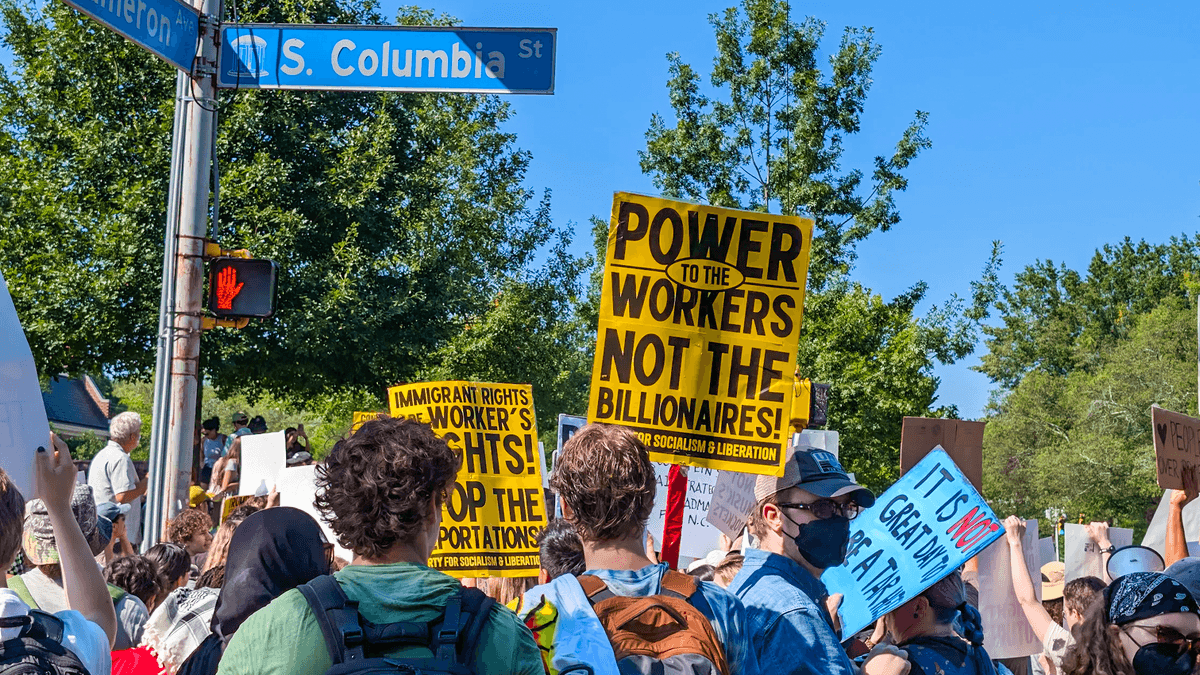
The United States is launching a coordinated effort to encourage global leaders to embrace AI data center construction, even as domestic opposition to these facilities intensifies across political lines.
At Wednesday's G20 Innovation Ministerial summit, US Commerce Secretary Howard Lutnick appeared alongside Anthropic co-founder Tom Brown to make the case for expanded data center infrastructure. The pitch comes as approximately 3,400 data center sites already operate in the US, with another 2,000 planned, according to Cleanview's tracking data.
Why it matters
The disconnect between government promotion of AI infrastructure and community resistance reveals a fundamental tension in technology policy. As nations compete to lead in artificial intelligence, the physical requirements—massive electricity consumption, water usage for cooling, and land development—are creating bipartisan local opposition that could constrain the industry's growth regardless of federal support.
Communities resist despite federal push
The backlash reached the summit itself, held at the University of North Carolina at Chapel Hill. Approximately 100 students and residents protested appearances by OpenAI CEO Sam Altman, Elon Musk, and Lutnick. Demonstrators cited concerns ranging from campus surveillance cameras to broader issues of corporate influence.
Local opposition stems from tangible impacts: noise pollution, air quality concerns, and higher utility bills. These facilities demand enormous amounts of electricity and water while occupying significant land parcels. Despite tech industry claims about job creation and tax revenue, residents across the political spectrum have organized against new construction in their areas.
President Trump escalated the rhetoric this week, posting on Truth Social that communities rejecting data centers will become "backwards and poor," though no evidence supports this prediction.
The administration's regulatory stance
Lutnick and other officials maintain that existing laws adequately address AI-related issues and that additional regulation would hinder growth. "This is an opportunity to democratize intelligence," Lutnick said, dismissing concerns about AI's existential risks.
To address utility cost concerns, the administration secured a voluntary ratepayer protection pledge from major tech companies, promising they would absorb rising energy costs rather than passing them to consumers. However, the pledge lacks enforcement mechanisms, as CNET previously reported.
Industry pivots to medical breakthroughs
Facing reputation challenges, technology companies have shifted their messaging toward potential scientific advances. "The economic scientific impacts [of AI] that we'll see five years from now will be immense. I think that we will make a major impact in things like curing cancer," Brown said at the summit.
Nvidia CEO Jensen Huang emphasized that countries building local AI infrastructure see immediate activation of startups and researchers, though studies suggest data center job creation is often overstated beyond initial construction phases.
Anthropic CEO Dario Amodei recently acknowledged the limits of this approach, writing that "saying that AI will cure cancer is more a cliche than it is inspiring" and that companies need to "actually cure cancer" to win back public trust.
These details were first reported by CNET's AI Watch coverage of the G20 summit.
This is an original analysis by the Omega editorial team. Source reporting: AI Watch.
Want systems like this working for your business?
Book a Call
