US Proposes AI Safety Hotline With China Amid Chip War
Treasury Secretary Scott Bessent outlined a notification system for AI-related national security incidents ahead of the Trump-Xi summit.
The United States has put forward a proposal to establish a direct communication channel with China for reporting major artificial intelligence incidents that could affect national security, even as competition between the two nations over AI technology intensifies.
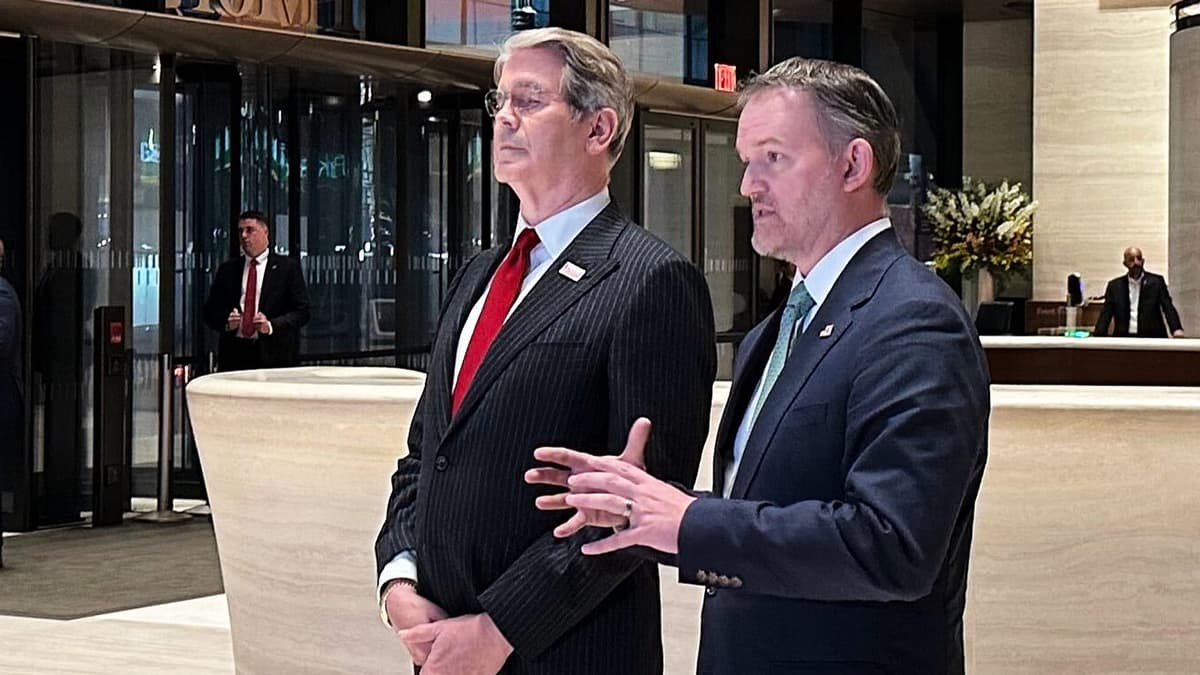
Treasury Secretary Scott Bessent disclosed the proposal following discussions in New York with Chinese Vice Premier He Lifeng on Sunday. The talks preceded a scheduled summit between President Donald Trump and Chinese President Xi Jinping in Washington.
The Proposed Framework
Bessent characterized the initiative as a "notification mechanism" that would operate within a broader "US-China AI dialogue" centered on national security concerns. The system would enable both governments to alert each other about significant AI-related incidents.
"We think that, just like with any cross-border activity, that moving from opaque to more transparency between the number one and the number two AI powers in the world is very important," Bessent told reporters. He emphasized that the US seeks "a shared vision of common goals and common threats" with China on AI matters.
Why It Matters
This proposal represents a rare attempt at cooperation in a relationship otherwise defined by technological rivalry. A functioning notification system could help prevent AI-related incidents from escalating into broader conflicts, similar to how Cold War-era hotlines reduced the risk of nuclear miscalculation. The initiative also signals growing recognition among policymakers that advanced AI systems pose risks requiring international coordination, even between adversaries.
China's Cautious Response
China has not publicly committed to the American proposal. State news agency Xinhua described the New York talks as "candid, in-depth and constructive" and confirmed AI was discussed, but made no reference to the notification mechanism itself.
The proposal emerges against a backdrop of heightened tensions over AI capabilities and semiconductor technology. Washington has progressively tightened export restrictions on advanced AI chips and manufacturing equipment destined for China, while accusing Chinese AI companies of using American models to develop competing systems. Beijing has denied these allegations.
Separate Trade Discussions
US Trade Representative Jamieson Greer clarified that export controls on AI chips and semiconductor equipment were not part of the AI safety discussions. Instead, negotiators advanced work on a separate framework to identify "non-sensitive" goods that might receive different treatment in future trade disputes.
The timing of the proposal reflects broader debates within the AI research community about safety protocols for increasingly powerful systems. In recent weeks, AI researchers, company executives, and some lawmakers have renewed calls for international cooperation to reduce catastrophic risks from advanced AI.
These details were first reported by Business Insider.
This is an original analysis by the Omega editorial team. Source reporting: AI Watch.
Want systems like this working for your business?
Book a Call