US Heatwave Exposes Power Grid Strain from AI Data Centers
Record temperatures test infrastructure as data centers consume electricity equal to 16 million homes and face growing political opposition.
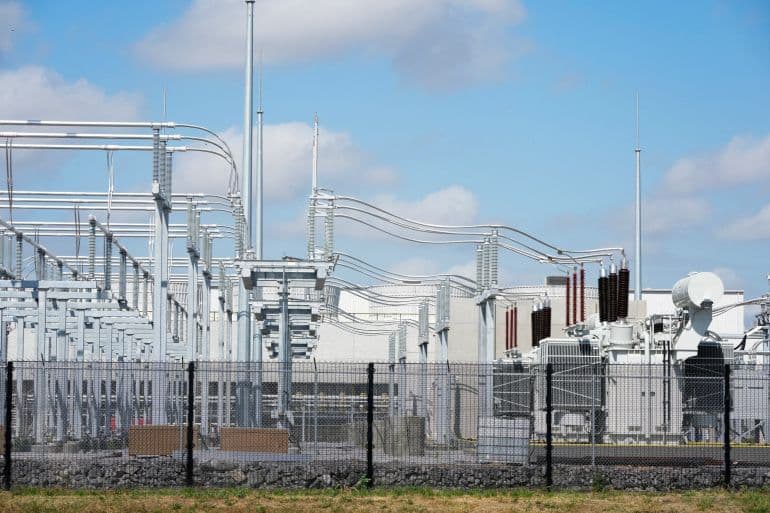
Grid operators request emergency power shifts
A severe heatwave across the United States is exposing critical vulnerabilities in the nation's ability to support rapid AI data center expansion. PJM Interconnection, the country's largest grid operator serving 13 states, has asked the Department of Energy to mandate that data centers switch to backup generators within 15 minutes of emergency alerts—a move designed to preserve power for residential and commercial customers during peak demand.
The request comes as temperatures are forecast to exceed 104°F in Washington, DC, and approach 100°F in New York, with Central Park expected to hit its highest temperature in over a decade. These conditions are testing infrastructure that wasn't designed for the combined load of extreme weather and energy-intensive AI facilities.
Political opposition spans left and right
Public concern about data center expansion is translating into rare bipartisan political action. Texas Governor Greg Abbott called for banning data center construction in rural areas during a campaign stop Tuesday, having previously advocated that facilities generate their own power and reuse water. On the opposite end of the spectrum, Senator Bernie Sanders and Representative Alexandria Ocasio-Cortez have called for a construction moratorium.
This political convergence reflects broader public sentiment: a recent Gallup survey found 70% of Americans oppose data center construction in their communities, with half citing excessive resource consumption as their primary concern.
The scale of consumption
US data centers currently account for 4% of national power demand—a figure the Department of Energy projects will more than double to 9% by 2030. The facilities collectively consume 176 terawatt-hours annually, enough electricity to power roughly 16 million homes or the entire population of California.
A single hyperscale data center requires 100 to 300 megawatts, equivalent to powering a city of 750,000 people. Virginia leads the nation with 398 operational facilities and 287 more planned, followed by Texas with 296 open and 170 in development.
Water consumption presents an equally pressing challenge. Data centers use 627 million gallons daily nationwide, and a large AI facility alone can consume 5 million gallons per day—as much as a city of 50,000 people. Nearly 80% of water used in cooling systems evaporates rather than being recirculated.
Infrastructure designed for conditions that no longer exist
The crisis extends beyond this single weather event. Two-thirds of new data centers built or planned since 2022 are located in water-stressed regions. In Corpus Christi, Texas, where reservoirs have fallen below 10% capacity during a five-year drought, a planned data center an hour north has reportedly delayed emergency water supply plans for the coastal city.
"Heatwaves are demonstrating that the current siting and cooling model was designed for average conditions, and average conditions are disappearing with each passing day," Arif Gasilov, partner at Gasilov Group, told Al Jazeera.
Data center cooling systems account for up to 40% of electricity usage under normal conditions—a percentage that rises as temperatures climb. A University of Cambridge study found that facilities create "heat islands" that raise surrounding temperatures by an average of 2°C, and by as much as 9.2°C in immediate proximity.
Why it matters
This heatwave provides a preview of infrastructure conflicts that will intensify as AI deployment accelerates. The collision of climate-driven extreme weather with facilities designed for stable conditions is forcing utilities to delay retiring aging power plants while schools in Virginia's Henrico County have been asked to limit power usage. California utilities have already told 50,000 customers near Lake Tahoe to find new providers due to data center demand. As AI companies race to build thousands of new facilities, the gap between computational ambition and physical infrastructure capacity is becoming a constraint on the technology's expansion.
These details were first reported by Al Jazeera.
This is an original analysis by the Omega editorial team. Source reporting: AI Watch.
Want systems like this working for your business?
Book a Call
