US Data Center Gas Power Pipeline Hits 189 Gigawatts
Tech companies are building private fossil fuel plants at unprecedented scale to meet AI's soaring energy demands, new research shows.
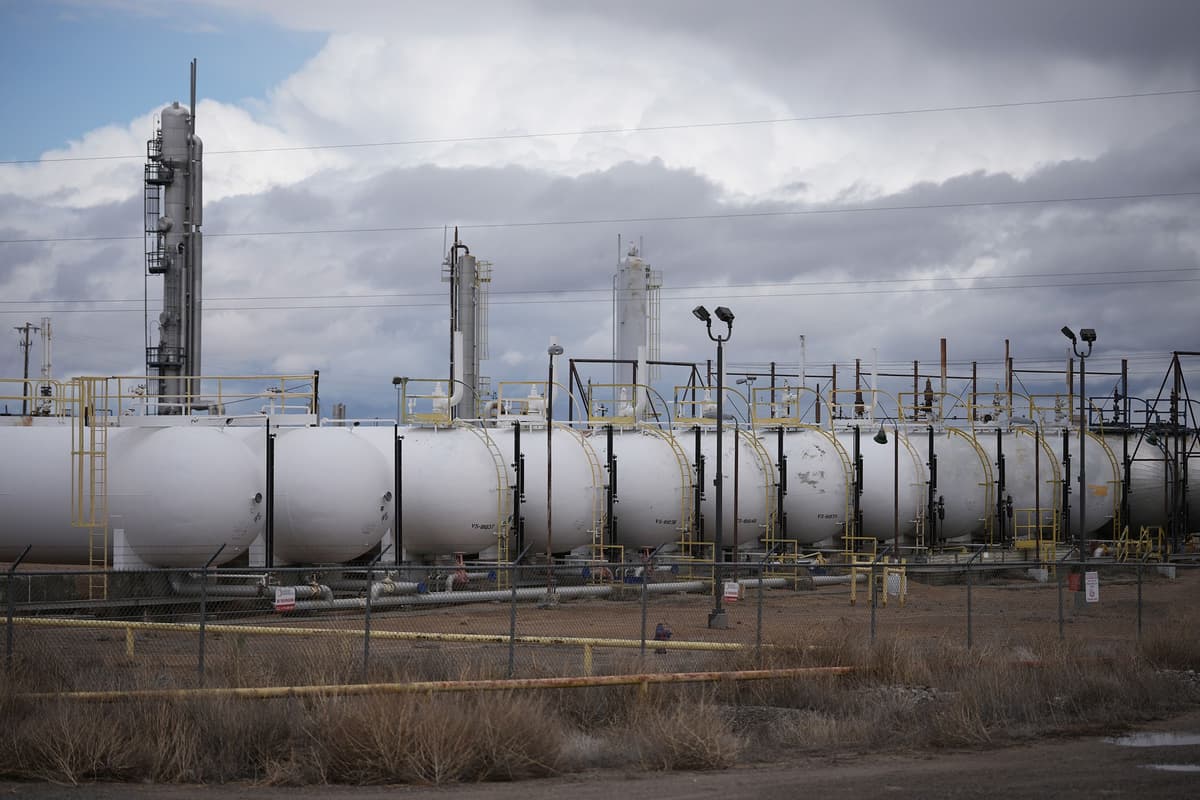
The pipeline of gas-fired power plants dedicated to US data centers has exploded to more than 189 gigawatts by mid-2026, according to new research from Global Energy Monitor released Tuesday. That figure represents a near-doubling from the 97 gigawatts tracked at the end of 2025—and a staggering increase from just 4 gigawatts in early 2024.
The scale is enormous: a single gigawatt can power roughly a million homes. The buildout reflects how artificial intelligence's energy requirements have forced tech companies to pursue private power generation at speeds and volumes unprecedented in the sector.
Why it matters
This shift locks the US into decades of fossil fuel emissions at precisely the moment climate scientists say rapid decarbonization is essential. It also reveals a strategic divergence: while American tech companies race to build gas plants, China is powering its data center expansion primarily with renewables—potentially gaining a long-term competitive advantage in clean energy infrastructure.
Behind-the-meter strategy accelerates
Data center developers have increasingly turned to "behind-the-meter" facilities—private power plants that bypass the public grid entirely. This approach sidesteps lengthy grid connection queues and avoids adding costs to utility ratepayers, a concern that has fueled local opposition to data centers nationwide.
The Trump administration has actively encouraged this model, launching a voluntary pledge signed by Microsoft, Meta, Google, OpenAI, several Republican governors, and major utilities. The policy push reflects a broader effort to accelerate AI infrastructure deployment without regulatory friction.
Jenny Martos, a research analyst at Global Energy Monitor who worked on the report, notes the two sectors have become inseparable: "Increasingly, the US gas power buildout is getting tied directly to the data center buildout—you can't talk about one without the other."
Climate costs mount
Many of these facilities use inefficient turbines that amplify greenhouse gas emissions. As WIRED has previously reported, some individual gas plants are permitted to emit more annually than entire small- and medium-sized countries.
Not every project in the pipeline will reach completion—financing constraints, local opposition, equipment supply limits, and regulatory moratoriums all create uncertainty. But Martos warns that those that do get built represent multi-decade emissions commitments.
China takes a different path
The US surge has pushed America past China in total gas projects under development, according to Global Energy Monitor's global tracking. That's a reversal from the early 2020s, when China briefly outpaced US gas plant construction.
But the comparison reveals a fundamental strategic difference. Kyle Chan, a fellow at the Brookings Institution, says China's data center boom "is really oriented around renewables," particularly solar and hydropower. Chinese facilities are often sited in rural areas with excess renewable generation, part of a deliberate government strategy for energy independence.
Chan acknowledges that gas power "might make sense economically" for US companies seeking speed and lacking access to cheap renewables. "But over the long term, you pay a price for that—obviously, in terms of emissions, but also, I think in terms of not investing in your own clean energy sector."
The findings were first reported by WIRED based on Global Energy Monitor's research.
This is an original analysis by the Omega editorial team. Source reporting: WIRED.
Want systems like this working for your business?
Book a Call
