US and Chinese AI firms converge on Singapore as neutral hub
OpenAI, Anthropic, Tencent, and others are building labs and hiring in the city-state, though geopolitical tensions threaten its neutrality.
A new center of gravity for global AI
Singapore has emerged as the preferred regional base for artificial intelligence companies navigating the US-China technology divide. Over the past year, OpenAI and Google DeepMind have opened applied AI labs in the city-state, while Anthropic has begun hiring for local roles in finance, product support, and economic research. Chinese technology giants including Tencent have simultaneously expanded their Singapore footprint.
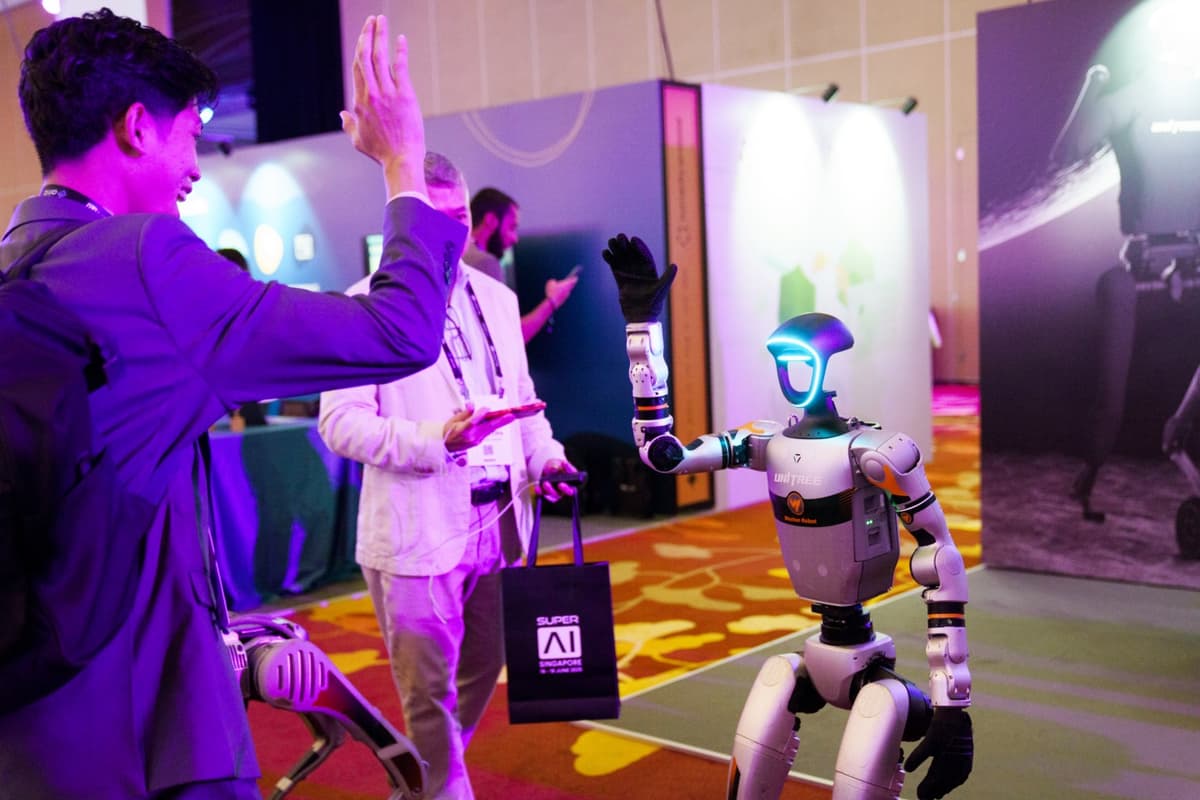
The convergence reflects Singapore's decades-long positioning as a trusted intermediary. "All the AI companies I work with, whether they're from China, Korea or Japan, all use Singapore as a hub," Gunja Gargeshwari, chief revenue officer of web scraping firm Bright Data, told Fortune at the SuperAI summit in Singapore. Her company designated Singapore as its Asia-Pacific headquarters despite 60 percent of its Asian customers being based in China and India.
San Francisco-based AI notetaker company Plaud announced in June it would invest 10 million Singapore dollars ($7.8 million) to expand local operations and grow headcount from 100 to 150 employees by year-end. The company hired its first Singapore employee in 2024.
Why it matters
As AI companies shift from model training to monetization, Singapore offers a strategic middle ground where US firms can access Asian markets and Chinese companies can pursue global expansion without immediate Western regulatory pressure. The city-state's role as an AI Switzerland could reshape how the technology industry navigates great power competition—or expose the limits of neutrality in an era of technology nationalism.
What's driving the migration
Singapore's appeal stems from both geopolitics and fundamentals. Prime Minister Lawrence Wong articulated the country's value proposition at a policy conference last July: "We are stable, we are predictable. We are reliable and we are trusted, and these are intangible assets that others would die to have."
The National University of Singapore ranked eighth in this year's QS World University Rankings, with Nanyang Technological University placing twelfth. Chinese tech companies are offering annual compensation packages between $150,000 and $273,000 for PhD holders in AI roles based in Singapore.
For Chinese firms, Singapore provides a pathway to international markets. "For some of my Chinese customers, the researchers can't leave the country without telling the government," Gargeshwari said. "So opening an office in Singapore and having local employees is a necessity for them to do business."
OpenAI committed 300 million Singapore dollars ($234 million) last month to Singapore's AI ecosystem and opened its first applied AI lab outside the United States. The facility will serve as a hub for forward deployed engineers who embed with customer organizations.
Neutrality under pressure
Geopolitical tensions are testing Singapore's position. When Chinese AI startup Manus AI relocated its global headquarters to Singapore in mid-2025 and sold itself to Meta for $2 billion in December, Beijing moved to block the transaction. In April, Chinese regulators ordered the acquisition unwound, determining that Manus's continued operations in China gave them jurisdiction regardless of its Singapore legal status.
"Regulators looked straight through the Singapore holding structure to the technology's Chinese origin," Sebastian Wiendieck, head of legal practice in China at law firm ROEDL, told CNA.
The United States also poses challenges. Last week, the US government restricted non-US individuals from accessing Anthropic's Mythos model, raising questions about Singapore's future access to frontier AI systems from American companies.
Singapore released its national AI research and development plan in January with a 1 billion Singapore dollar infrastructure investment. The country plans to open Kampong AI, an industrial park for AI startups, in 2028.
These details were first reported by Fortune.
This is an original analysis by the Omega editorial team. Source reporting: AI Watch.
Want systems like this working for your business?
Book a Call