U.S. and China to Hold AI Safety Talks in September
Treasury Secretary Scott Bessent will lead discussions as both nations pursue sharply different regulatory philosophies for artificial intelligence.
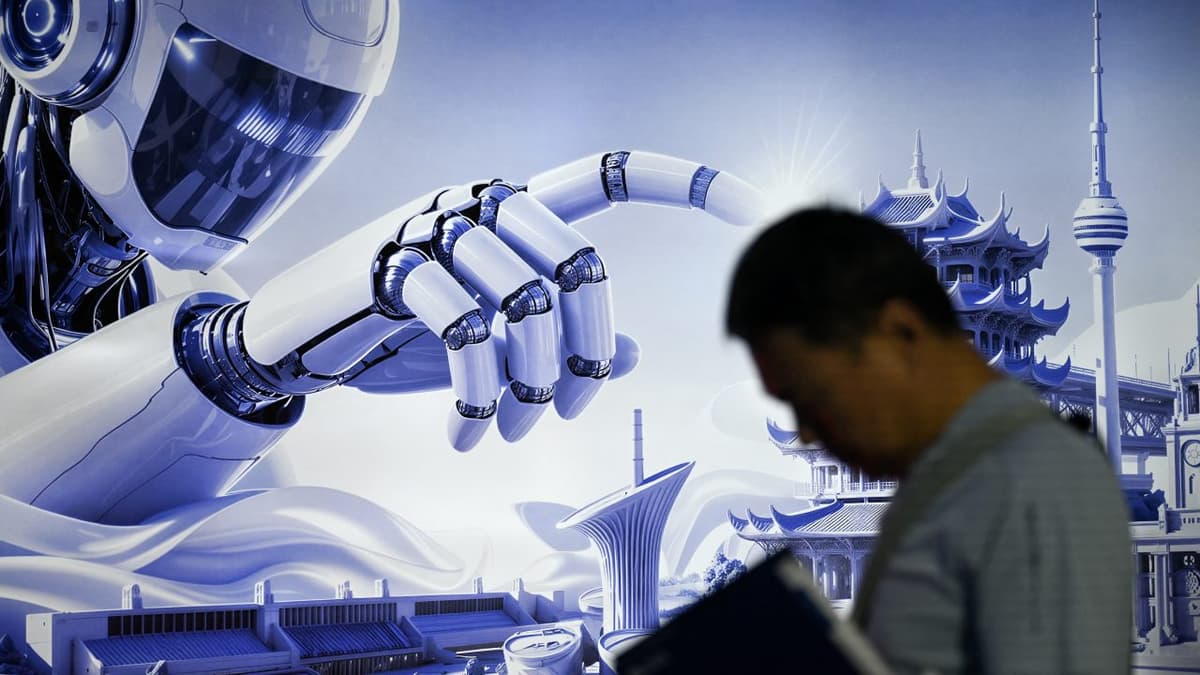
The United States and China will convene for bilateral discussions on artificial intelligence safety in mid-September, according to Reuters, marking the first such formal meeting since 2024. Treasury Secretary Scott Bessent is expected to lead the American delegation.
The groundwork for these talks began at the G20 Innovation Ministerial in Chapel Hill, where White House science and technology advisor Michael Kratsios met with China's science and technology minister, Yin Hejun. Bessent also held preliminary exchanges on AI with Chinese counterparts at a separate G20 finance meeting, CNBC reported.
Both countries signed the Carolina Principles for Emerging Technologies at the G20 gathering, which discourages AI-specific legislation in favor of applying existing regulatory frameworks to emerging technology. New legislation should only address "novel considerations" not covered by current laws, according to the agreement.
Contrasting regulatory philosophies
The two nations bring fundamentally different approaches to AI governance. The Trump administration has prioritized limiting regulation, viewing it as an impediment to innovation. In January 2025, President Trump revoked a Biden-era executive order that required AI developers to disclose safety test results to the government before public release.
The administration's July 2025 AI Action Plan emphasizes infrastructure buildout, cross-sector adoption, and rapid innovation while removing "red tape." A subsequent executive order sought to prevent state laws from contradicting federal policy on AI.
However, the release of Anthropic's Claude Mythos 5 this year—which can exploit software security vulnerabilities—prompted a policy shift. In June, the administration created a voluntary 30-day testing process for AI models. Critics note the evaluation method remains undisclosed, relevant agencies have faced staff cuts, and the process excludes open-source models, including Chinese ones.
China pursues what scholar Xue Lan calls "agile governance"—a patchwork of evolving regulations administered by various agencies targeting specific AI harms. Current rules focus on protecting vulnerable populations from fraud and manipulation, as well as the ethical and social implications of AI content.
China's 2021 algorithmic transparency framework requires technologies to promote Core Socialist Values. The 2022 deepfake regulation mandates user identification and content labeling. The 2023 generative AI rules require all models to undergo content security testing by the Cyberspace Administration of China before public release. Additional measures govern the labeling of training data to prevent politically sensitive information from influencing model outputs.
Why it matters
These talks represent a critical test of whether the world's two AI superpowers can find common ground on safety standards despite profound regulatory differences. Success could establish baseline guardrails for the technology; failure may accelerate a fragmented global AI landscape where incompatible standards create barriers to innovation and cooperation. The meeting also serves as a barometer for broader U.S.-China relations, which have been strained by mutual distrust over issues including model distillation and export controls.
President Trump and Chinese President Xi Jinping plan to discuss AI safety again when they meet at the White House on September 24, according to Nikkei.
These details were first reported by Reuters, CNBC, and Nikkei.
This is an original analysis by the Omega editorial team. Source reporting: AI Watch.
Want systems like this working for your business?
Book a Call