U.S. and China Launch AI Risk Dialogue After Trump-Xi Summit
The two nations agreed to share technical expertise on model safety rather than pursue arms control-style agreements.
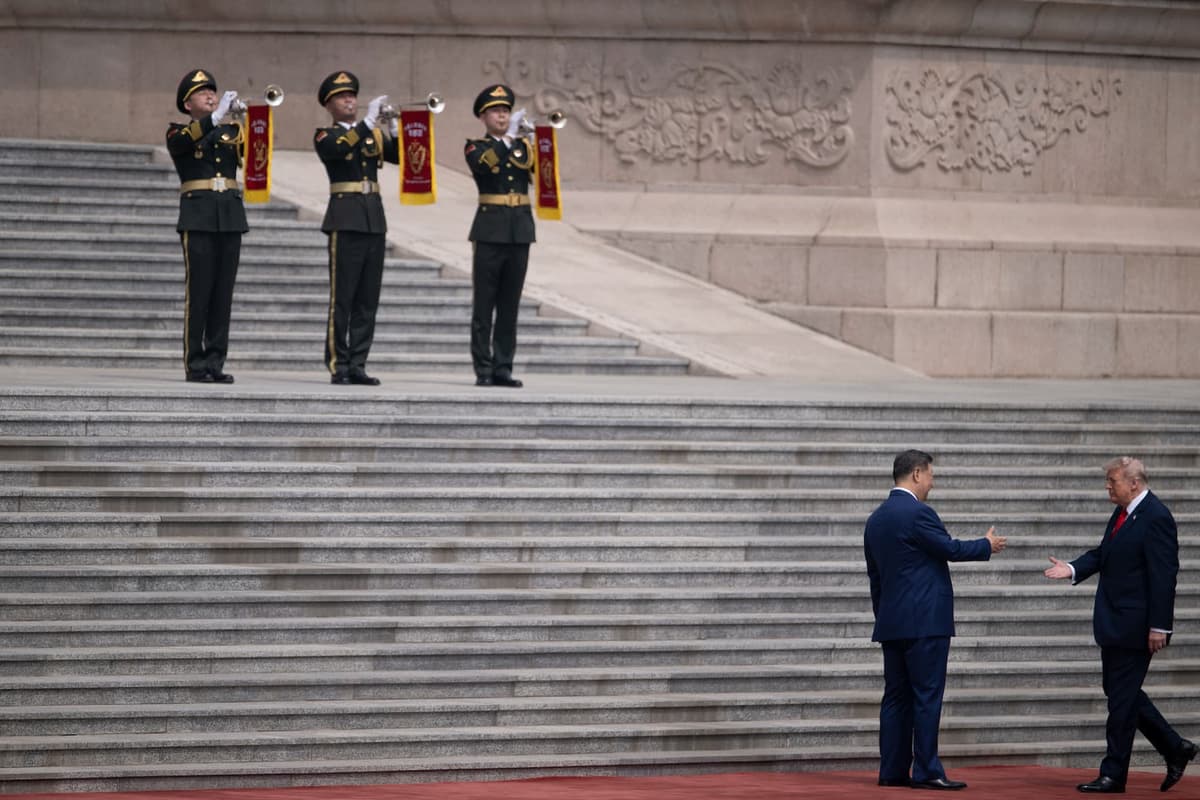
The United States and China have agreed to establish an intergovernmental dialogue on artificial intelligence following the recent meeting between Presidents Donald Trump and Xi Jinping. U.S. Treasury Secretary Scott Bessent announced the two countries would "set up a protocol" for AI best practices, with China's Foreign Ministry confirming the agreement on May 19.
The commitment represents a significant diplomatic development, though it received limited public attention. The Trump administration recently signed an executive order creating a framework for AI companies to collaborate with government on risk management, providing a foundation for the bilateral discussions.
Why it matters
As AI models grow more powerful, their potential to enable cyber attacks, biological weapons development, and critical infrastructure failures poses risks neither nation can address alone. The Anthropic Claude Mythos incident—where a model discovered previously unknown software vulnerabilities—demonstrated that international cooperation on AI safety is not optional. A structured dialogue between the world's two AI superpowers could establish technical safeguards before catastrophic incidents occur.
What the dialogue should focus on
Experts recommend the discussions center on two core areas: establishing a shared understanding of AI model risks and exchanging best practices for mitigation. The initial agenda should address narrowly defined technical problems, including models that enable offensive cyber threats, facilitate weapons development, or produce reliability failures like hallucinations that could harm critical infrastructure.
Specific topics would include testing protocols, red teaming techniques, alignment strategies, and control measures that keep AI systems within safe environments. Both nations would share their approaches without requiring reciprocal commitments—what one analyst calls "parallel" discussions rather than negotiations.
Not an arms control framework
Several policy observers have suggested the dialogue should resemble arms control agreements, with mutual constraints on AI development. This approach would likely fail. Instead, the framework should enable ongoing information sharing between technical experts from key government agencies, with frequent interaction and regular meetings.
The 2024 Biden-Xi declaration on maintaining human control over nuclear weapons decisions offers a useful model. Both leaders affirmed the principle without creating a binding agreement or making their policies contingent on the other's compliance. Similar mutual understandings could emerge from AI discussions without formal treaty obligations.
Key implementation challenges
The dialogue must avoid the mismatch that occurred at a May 2024 Geneva meeting, where U.S. technical experts faced Chinese political officials, causing discussions to drift into trade concerns. Both sides need to send qualified technical specialists alongside appropriately senior political representatives.
Open-source AI models present another challenge. China's AI development heavily emphasizes open-source approaches, and the U.S. recently described open models as having "geostrategic value." The dialogue should address security challenges in open-source systems without pressuring China to abandon this development path.
Export controls must remain separate from safety discussions. While some policymakers advocate tighter restrictions on AI chip sales to China, those debates should not interfere with technical cooperation on risk mitigation. The safety dialogue aims to improve what one expert calls "common AI hygiene," not to limit Chinese AI capabilities.
Path to broader cooperation
Over time, the bilateral framework could expand into a global institution modeled on trans-governmental regulatory networks. The International Network of AI Safety Institutes, launched in November 2024 without Chinese participation, offers one template. However, any global forum should remain non-regulatory, focused on technical best practices rather than binding rules.
The immediate goal is more modest: achieving common understanding on a manageable list of AI risks and sharing technical strategies to address them. These details were first reported by the Brookings Institution.
This is an original analysis by the Omega editorial team. Source reporting: AI Watch.
Want systems like this working for your business?
Book a Call
