US and China Launch AI Dialogue Amid Trade Truce Talks
Treasury Secretary Bessent and Vice Premier He Lifeng agreed to establish formal channels for managing AI risks and potential incidents between the two powers.
New Framework for AI Risk Management
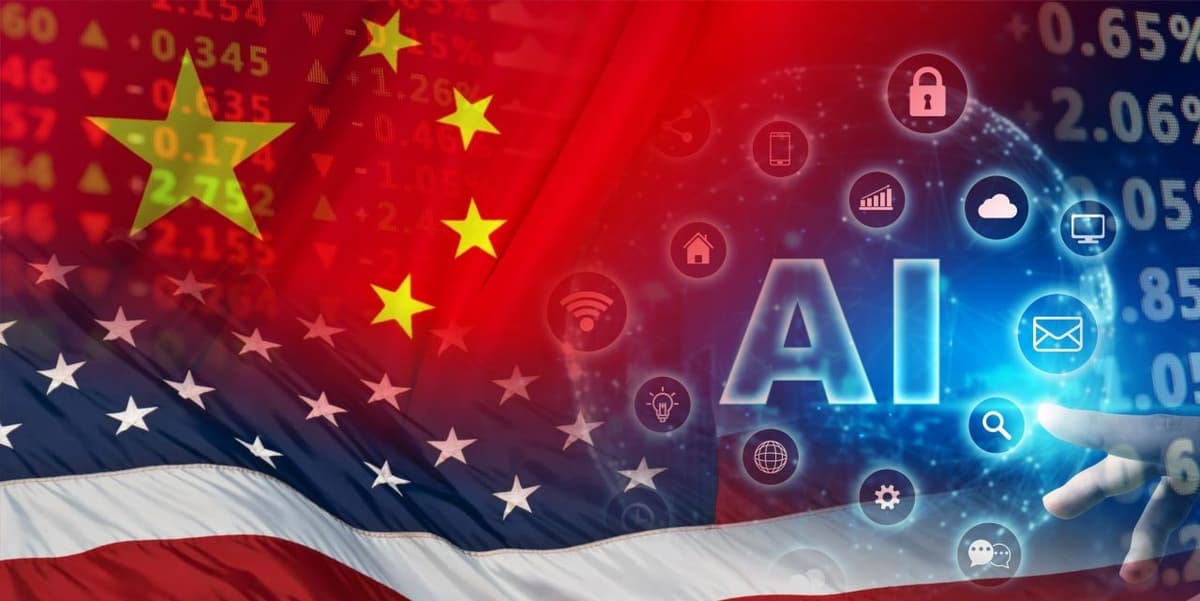
The United States and China have agreed to establish a formal dialogue on artificial intelligence following talks in New York between US Treasury Secretary Scott Bessent and Chinese Vice Premier He Lifeng. The agreement includes plans for an "incident line" enabling direct government communication when AI-related events reach national security thresholds.
The discussions will address risks from uncontrollable AI agents and cyber threats involving non-state actors, according to details first reported by AI Watch. The two sides plan to meet again in Shenzhen in approximately two months to continue the dialogue.
US officials emphasized that existing export controls on advanced chips and semiconductor manufacturing equipment remain outside the scope of these AI discussions, underscoring that technological competition continues even as risk-management channels open.
Why it matters
AI represents a fundamentally different category of strategic challenge than traditional areas of US-China competition. While both nations compete intensely for AI leadership, autonomous systems capable of attacking critical infrastructure or assisting non-state actors with cyber operations could threaten both countries regardless of which developed the underlying technology. This creates unusual pressure for cooperation even amid rivalry—a dynamic that could reshape how the world's two largest economies manage their relationship.
Competing Visions of Trade Stability
Ahead of a planned summit between President Donald Trump and President Xi Jinping in Washington, the two governments are also negotiating the extension of their current trade truce, which expires November 10. The discussions reveal divergent approaches to stability.
Washington has favored extensions of approximately six months, preserving regular opportunities to assess implementation of Chinese commitments on issues including critical minerals. Beijing reportedly prefers a much longer extension lasting through the remainder of Trump's term, seeking to eliminate recurring deadline pressures that create uncertainty for businesses and investors.
A potential compromise could combine a longer baseline truce with regular six-month implementation reviews—providing accountability without automatically triggering new tariff confrontations. Progress was also reported on operationalizing a Board of Trade mechanism that would identify non-sensitive goods eligible for lower barriers while maintaining separate rules for genuinely security-sensitive sectors.
From Temporary Restraint to Institutional Architecture
The AI dialogue and trade truce negotiations suggest China-US relations may be shifting from crisis management toward more structured risk management. Neither development eliminates strategic competition, but both create mechanisms for making that competition more predictable.
AI incident notification protocols, scheduled trade reviews, extended periods of tariff stability, and clearer distinctions between strategic and commercial sectors represent relatively modest institutional innovations. Yet such limited mechanisms can significantly reduce the risk of escalation between economies that together account for more than 40 percent of global GDP.
The emerging framework reflects a pragmatic recognition: some risks—whether from autonomous AI systems or sudden trade disruptions—cannot be fully controlled by either government acting alone.
These details were first reported by AI Watch based on information from the recent New York talks between US and Chinese officials.
This is an original analysis by the Omega editorial team. Source reporting: AI Watch.
Want systems like this working for your business?
Book a Call