U.S. Accuses Six Chinese AI Firms of Mass IP Theft via Distillation
Federal officials allege DeepSeek, Moonshot AI, Alibaba and others systematically copied American AI models to accelerate development and cut costs.
U.S. levels sweeping IP theft charges against Chinese AI developers
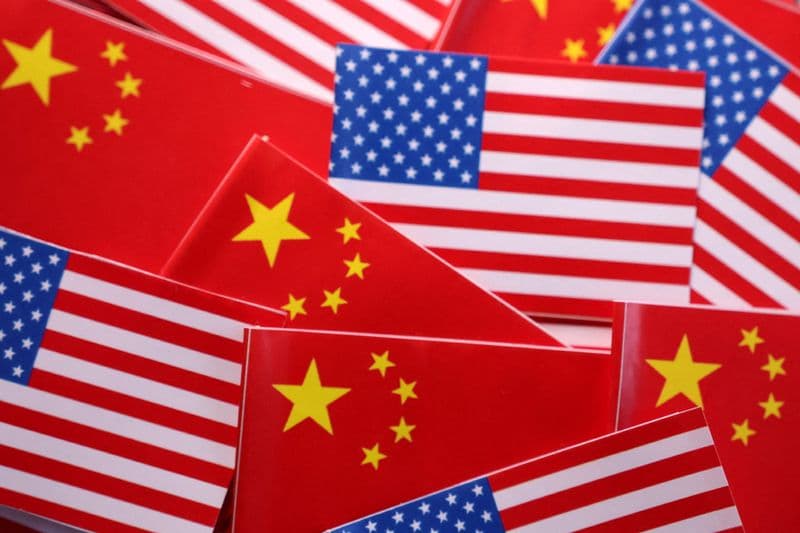
The U.S. government has formally accused six Chinese artificial intelligence companies of systematically stealing intellectual property from American AI labs through a technique called distillation, escalating tensions in the technology rivalry between Washington and Beijing.
U.S. law enforcement and intelligence officials named DeepSeek, Moonshot AI, and Alibaba among the firms allegedly engaged in what they characterized as "aggressive, malicious and targeted distillation activities at an industrial scale." The statement, released Tuesday, claims these companies used variants of AI models developed by Anthropic, OpenAI, Google, and SpaceX to accelerate their own product development.
How distillation works as an IP shortcut
Distillation involves training smaller, more efficient AI models by feeding them outputs generated by larger, more expensive systems. The technique legitimately helps developers reduce computational costs and deployment complexity. However, U.S. officials allege the Chinese firms crossed into theft by using American models' outputs without authorization to replicate proprietary capabilities they had not independently developed.
According to the statement, this approach allowed Chinese companies to bypass substantial research and development investments while capturing the performance characteristics of leading U.S. systems.
National security implications cited
Beyond commercial concerns, U.S. officials warned that the alleged theft enhances China's "military and cyberattack capabilities that could be used against the U.S. and our allies." The statement suggested the activities occurred "likely with Chinese government awareness," though it stopped short of alleging direct state coordination.
Reuters previously reported in July that Chinese military researchers have used outputs from leading American AI models to train domestic systems for defense applications, lending credibility to the national security framing.
Why it matters
The timing of these accusations—just weeks before Chinese President Xi Jinping's planned late-September visit to the U.S.—signals that AI technology transfer has become a central friction point in bilateral relations. With both nations scheduled to hold AI safety talks in mid-September, the distillation allegations could complicate efforts to establish guardrails around the technology's most dangerous applications. For American AI companies, the charges underscore the challenge of protecting intellectual property when model outputs can be queried and reverse-engineered at scale.
Pattern of allegations
This marks at least the second time in 2026 that the U.S. has publicly accused Chinese firms of AI-related intellectual property theft. Officials made similar claims in April ahead of President Trump's visit to Beijing, suggesting a deliberate strategy of using public attribution to deter the practice.
The Chinese embassy in Washington had not responded to requests for comment at the time of the announcement.
These details were first reported by Reuters.
This is an original analysis by the Omega editorial team. Source reporting: AI Watch.
Want systems like this working for your business?
Book a Call