US Accuses China of Industrial-Scale AI Model Theft
Federal agencies claim Chinese firms use distillation techniques and proxy networks to extract capabilities from American frontier AI systems.
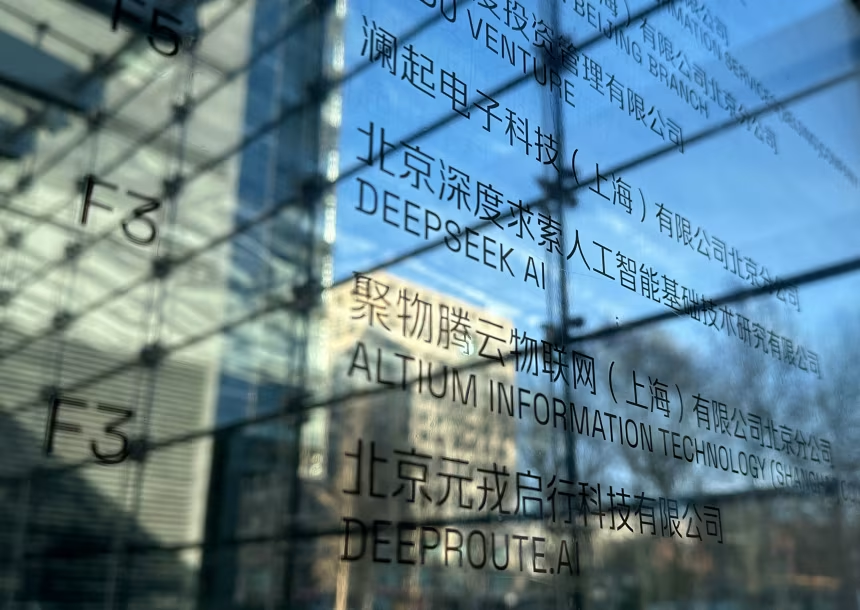
US agencies detail AI theft allegations
Three major US federal agencies have accused Chinese artificial intelligence companies of conducting systematic theft of American AI trade secrets, according to details first reported by CNN. The FBI, National Security Agency, and Cybersecurity and Infrastructure Security Agency issued a joint advisory Tuesday alleging that Chinese firms use distillation techniques at industrial scale to replicate capabilities from advanced US AI models.
Distillation involves training a simpler AI model by feeding it outputs from a more sophisticated system. While the technique has legitimate research applications, US officials say the volume and targeting of Chinese campaigns cross into intellectual property theft. The advisory specifically names DeepSeek and Alibaba Group as conducting "high-volume knowledge distillation campaigns" against American AI firms.
According to the agencies, Chinese companies employ networks of proxy services—described as "transfer stations"—to circumvent geographic restrictions, usage terms, and safeguards that US AI providers put in place. This infrastructure allows them to access American models despite efforts to block unauthorized use.
Scale of alleged campaigns
The scope of these operations extends beyond isolated incidents. Anthropic, maker of the Claude AI assistant, reported that three Chinese AI laboratories generated more than 16 million exchanges with Claude using approximately 24,000 fraudulent accounts. The company characterized this activity as an "industrial-scale campaign" designed to extract its model's capabilities.
US officials argue the pattern indicates distillation has become central to Chinese AI development rather than a supplementary research method. "The sheer scale of these campaigns and their sophistication indicate that distillation is not a supplement to these companies' AI model development, but the critical core of it," the advisory states.
Why it matters
This escalation in US accusations arrives as President Donald Trump prepares to host Chinese leader Xi Jinping in Washington later this month, with AI technology slated as a discussion topic. The allegations add technical specificity to longstanding concerns about technology transfer and could accelerate restrictions on AI exports or trigger sanctions. Treasury Secretary Scott Bessent warned that Chinese firms conducting "covert, industrial-scale distillation attacks" could face sanctions and Entity List designations—measures that would significantly restrict their access to US technology and markets.
The competitive dynamics extend beyond state actors. Google's Threat Intelligence Group released a separate report Tuesday noting that hackers with various motivations increasingly target "proprietary AI models and source code," treating enterprise AI assets as high-value targets for espionage, extortion, and resource theft.
Chinese open-weight AI models have gained market traction due to their customizability, ability to run without cloud infrastructure, and lower costs—advantages that may stem partly from the development methods US agencies now challenge. CNN requested comment from the Chinese Embassy, DeepSeek, and Alibaba but had not received responses at publication time.
These details were first reported by CNN.
This is an original analysis by the Omega editorial team. Source reporting: AI Watch.
Want systems like this working for your business?
Book a Call