Universities Scale Back AI Detection Tools Amid False Positive Concerns
Growing evidence of unreliable results pushes institutions toward redesigning assessments rather than policing student work with algorithmic surveillance.
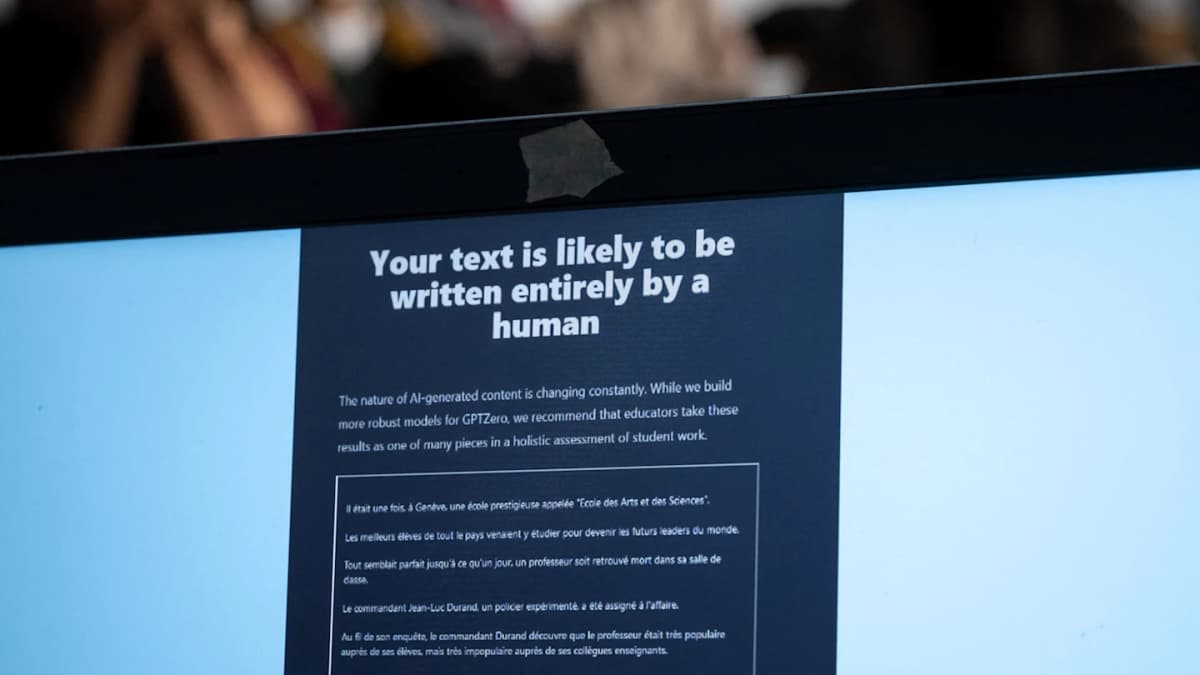
Universities Retreat From AI Detection Software
A January 2025 New York court ruling in favor of Adelphi University student Orion Newby has intensified scrutiny of AI detection tools used to police academic integrity. Newby was wrongly accused of using AI to write an essay after Turnitin's detector assigned his work a 100 percent AI-generated probability score, even though other detection tools showed zero percent likelihood. The court found the university failed to follow proper disciplinary procedures, according to details first reported by the Financial Times.
The case highlights a growing crisis of confidence in detection technology. Multiple institutions—including Vanderbilt, Yale, Johns Hopkins, Northwestern, and universities in Canada, South Africa, and Australia—have restricted or disabled AI detection features entirely.
Edward Watson, vice-president for digital innovation at the American Association of Colleges and Universities, warns that false positives represent the primary concern. He advises that AI detection should play only a minor role in academic integrity cases and never serve as definitive proof of misconduct.
Why it matters
With 32 percent of UK university students admitting to some unpermitted AI use in assessments, institutions face mounting pressure to maintain academic standards without relying on flawed technology. The inconsistent policies and surveillance-based approaches risk undermining trust between students and educators while failing to address the fundamental question of what universities should actually assess. A shift toward process-based evaluation and transparent AI policies could reshape higher education assessment for the AI era.
Detection Tools Face Reliability Questions
Research from Edinburgh Napier University surveying more than 6,600 students across seven UK institutions found widespread AI use, yet university policies remain inconsistent. An audit of 163 UK universities revealed that over 40 percent lack publicly accessible AI policies.
Annie Chechitelli, chief product officer at Turnitin, characterizes the company's detector as a "starting point" rather than definitive evidence. Turnitin launched a new product last year that tracks the evolution of student writing rather than analyzing only final submissions.
Critics note that detection tools disproportionately flag non-native English speakers with false positives, according to a 2023 Stanford study. The UK's Office of the Independent Adjudicator for Higher Education confirms that while overall complaints remain low, AI-related misconduct cases are rising within internal university procedures.
Assessment Redesign Emerges as Alternative
Judy Williams, pro vice-chancellor for education and students at Queen's University Belfast, argues that good assessment design—not detection technology—provides the answer to academic integrity concerns. "The important question isn't: 'How do we stop students using AI?' It's: 'What are we actually trying to assess?'" Williams said.
Sam Illingworth, a professor of critical AI literacy at Edinburgh Napier University, observes that some institutions are redesigning assessments around oral components and evaluating student process, though many still rely on detection tools.
Urszula Lis of the European Students' Union questions whether higher education should depend on detection-based approaches at all, warning against transforming academic integrity into a surveillance exercise. She notes that fragmented guidance across Europe creates equity issues where identical AI use might be punished in one country but permitted in another.
A December 2025 study by the UK's Higher Education Policy Institute found that 42 percent of surveyed students reported being less likely to use AI due to fears of false accusations.
These details were first reported by the Financial Times.
This is an original analysis by the Omega editorial team. Source reporting: AI Watch.
Want systems like this working for your business?
Book a Call
