UN Calls for 100% Renewable Data Centers by 2030
Energy analysts say the ambitious goal would require unprecedented grid transformation as AI power demand doubles.
UN Sets Ambitious Clean Energy Target for AI Infrastructure
United Nations Secretary-General António Guterres has called for all data centers worldwide to run entirely on renewable energy by 2030, while also demanding greater transparency around their energy, water, and land consumption. The announcement comes as electricity demand from data centers is projected to at least double over the next four years.
Why it matters
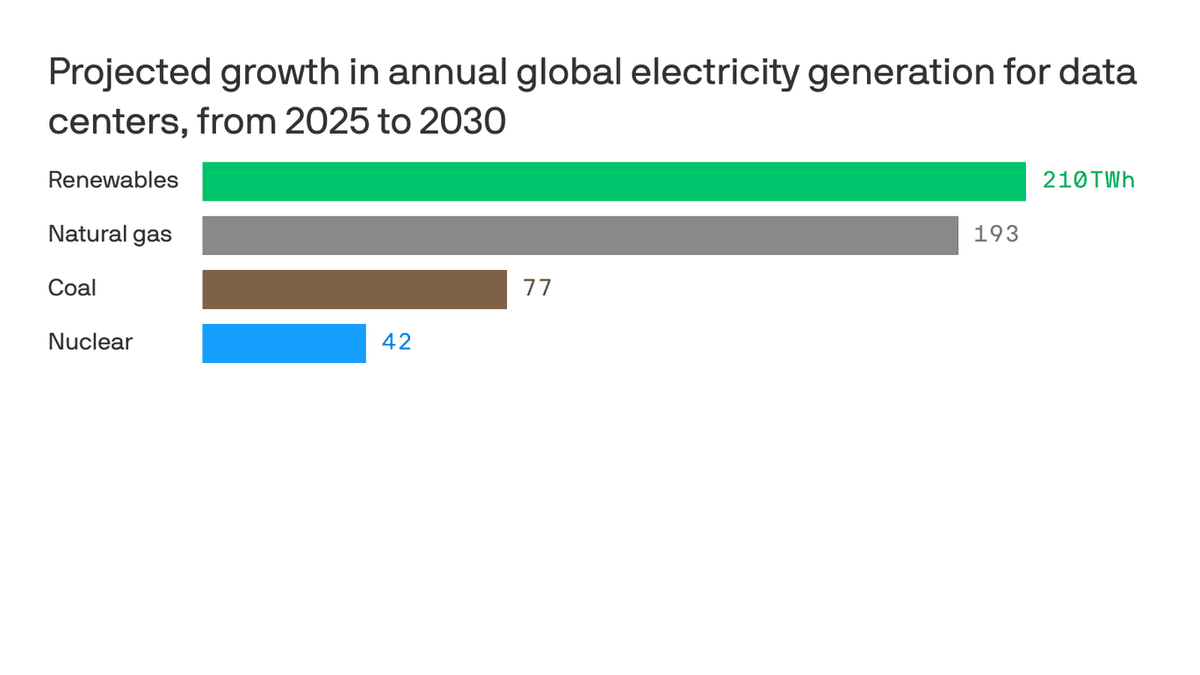
The trajectory of data center energy sourcing will shape both investment flows and global greenhouse gas emissions at a critical juncture. While renewables are expanding rapidly, fossil fuel generation is also growing to meet surging AI-driven electricity demand — creating a tension that could undermine climate goals even as clean energy capacity increases.
Reality Check on Feasibility
Energy market experts are skeptical the UN timeline is achievable. "There's no way to power every data center with renewable energy by 2030," said Michael Thomas, founder of market intelligence platform Cleanview. "That would require decarbonizing most power grids in the world in less than five years."
The details were first reported by Axios.
UN spokesman Stéphane Dujarric defended the goal as reflecting "both the urgency of the climate crisis and the speed at which electricity demand from AI and data centres is increasing." He noted that renewables represent "the quickest and most cost-effective options for expanding electricity supply in much of the world."
The Current Energy Mix
Renewable energy sources are on track to surpass coal in global power generation this year, according to the International Energy Agency. The IEA projects renewables could account for more than one-third of data center electricity by 2030.
However, natural gas and coal combined still outpaced the combined growth from renewables and nuclear power in meeting new data center demand. This reality underscores the challenge facing the UN's ambitious target.
Notably, Guterres framed the goal specifically around renewable energy rather than carbon-free electricity, which would exclude nuclear power. Dujarric clarified the initiative "is not intended to prescribe or exclude the broader energy choices available to governments."
The Accounting Question
Thomas pointed out that tech companies could theoretically purchase renewable energy credits globally to offset fossil fuel-powered data center emissions. "But it's important to note that this is largely an accounting exercise," he said. Many major cloud providers already employ this strategy to some extent, yet their actual emissions continue rising "because we live in a physical world."
Recent sustainability reports from Google, Microsoft, and Amazon have emphasized efficiency improvements, but overall resource consumption continues climbing due to rapid expansion.
Transparency as a Parallel Goal
The UN is linking its renewable energy push with demands for greater disclosure. "Ultimately, the initiative is calling on AI companies to demonstrate transparently and credibly how the expansion of AI can proceed without shifting carbon, water and land burdens onto communities and future generations," Dujarric said.
This dual focus on clean energy sourcing and transparent reporting reflects growing pressure from investors, policymakers, and communities for a clearer accounting of AI's environmental footprint.
This is an original analysis by the Omega editorial team. Source reporting: AI Watch.
Want systems like this working for your business?
Book a Call
