Ukraine Battlefield Drone Data Fueling New AI Training Market
Millions of hours of combat footage are being packaged for defense contractors and commercial firms, raising questions about ownership and regulation.
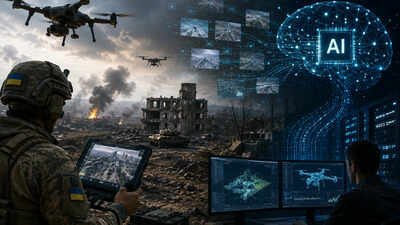
Ukraine's ongoing conflict with Russia is producing an unexpected byproduct: massive volumes of battlefield data that are being transformed into training material for artificial intelligence systems. This development is creating a largely unregulated market where combat experience becomes a commercial asset.
According to MIT Technology Review, Ukraine's Ministry of Defence announced in January that it would provide access to millions of data points collected during tens of thousands of drone flights. More than 100 companies and the UK government have since gained access to these datasets.
Each drone flight generates thousands of individual data points—images, video, sensor readings, and records of how operators respond to changing battlefield conditions. Ukraine is now packaging these records as training material that gives defense companies exposure to real-world combat scenarios that cannot be replicated in laboratories.
A new defense partnership
The UK's access came through a defense partnership that allows British universities and companies to work with battlefield information through Ukraine's AI Avengers Labs platform. The system contains millions of frames collected from cameras and infrared sensors deployed across combat zones.
US-based Enabled Intelligence has already made more than half a million hours of Ukrainian drone footage available for AI training purposes, with applications spanning both military and commercial systems.
Why it matters
This represents a fundamental shift in how warfare generates economic value. Countries bearing the physical costs of conflict are creating digital assets that could be captured by companies and wealthier nations far from the fighting. The data includes images and sensor records of soldiers, civilians, and people caught in attacks—individuals who never consented to having their experiences converted into commercial training material. Without clear regulatory frameworks, battlefield experience is becoming extractive digital capital with no established rules for ownership, licensing, or downstream use.
From combat to commercial applications
The technology flow operates in both directions. Commercial drones adapted for warfare generate data under extreme conditions—signal jamming, degraded visibility, communication failures—that can then inform civilian applications. Some systems trained on Ukrainian battlefield data are already being applied in agriculture, particularly for mapping and surveying fields in areas with limited connectivity.
This pattern has precedent. US drones operating over Syria and Yemen generated data that informed early semiautonomous military systems.
The regulatory gap
Military laws govern how countries conduct warfare but provide little guidance on what happens when combat-generated information is extracted, packaged, and licensed to private entities. Ukraine has introduced some access controls, but no broader framework exists for tracking what happens after battlefield data is absorbed into AI models and potentially enters civilian markets.
Unlike conventional datasets, battlefield information incorporated into AI systems becomes nearly impossible to trace. MIT Technology Review suggests governments should treat battlefield data more like controlled weapons transfers—tracking origins, licensing users, and restricting onward sharing—rather than as ordinary commercial material.
These details were first reported by MIT Technology Review.
This is an original analysis by the Omega editorial team. Source reporting: AI Watch.
Want systems like this working for your business?
Book a Call